Distressed Property Deals in Dubai 2026: The Complete Investor's Guide
- Published 9 Apr 2026
- Updated 10 November 2026
- 10 min read
- Data verified on 10 Nov 2026
In short
A distressed property in Dubai is one whose owner must sell quickly, usually because of instalments, a mortgage, relocation or a legal dispute, so the price reflects the seller’s pressure rather than the home’s value. In 2026 there are more of them: off-plan registrations fell 45.7% year on year in Q3 (ValuStrat) and ValuStrat’s residential index is 4.5% lower than a year ago, while 314,363 units under construction are less than 20% built. A good deal requires checking the mortgage, the developer statement and service charges before paying anything.
ValuStrat Q3 2026 review via The Arabian Post · DXBinteract supply pipeline based on DLD records, retrieved 10 Nov 2026
-45.7%off-plan registrations
Off-plan sales registered in Q3 2026 vs Q3 2025
Source: ValuStrat via The Arabian Post, Oct 2026
314,363units 0–20% built
Dubai units under construction with 0–20% progress, whose buyers still face most instalments
Source: DXBinteract analysis of DLD records, retrieved 10 Nov 2026
2/3cash resales
Approximate share of resale purchases paid in cash, October 2026
Source: Haus51 reading of DLD data, Nov 2026
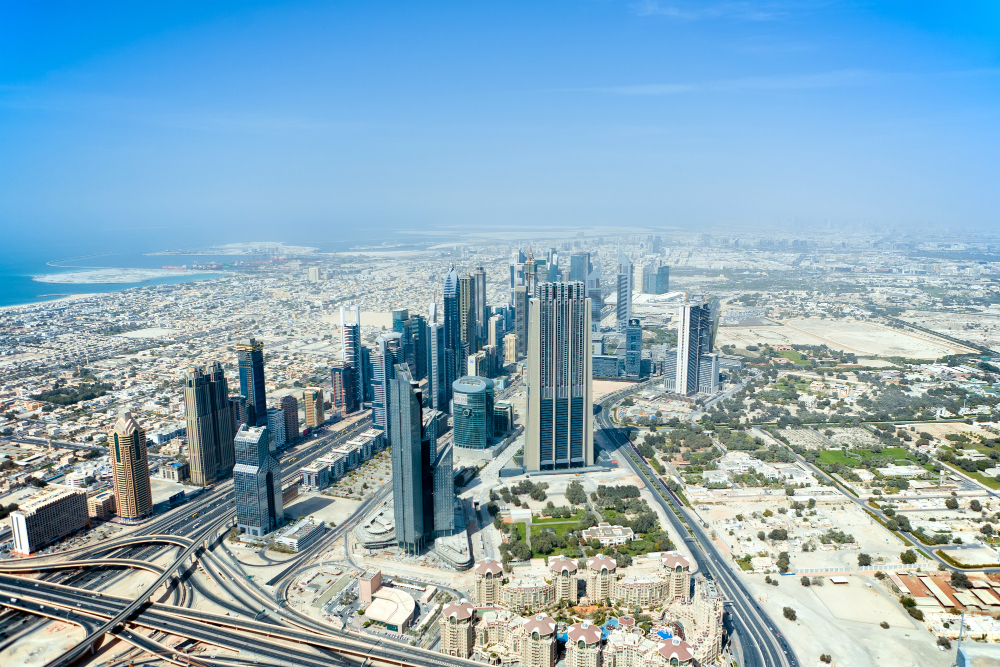
A distressed sale is about the seller’s situation, not the quality of the property.Photo: © VALORISIMO
In this article · 9 sections
What is a distressed property in Dubai?
A distressed property is a home or commercial unit sold under pressure: the owner needs to sell within weeks rather than months, and accepts a lower price or easier terms to do so.
The discount comes from the seller’s situation, not necessarily from a defect in the property. That is the opportunity: a well-located apartment or villa can trade below comparable registered sales simply because its owner cannot wait. It is also the trap: urgency on the seller’s side often hides debts, unpaid instalments or legal issues that become the buyer’s problem if they are not cleared at transfer.
A distressed deal differs from a general price drop. When the whole market softens, all sellers cut prices a little; a distressed seller cuts more, faster, and often negotiates on payment terms as well. Our live Dubai real estate price drops list shows both kinds of discount, so this guide focuses on what makes a sale distressed and how to buy one safely.
Why are there more distressed sellers in Dubai in 2026?
Three forces have combined in 2026: a sudden drop in buyer demand, a very large number of off-plan contracts still being paid for, and heavy new supply.
| Indicator | Latest reading | Source and period |
|---|---|---|
| Off-plan registrations | 24,375 (-45.7% year on year) | ValuStrat, Q3 2026 |
| Ready-home resales | 9,491 (-23.8% year on year) | ValuStrat, Q3 2026 |
| Residential price index | 218.6 points (-4.5% year on year) | ValuStrat, end Sep 2026 |
| Average resale price | AED 1,627 per sq ft (-1.5% year on year) | ValuStrat, Q3 2026 |
| Residential sales value | AED 72.6bn (-47% year on year) | Cavendish Maxwell, Q3 2026 |
| Mortgage transactions | 4,604 (-5.6% year on year), AED 13.2bn | Haus51 reading of DLD data, Oct 2026 |
| Units launched | 172,955 in 2025; 78,294 in 2026 to date | DXBinteract, DLD records |
Sources: ValuStrat Q3 2026 review via The Arabian Post (29 Oct 2026); Cavendish Maxwell via PropertyNews.ae (7 Oct 2026); Haus51 (3 Nov 2026); DXBinteract supply pipeline, retrieved 10 Nov 2026.
A demand shock
Cavendish Maxwell attributes the slowdown to buyer caution after the Iran war began in late February 2026. Fewer buyers means sellers who must sell have to cut deeper to find one.
A large stock of unfinished off-plan contracts
More than 340,000 units were launched in 2024 and 2025 alone. Many were bought by investors who planned to resell before completion or to pay instalments from other income. With resale demand weaker, some now need to exit before the next payment falls due.
New supply competing for tenants and buyers
About 43,000 homes have been delivered in 2026 so far and 122,604 units are scheduled for 2027. Owners who counted on rent to cover a mortgage face lower rents on new leases (-6.3% year on year for apartments in October 2026).
Why do properties become distressed?
Every distressed sale starts with a deadline the owner cannot move.
Financial strain and liquidity needs
Business difficulties, job loss or a margin call elsewhere can force an owner to turn property into cash quickly, whatever the market.
Off-plan instalment pressure
Construction-linked payment plans require regular instalments. If an investor cannot pay, the developer can apply the remedies set out in the sale contract and Dubai’s off-plan rules, which can cost the buyer a large part of what was paid. Selling the contract at a discount is often less costly.
Relocation and personal circumstances
Expatriates leaving the UAE, families changing schools or cities, or owners moving to another emirate may prefer a fast sale to managing a property from abroad.
Divorce, inheritance and legal disputes
Court-ordered or negotiated sales after a divorce or an estate settlement often need a quick, clean exit. They can take longer to complete because several parties must agree.
Over-leveraged positions
Owners who bought several units with short-term financing, or who stretched to buy at the 2025 peak, may have to sell one asset to protect the others.
What types of distressed property deals exist in Dubai?
Distressed deals come in five main forms, each with its own checks.
Motivated-seller listings
Ready homes sold by owners who need speed. They are the simplest to buy: a title deed exists, the unit can be inspected and, if it is tenanted, the rent is known. Check whether a mortgage must be redeemed at transfer.
Off-plan contract resales under pressure
The buyer takes over the original purchaser’s contract, paying what has already been paid (sometimes less) and assuming the remaining instalments. The developer must issue a no-objection certificate (NOC), and most developers only allow a resale once a minimum share of the price has been paid. Ask the developer for an official statement of account. Our guide on whether to buy off-plan in Dubai covers the wider risks.
Developer clearance sales
Developers sell remaining units in a finished or nearly finished building with discounts or unusual terms. These are not distressed in the strict sense but appear when developers need to close a project; compare the terms using our guide to UAE property payment plans.
Bank repossessions and court auctions
When a borrower defaults, the lender can enforce the mortgage through the courts, and the property may be sold at public auction. Prices can be attractive, but viewing may be limited, the unit may be occupied and the process has its own fees and timelines.
Distressed commercial property
Offices and shops follow the same logic but depend on the business cycle and on tenant covenants. Commercial resale prices rose in 2026 (resale commercial prices per sq ft up 23% year on year in October, DLD data), so true commercial distress is rarer at present.
Where is off-plan distress most likely?
Off-plan distress concentrates where many units were sold recently, are far from completion and will be delivered at the same time.
| Construction progress | Units under construction in Dubai |
|---|---|
| 0–20% | 314,363 |
| 20–40% | 85,370 |
| 40–60% | 55,564 |
| 60–80% | 44,308 |
| 80–100% | 45,244 |
Source: DXBinteract supply pipeline based on DLD project records, retrieved 10 Nov 2026.
| Scheduled delivery year | Units | Largest areas |
|---|---|---|
| 2027 | 122,604 | Dubai South (11,616), Wadi Al Safa 5 (9,163), Wadi Al Safa 4 (8,634), JVC (8,266) |
| 2028 | 116,541 | Wadi Al Safa 5 (11,977), Al Hebiah First (8,395), JVC (6,856), Dubai South (6,658) |
| 2029 | 66,154 | Dubai South (6,626), Dubai Investment Park Second (6,202), Dubai Maritime City area (4,735) |
Source: DXBinteract supply pipeline based on DLD records, retrieved 10 Nov 2026. Scheduled dates often slip.
Buyers of units at an early stage of construction still owe most of the price, so they are the most exposed if they can no longer pay. Areas with the largest 2027 and 2028 pipelines (Dubai South, the Dubailand districts of Wadi Al Safa, JVC) are where contract resales at a discount are most likely, and also where post-handover rents will face the most competition. A cheap entry price there must still make sense against the rents achievable on delivery.
How does a distressed deal compare with a standard purchase?
You trade speed and extra checks for a better price or better terms.
| Factor | Distressed sale | Standard listing |
|---|---|---|
| Pricing | Below comparable registered sales | At or near the market |
| Seller motivation | Urgent, fixed deadline | Flexible, no time pressure |
| Negotiating room | High, on price and terms | Moderate to limited |
| Speed | Days to a few weeks | Weeks to months |
| Due diligence | Extensive: debts, instalments, legal status | Standard |
| Financing | Cash strongly preferred | Mortgage usually workable |
| Condition | Variable; may need work | Generally market-ready |
Valorisimo comparison of typical deal characteristics; qualitative, not market data.
The benefits
Built-in equity: buying below registered sales gives a margin of safety from day one. Higher yield: the same rent on a lower price raises the gross yield; see our guide to rental yield in Dubai for area benchmarks. Negotiable terms: handover dates, furniture or the seller paying some fees can be part of the deal. Access to prime locations that rarely trade at a discount, such as Downtown, Dubai Marina or Palm Jumeirah, where some 2026 values fell the most.
Because cash buyers can close fastest, they get the best discounts: in October 2026 roughly two thirds of resale purchases were paid in cash. If you need a mortgage, get pre-approval before you start negotiating.
How do you buy a distressed property safely in Dubai?
The risks in a distressed deal are almost all hidden in paperwork. Clear each one before you pay a deposit.
1. Verify ownership and the title
Check the title deed (or the Oqood registration for off-plan) through the Dubai Land Department’s official channels, and confirm the seller is the registered owner or holds a valid power of attorney.
2. Identify every debt attached to the property
Ask for a liability letter from the seller’s bank showing the amount needed to release the mortgage, a statement of account from the developer for off-plan units, and confirmation that service charges are paid. All must be settled at or before transfer.
3. Inspect the property
For ready units, check air-conditioning, waterproofing, appliances and, for villas, the roof and pool. Deferred maintenance is common when owners are under financial pressure.
4. Secure the transaction
Sign the standard sale agreement, hold the deposit through a registered agent or trustee, obtain the developer’s NOC and complete the transfer at a DLD trustee office, where the seller’s mortgage is redeemed and the new title is issued. If you finance, align your bank’s valuation and approval with the seller’s deadline; see our guide to financing your investment in Dubai.
- Never pay before seeing the debts. Mortgage, developer and service charge statements come first.
- Benchmark against registered sales. A discount from the asking price is not proof of value.
- Resist the urgency trap. The seller's deadline is not yours; walk away if documents are missing.
- Check the developer's resale rules. Off-plan transfers need an NOC and fees.
- Plan the exit. Make sure the unit works as a rental or resale at today's rents and prices.
Watch out
Distressed deals move fast, and fraud or misrepresentation is more likely when a seller is under pressure. Use official DLD channels, pay through a registered trustee or escrow, and get legal advice for court, auction or inheritance sales. Nothing in this guide replaces checking the specific property's documents.
Frequently asked questions
What is a distressed property in Dubai?
It is a property whose owner must sell quickly, because of unpaid instalments, a mortgage, relocation, a divorce or an estate settlement. The price reflects the seller’s urgency rather than a problem with the home, which is why it can sell below comparable registered sales.
Are there more distressed deals in Dubai in 2026?
Yes. Buyer demand fell after the Iran war began in late February 2026: off-plan registrations dropped 45.7% year on year in Q3 (ValuStrat) and residential sales value fell 47% (Cavendish Maxwell). Owners who must sell now face fewer buyers and accept larger discounts.
How do I find distressed properties in Dubai?
Look for price cuts and listings below the area’s average price per sq ft, off-plan contract resales, developer clearance sales and court or bank auctions. Valorisimo’s Hot Deals list tracks discounted listings in Dubai and Abu Dhabi in real time.
What are the risks of buying a distressed property?
The main risks are hidden debts (mortgage, developer instalments, service charges), deferred maintenance, title or legal complications and the pressure to skip checks. Each debt must be settled at or before the DLD transfer, so obtain written statements before paying any deposit.
Can I buy an off-plan property from a distressed seller?
Yes, by taking over the contract with the developer’s no-objection certificate. You pay the seller for what has been paid, sometimes at a discount, and take over the remaining instalments. Ask the developer for an official statement of account and check its resale conditions first.
Figures are indicative as of the date shown: check them with official sources before any decision.
- For information only; this is not tax, legal or financial advice.