

History of the Maktoum Family: Dubai's Royal Legacy from 1833 to 2026
- Published 21 Jun 2025
- Updated 10 November 2026
- 11 min read
- Data verified on 10 Nov 2026
In short
The Maktoum family, a branch of the Bani Yas tribal confederation, has ruled Dubai since 1833, when about 800 tribesmen led by Maktoum bin Butti settled at the Creek. Ten Maktoum rulers have followed one another since then. Sheikh Rashid bin Saeed (1958–1990) built the airport (1960), Port Rashid (1972) and Jebel Ali Port (1979). Sheikh Mohammed bin Rashid has ruled since 4 January 2006, with Sheikh Hamdan as Crown Prince since 2008, and Dubai now counts 4.8 million residents.
Al Maktoum family history, maktoum.ae · Wikipedia, Al Maktoum family and Timeline of Dubai · Dubai Data and Statistics Establishment via Emirates 24|7, Sept 2026
1833year the dynasty began
About 800 Bani Yas members led by Maktoum bin Butti take over Dubai
Source: Wikipedia, Al Maktoum family; maktoum.ae
10Maktoum rulers
From Maktoum bin Butti (1833) to Sheikh Mohammed bin Rashid (since 2006)
Source: maktoum.ae, history of the Al Maktoum family
AED 917 bnproperty deals in 2025
Record value of Dubai real estate transactions, up 20% on 2024
Source: Dubai Land Department via The National, Jan 2026
Dubai Creek, where the Maktoum family settled in 1833, remains the historic core of the city.Photo: © VALORISIMO
In this article · 9 sections
Who are the Al Maktoum family and where do they come from?
The Al Maktoum are the ruling family of Dubai. They belong to the Bani Yas, the tribal confederation of the Arabian Gulf coast from which the Al Nahyan of Abu Dhabi also descend, and more precisely to its Al Bu Falasah section.
Until the early 19th century the Bani Yas were centred on Abu Dhabi. In 1833, a group of Al Bu Falasah clansmen left Abu Dhabi and settled on the shores of Dubai Creek, then a small fishing and pearling settlement. Sources put the group at about 800 people, led jointly by Maktoum bin Butti and Obeid bin Said. The move made Dubai independent of Abu Dhabi. When Obeid bin Said died in 1836, Maktoum bin Butti became sole ruler, and the dynasty took his name.
A shared root with Abu Dhabi
Because both ruling families come from the Bani Yas, Dubai and Abu Dhabi share a common tribal heritage. This kinship helps explain the close partnership between the two emirates, which became the two pillars of the United Arab Emirates when the federation was founded on 2 December 1971.
Why the Creek mattered
The Creek, a natural saltwater inlet, offered a sheltered harbour for dhows, pearling boats and traders. From the start, the family’s power rested on trade rather than on agriculture or, later, on oil. That choice still shapes Dubai today: an open, trade-driven economy where the state sets the vision and invites private capital to build it.
Who have been the rulers of Dubai since 1833?
Ten members of the Maktoum family have ruled Dubai, plus co-founder Obeid bin Said in the first three years. Succession has usually passed between brothers, cousins or from father to eldest son, after consultation within the family.
| Ruler | Reign | Key point |
|---|---|---|
| Maktoum bin Butti | 1833–1852 | Founder of the dynasty; sole ruler from 1836 |
| Saeed bin Butti | 1852–1859 | Brother of the founder; strengthened alliances |
| Hasher bin Maktoum | 1859–1886 | Son of the founder |
| Rashid bin Maktoum | 1886–1894 | Chosen after consultation among tribal elders |
| Maktoum bin Hasher | 1894–1906 | Opened Dubai to maritime trade; free port around 1901 |
| Butti bin Suhail | 1906–1912 | Cousin of Maktoum bin Hasher; short reign |
| Saeed bin Maktoum | 1912–1958 | Longest reign; population doubled |
| Rashid bin Saeed | 1958–1990 | Father of modern Dubai: airport, ports, Creek bridges |
| Maktoum bin Rashid | 1990–2006 | UAE Prime Minister; freehold and landmark era begins |
| Mohammed bin Rashid | Since 2006 | UAE Vice President and Prime Minister |
Source: maktoum.ae, history of the Al Maktoum family; Wikipedia, Al Maktoum family (consulted Nov 2026). Some lists add a brief interruption in April 1929.
The longest reign
Sheikh Saeed bin Maktoum, born in 1878, ruled for 46 years, from 1912 until his death in 1958. His era saw Dubai’s population double and the town begin to take a modern shape, despite the collapse of the pearling industry in 1929.
How succession works
There is no written constitution for Dubai’s succession. The Ruler designates a Crown Prince by decree: Sheikh Maktoum bin Rashid named his brother Mohammed Crown Prince during his reign, and Sheikh Mohammed named his son Hamdan Crown Prince in 2008.
How did the Maktoums turn Dubai into a trading hub?
Long before oil, the Maktoums bet on free trade. The decisive move came at the turn of the 20th century under Sheikh Maktoum bin Hasher (1894–1906).
Around 1901, Sheikh Maktoum bin Hasher made Dubai a free port, with no tax on imports or exports, and offered merchants land and guarantees of protection. The timing was ideal: the Persian port of Lingeh was declining after 1902 under new customs duties, and many of its traders, a large share of them from the town of Bastak, moved across the Gulf. They settled by the Creek in a district that became known as Al Bastakiya, today the Al Fahidi Historical Neighbourhood.
Shipping lines and British protection
In 1892 the rulers of the Trucial Coast signed an exclusive protection treaty with Britain. From 1904 the British-India Steam Navigation Company called regularly at Dubai, which became the main port of the coast. Trade in pearls, textiles, spices and re-exports made the Creek one of the busiest harbours of the Gulf.
Surviving the end of pearling
The pearling industry, long the backbone of the coast, collapsed in 1929. Under Sheikh Saeed bin Maktoum, Dubai adapted by leaning further on trade and re-exports, a model that still lives on in the souks of Deira and Bur Dubai.
- Free port (around 1901): no customs duties, land offered to merchants.
- Lingeh traders (after 1902): Persian merchants relocate to Dubai and found Al Bastakiya.
- Regular steamer service (1904): Dubai becomes the main port of the Trucial Coast.
- Pearling collapse (1929): trade and re-exports take over.
What did Sheikh Rashid bin Saeed build in Dubai?
Sheikh Rashid bin Saeed Al Maktoum (1912–1990), Ruler from 1958, is widely called the father of modern Dubai. In 32 years he turned a Creek town into a regional port, aviation and business hub.
His method was to build infrastructure ahead of demand. The Creek was dredged in 1959 so larger ships could enter, and Dubai’s first airport opened on 30 September 1960 with a compacted-sand runway about 1,800 metres long. Oil was discovered offshore at the Fateh field in 1966, and the first cargo, around 180,000 barrels, was exported on 22 September 1969. Dubai was never as oil-rich as Abu Dhabi, so Sheikh Rashid used the revenue to diversify.
| Year | Project | Why it mattered |
|---|---|---|
| 1959 | Dredging of Dubai Creek | Larger ships could reach the city |
| 1960 | Dubai International Airport opens | Start of Dubai as an aviation hub |
| 1963 | Al Maktoum Bridge | New crossing of the Creek |
| 1969 | First oil export (Fateh field) | Revenue used to diversify the economy |
| 1971 | UAE founded (2 December) | Sheikh Rashid becomes Vice President and Prime Minister |
| 1972 | Port Rashid inaugurated | Deep-water port for modern shipping |
| 1978 | Dubai World Trade Centre | Business and exhibition hub |
| 1979 | Jebel Ali Port inaugurated | Opened by Queen Elizabeth II on 26 Feb 1979 |
| 1985 | Emirates airline and Jebel Ali Free Zone | The region’s first free zone |
Source: Wikipedia, Timeline of Dubai and Port of Jebel Ali; Gulf News, oil in Dubai timeline and profile of Sheikh Rashid; Dubai Airports via Dubai Media Office (consulted Nov 2026).
The architect of the union
With Sheikh Zayed bin Sultan Al Nahyan of Abu Dhabi, Sheikh Rashid was one of the founders of the UAE. He served as Vice President and Prime Minister of the federation from 1971 until his death on 7 October 1990. The Jebel Ali Free Zone, opened in 1985, was the first free zone in the UAE and the region.
How did Sheikh Maktoum and Sheikh Mohammed open Dubai to the world?
Sheikh Rashid’s sons pushed his strategy further: tourism, finance and real estate became new engines of growth, and foreigners were allowed to own property for the first time.
Sheikh Maktoum bin Rashid (1990–2006)
Sheikh Maktoum succeeded his father as Ruler and as UAE Prime Minister in 1990. His reign saw the launch of the Dubai Shopping Festival and the Dubai World Cup horse race in 1996, the opening of the Burj Al Arab in 1999, the announcement of Palm Jumeirah in 2001 and the creation of the Dubai International Financial Centre in 2002. In May 2002, a decree allowed foreign nationals to buy freehold property in designated areas, a turning point for the real estate market later framed by Law No. 7 of 2006 on property registration.
Sheikh Mohammed bin Rashid (since 2006)
Sheikh Mohammed became Ruler of Dubai on 4 January 2006, and on 5 January the Federal Supreme Council chose him as Vice President and Prime Minister of the UAE. His era includes the Dubai Metro Red Line and the Dubai Mall (2009), the opening of the Burj Khalifa on 4 January 2010, Expo 2020 Dubai (opened 1 October 2021) and COP28 in 2023.
The plans that frame the next decade
Two long-term plans now guide the city. The Dubai 2040 Urban Master Plan, launched on 13 March 2021, prepares for a resident population of 5.8 million by 2040, up from 3.3 million in 2020, around five main urban centres. The D33 Economic Agenda, announced on 4 January 2023, targets AED 32 trillion of economic activity over ten years and a doubling of Dubai’s economy by 2033.
- 2002: foreigners allowed to buy freehold property in designated areas.
- 2010: Burj Khalifa opens on 4 January.
- 2021: Dubai 2040 Urban Master Plan launched; Expo 2020 opens.
- 2023: D33 agenda targets a doubling of the economy by 2033.
Who is who in Dubai's ruling family in 2026?
Sheikh Mohammed bin Rashid remains Ruler of Dubai, Vice President and Prime Minister of the UAE. Three of his sons hold the top posts of the emirate’s succession and government.
| Member | Role | Since |
|---|---|---|
| Sheikh Mohammed bin Rashid | Ruler of Dubai; UAE Vice President and Prime Minister | 2006 |
| Sheikh Hamdan bin Mohammed | Crown Prince of Dubai | 2008 |
| Sheikh Hamdan bin Mohammed | UAE Deputy Prime Minister and Minister of Defence | July 2024 |
| Sheikh Maktoum bin Mohammed | First Deputy Ruler of Dubai; UAE Deputy Prime Minister and Minister of Finance | Deputy Ruler 2008; First Deputy Ruler April 2023 |
| Sheikh Ahmed bin Mohammed | Second Deputy Ruler of Dubai | April 2023 |
Source: maktoum.ae; Dubai Media Office, Decree No. 21 of 2023 (28 Apr 2023); The National, 14 Jul 2024.
The Crown Prince
Sheikh Hamdan bin Mohammed was named Crown Prince by decree in 2008. In the federal cabinet reshuffle announced on 14 July 2024, he became Deputy Prime Minister and Minister of Defence, a portfolio his father had held since the formation of the UAE.
Philanthropy
The family’s best-known charitable umbrella is the Mohammed bin Rashid Al Maktoum Global Initiatives (MBRGI). According to its 2025 Year in Review, presented on 25 April 2026, it spent about AED 2.3 billion in 2025 and its programmes reached some 165 million people in 122 countries.
What does the Maktoum legacy mean for property buyers in 2026?
The Maktoum model, state vision plus private capital, is what built Dubai’s property market. For a buyer, it translates into long-term plans that are announced, dated and generally delivered.
The 2002 freehold decree created today’s international market. In 2025, Dubai recorded more than 270,000 real estate transactions worth AED 917 billion, up 20% year on year, with 193,100 investors, of whom 129,600 were new. The emirate’s Real Estate Sector Strategy 2033 aims to lift transaction value to AED 1 trillion. Activity has stayed high in 2026 despite a slower pace: AED 625 billion of transactions in the first ten months.
| Indicator | Value | Period |
|---|---|---|
| Total real estate transactions | AED 917 bn (270,000+ deals) | Full year 2025 |
| Investors / new investors | 193,100 / 129,600 | Full year 2025 |
| Total real estate transactions | AED 625 bn (181,866 deals) | Jan–Oct 2026 |
| of which sales | AED 412 bn | Jan–Oct 2026 |
| Dubai population | 4,807,185 | September 2026 |
| Target population (2040 plan) | 5.8 million | 2040 |
Source: Dubai Land Department via The National (13 Jan 2026) and Emirates 24|7 (31 Oct 2026); Dubai Data and Statistics Establishment via Emirates 24|7 (Sept 2026); Dubai 2040 Urban Master Plan via Khaleej Times.
Where history meets investment
Many of the landmarks launched by the Maktoum rulers anchor today’s prime districts: the Burj Khalifa in Downtown Dubai, the Palm announced in 2001 on Palm Jumeirah, and the historic Creek, now extended by Dubai Creek Harbour. The 2040 plan and new transport lines are covered in our guide to Dubai’s urban development plans, and the latest prices in our Dubai real estate market report.
Where can you discover the Maktoum family's history in Dubai today?
The story of the dynasty can still be read on the ground, along a short walk on both banks of the Creek.
Al Fahidi Fort and the Dubai Museum area
Built around 1787, Al Fahidi Fort is the oldest standing building in Dubai and predates the Maktoum era. It sits next to the Al Fahidi Historical Neighbourhood, the former Al Bastakiya founded by the merchants who answered Sheikh Maktoum bin Hasher’s free-port offer.
Al Shindagha
At the mouth of the Creek, the Al Shindagha district, where Sheikh Rashid grew up, is home to the Sheikh Saeed Al Maktoum House, named after the ruler who reigned from 1912 to 1958 and today one of the main heritage sites of the Creek.
Accession Day
Each 4 January, the anniversary of Sheikh Mohammed’s accession, is often used to announce major initiatives: the D33 agenda was unveiled on that date in 2023.
Watch out
Historical dates differ slightly between sources (for example 9 June or 9 July 1833, and a brief interruption in 1929). For legal questions on property ownership, rely on the Dubai Land Department and current law, not on historical summaries.
Frequently asked questions
When did the Maktoum family start ruling Dubai?
In 1833, when about 800 members of the Bani Yas tribe, led by Maktoum bin Butti and Obeid bin Said, left Abu Dhabi and took over Dubai. Maktoum bin Butti became sole ruler in 1836 and gave his name to the dynasty, which has ruled without interruption since then.
Who is the current ruler of Dubai?
Sheikh Mohammed bin Rashid Al Maktoum, Ruler since 4 January 2006. He is also Vice President and Prime Minister of the UAE. He is the tenth Maktoum ruler, after his brother Sheikh Maktoum bin Rashid, who ruled from 1990 to 2006.
Who is the Crown Prince of Dubai?
Sheikh Hamdan bin Mohammed bin Rashid Al Maktoum, named Crown Prince in 2008. Since July 2024 he has also been UAE Deputy Prime Minister and Minister of Defence. His brothers Sheikh Maktoum and Sheikh Ahmed are First and Second Deputy Rulers since April 2023.
Are the Maktoum and Al Nahyan families related?
Both descend from the Bani Yas tribal confederation. The Al Nahyan rule Abu Dhabi, while the Al Maktoum come from the Al Bu Falasah section that left Abu Dhabi for Dubai in 1833. The two families are the pillars of the UAE founded in 1971.
Who is called the father of modern Dubai?
Sheikh Rashid bin Saeed Al Maktoum, Ruler from 1958 to 1990. He had the Creek dredged, opened the airport in 1960, Port Rashid in 1972 and Jebel Ali Port in 1979, and launched the Jebel Ali Free Zone and Emirates airline in 1985.
Figures are indicative as of the date shown: check them with official sources before any decision.
- For information only; this is not tax, legal or financial advice.
Inspired by Dubai's story and thinking of buying there?
Read next
Dubai
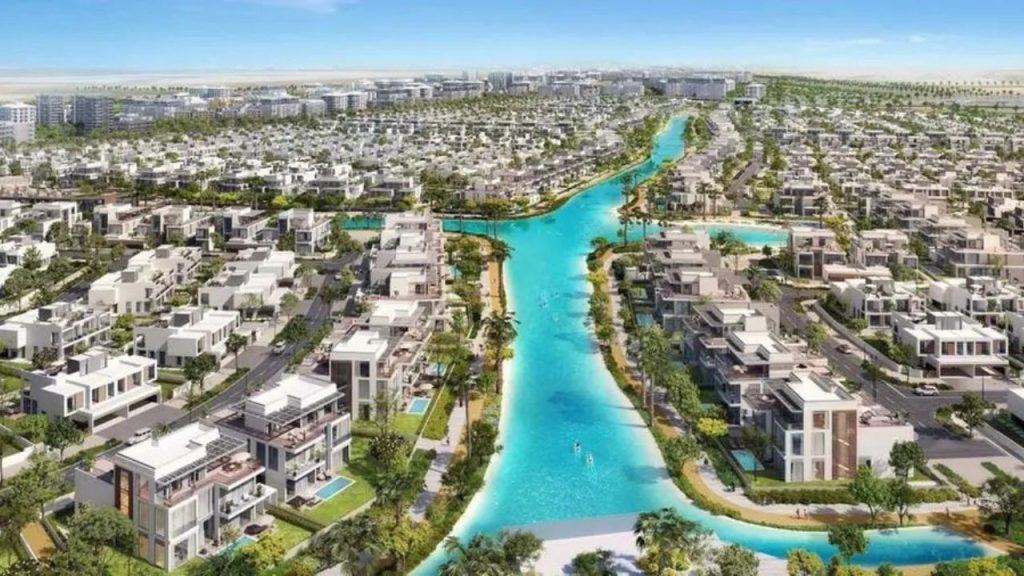
the 2040 master plan, new districts and what they mean for property.
Dubai
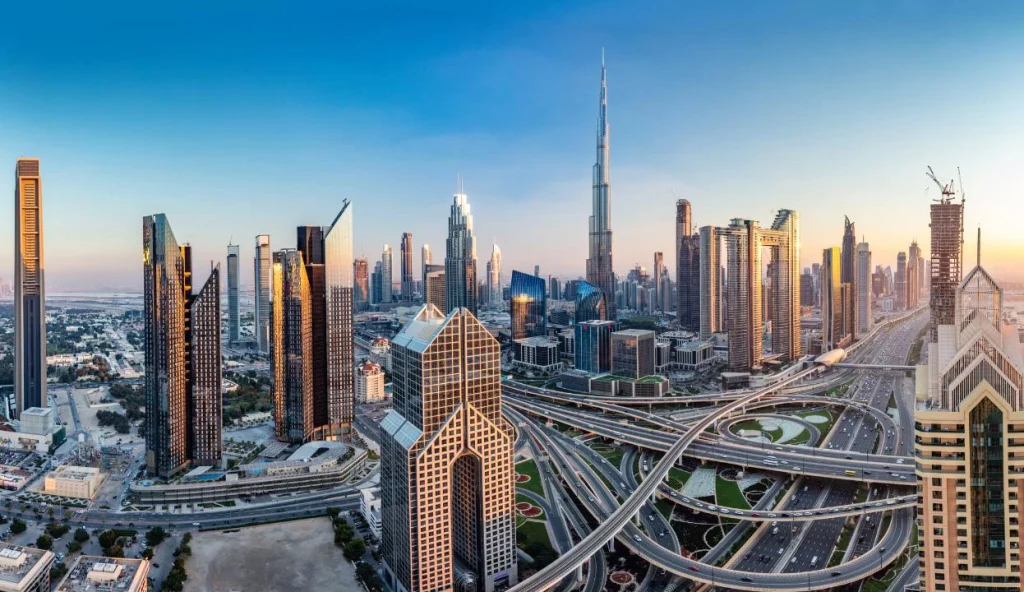
transactions, prices and rents in the latest data.
Dubai
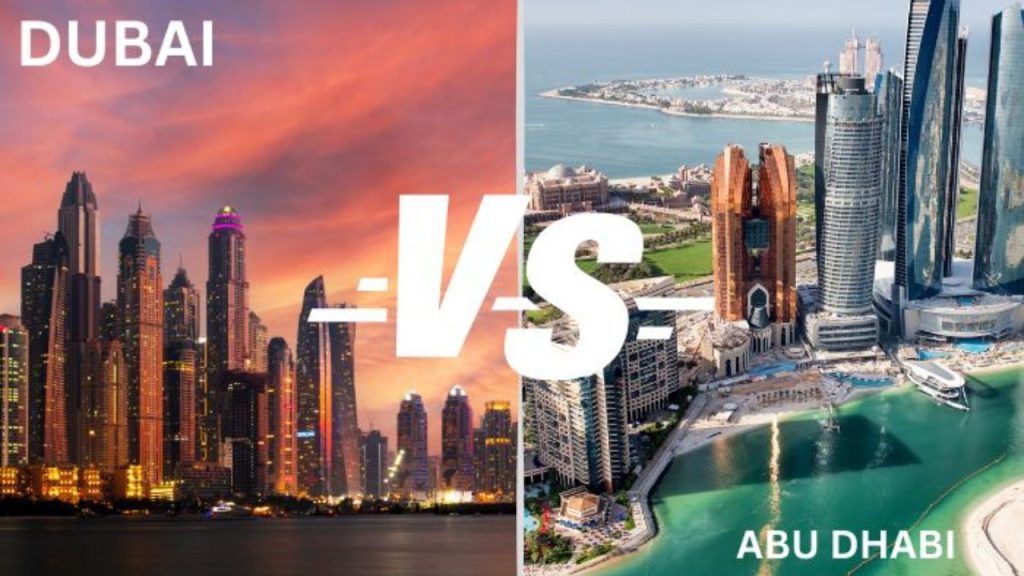
prices, yields and risks in the two emirates compared.