
Dubai vs Abu Dhabi in 2026: Where Should You Invest?
- Published 19 Mar 2025
- Updated 10 November 2026
- 11 min read
- Data verified on 10 Nov 2026
In short
Dubai vs Abu Dhabi in 2026 comes down to scale versus momentum. Dubai recorded more than AED 380 billion of sales from January to September 2026, still about three times Abu Dhabi, though down on 2025. Abu Dhabi transactions rose 76.1% to AED 171.26 billion, and its values climbed 16.8% in a year. Mid-market prices are similar, at about AED 1,650–1,700 per sq ft. Choose Dubai for liquidity and negotiating room, or Abu Dhabi for its 2% transfer fee and tighter supply.
DLD via W Capital, Jan–Sep 2026 · ADREC, Jan–Sep 2026 · ValuStrat, Q3 2026 · DXBinteract/DLD, Oct 2026 · Bayut, H1 2026
AED 171.26bnAbu Dhabi deals
Transaction value, Jan–Sep 2026, up 76.1% year on year
Source: ADREC, Jan–Sep 2026
AED 380bn+Dubai sales
Sales value, Jan–Sep 2026, against AED 495.8bn in 2025
Source: DLD data via W Capital, Jan–Sep 2026
AED 1,636per sq ft
Dubai median sale price, all property types, October 2026
Source: DXBinteract / DLD, Oct 2026
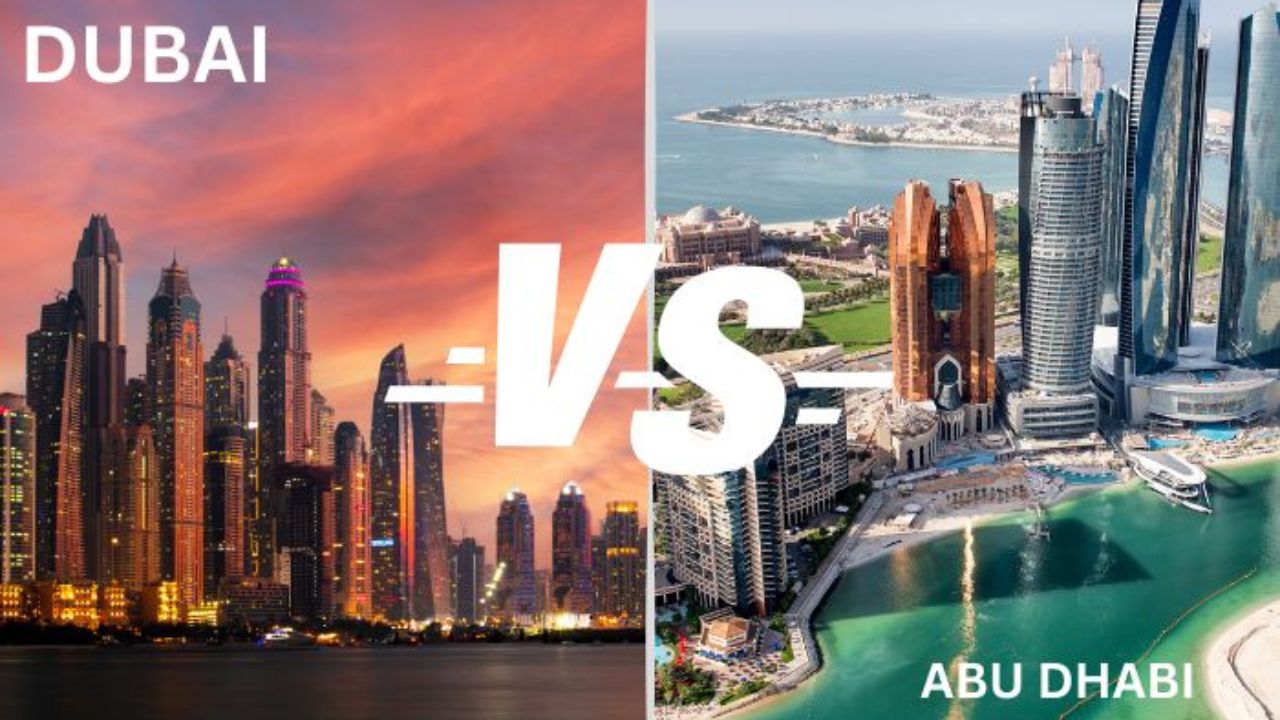
Dubai and Abu Dhabi: two different property cycles in 2026.Photo: © VALORISIMO
In this article · 9 sections
Dubai vs Abu Dhabi: which market is stronger in 2026?
In 2026 the two emirates moved in opposite directions. Dubai is still the bigger market by far, but it has slowed. Abu Dhabi is smaller and growing fast.
Regional disruption began in late February 2026 and a ceasefire followed on 8 April. Dubai felt it most. Dubai Land Department data compiled by W Capital shows sales of more than AED 380 billion from January to September 2026, against AED 495.8 billion a year earlier. That is still the second-highest nine-month total on record, behind only 2025. In Abu Dhabi, the Abu Dhabi Real Estate Centre (ADREC) recorded AED 171.26 billion of transactions over the same nine months, up 76.1%. Sales alone more than doubled to AED 119.33 billion.
Scale versus momentum
Dubai recorded more than 123,000 sales in nine months, roughly five times Abu Dhabi’s 23,749. That depth is why Dubai remains the easier market to enter and exit. You can find many comparable sales, buyers for resale stock and a broad rental pool. Abu Dhabi has the momentum. Non-resident investors put AED 17.22 billion into Abu Dhabi property in nine months, more than double the AED 8.2 billion recorded for all of 2025. They came from 121 nationalities.
| Indicator | Dubai | Abu Dhabi |
|---|---|---|
| Sales value, Jan–Sep 2026 | More than AED 380bn | AED 119.33bn |
| Change vs Jan–Sep 2025 | About −23% (AED 495.8bn in 2025) | +105% (AED 58.20bn in 2025) |
| Sales transactions, Jan–Sep 2026 | More than 123,000 | 23,749 |
| Mortgage value, Jan–Sep 2026 | AED 150.6bn (+14%) | AED 45.92bn (+30.2%) |
| Q3 2026 sales value | About AED 92.3bn (AED 169bn in Q3 2025) | Not published separately |
| Price trend | Median AED 1,636 per sq ft in Oct 2026, −2.4% YoY | Residential values +16.8% YoY in Q3 2026 |
Source: Dubai Land Department data compiled by W Capital, Jan–Sep 2026 (Dubai); Abu Dhabi Real Estate Centre (ADREC), Jan–Sep 2026 (Abu Dhabi); fäm Properties / DXBinteract analysis of DLD records, October 2026; ValuStrat via The National, Q3 2026. The Dubai percentage change is our calculation from the two published totals.
What the numbers mean for a buyer
Dubai’s slowdown is mostly about volume. Prices moved far less: the median sale price across all property types was AED 1,636 per sq ft in October 2026, only 2.4% below October 2025. Abu Dhabi’s rise is broad. ValuStrat measured residential values up 16.8% year on year in Q3 2026, with apartments up 24%. In short, Dubai currently offers more room to negotiate. Abu Dhabi offers more momentum, but at prices that have already moved.
How do property prices per sq ft compare in Dubai and Abu Dhabi?
Average prices are now close in the two cities. The gap between areas is much bigger than the gap between emirates.
In October 2026, DLD records analysed by DXBinteract put the median Dubai apartment at AED 1,667 per sq ft, or about AED 1.14 million per unit. Villas came in at AED 1,355 per sq ft and townhouses at AED 1,575. In September, the villa median was 15.5% higher than a year earlier, while apartments were 3.5% lower. In Dubai, villas have held up better than flats.
Abu Dhabi does not publish a monthly transaction median in the same way, so portal data is the closest benchmark. Bayut’s H1 2026 asking prices range from AED 1,065 per sq ft in Al Reef to AED 1,690 on Al Reem Island, AED 2,393 on Yas Island and AED 2,707 on Al Maryah Island. Mid-market Abu Dhabi is therefore close to the Dubai apartment median. Waterfront islands such as Yas and Maryah sit well above it.
Where prices rose fastest
ValuStrat’s Q3 2026 Abu Dhabi review shows the strongest annual apartment gains in Al Reef (+36.6%), Al Bandar (+24.7%), Al Muneera Island (+24.4%) and Al Reem Island (+22%). In Dubai, ValuStrat’s index fell 6% in March, then 2% in April and 1% in each of May and June. That leaves values about 10% below late February, but only 0.1% lower year on year by the end of Q2. For full area tables, see our apartment prices in Dubai and Abu Dhabi apartment prices pages.
Where are rental yields higher, Dubai or Abu Dhabi?
Gross yields are in the same band in both cities. The highest figures come from affordable areas, not from a particular emirate.
For Dubai, Windmills Group puts the average apartment yield at about 7.7% in Q3 2026, and villas at about 7.0%. Our own check using DLD medians gives a lower figure. A new apartment lease cost a median AED 95 per sq ft a year in October 2026, against a median sale price of AED 1,667, which implies a gross yield of about 5.7%. The difference comes from method and unit mix: smaller and older units yield more. Treat 6–8% as achievable only after you have checked the rent in your target building.
In Abu Dhabi, Bayut’s H1 2026 gross yields show the same pattern. Al Reef reaches 8.92% and Masdar City 7.63%. Al Reem Island returns 6.34%, and Yas Island and Al Maryah Island 5.94%. Waterfront prestige costs yield in both cities.
| Area | Emirate | Price per sq ft (AED) | Gross yield | Measure |
|---|---|---|---|---|
| Dubai, all apartments | Dubai | 1,667 (median) | About 5.7% (implied) | DLD sales and new leases, Oct 2026 |
| Dubai, apartment average | Dubai | n/a | About 7.7% | Windmills Group, Q3 2026 |
| Al Reem Island | Abu Dhabi | 1,690 | 6.34% | Bayut asking prices, H1 2026 |
| Masdar City | Abu Dhabi | 1,781 | 7.63% | Bayut asking prices, H1 2026 |
| Yas Island (apartments) | Abu Dhabi | 2,393 | 5.94% | Bayut asking prices, H1 2026 |
| Al Reef (apartments) | Abu Dhabi | 1,065 | 8.92% | Bayut asking prices, H1 2026 |
| Al Maryah Island | Abu Dhabi | 2,707 | 5.94% | Bayut asking prices, H1 2026 |
Sources: fäm Properties / DXBinteract analysis of DLD records, October 2026 (median AED 1,667 per sq ft sale price, median AED 95 per sq ft annual rent on new apartment leases; the 5.7% is our calculation, 95 ÷ 1,667); Windmills Group via Khaleej Times, 29 Oct 2026; Bayut Abu Dhabi Sales Market Report H1 2026 (advertised prices, gross yields). Asking prices and transaction medians are not like-for-like.
Rents: rising slowly in both cities
ValuStrat’s Dubai rental index was up 1.7% year on year in Q2 2026. In Abu Dhabi, average apartment rents rose 1.5% to AED 121,500 a year in Q3, and villa rents rose 1.8% to AED 258,000. Since June 2026, Abu Dhabi has also applied a temporary 0% cap on residential rent increases. That protects tenants but limits how fast a landlord’s income can grow. For area-level yields in Dubai, see our guide to the top rental yield areas in Dubai.
How much does it cost to buy property in Dubai vs Abu Dhabi?
Abu Dhabi is cheaper to enter. Its transfer fee is 2% of the price, against 4% in Dubai.
On an AED 2 million apartment, the transfer fee is AED 80,000 in Dubai and AED 40,000 in Abu Dhabi. Neither emirate charges a tax on buying the property. Agency commission, trustee or registration service fees and any mortgage costs come on top, and they vary by transaction. Ask for a full cost breakdown before you sign.
| Cost item | Dubai | Abu Dhabi |
|---|---|---|
| Transfer / registration fee | 4% of the price | 2% of the price |
| Fee on an AED 2m purchase | AED 80,000 | AED 40,000 |
| Tax on buying the property | None | None |
| Rent rule in 2026 | Rental index +1.7% YoY (Q2 2026) | 0% cap on residential rent increases since June 2026 |
Sources: The National, UAE purchase costs (4% Dubai transfer fee, 2% Abu Dhabi municipality transfer fee, no purchase tax); ValuStrat Dubai Q2 2026 review; The National and Bayut, Abu Dhabi rent cap, June 2026. The AED 2m line is our arithmetic. Agency, trustee and mortgage fees come on top and vary.
How you pay
Cash dominates in Abu Dhabi: ADREC reports that 87% of 2025 residential sales value was registered as cash, and 61% of ready-home purchases in H1 2026 were paid in cash. Mortgage use is growing in both cities, though. Dubai mortgage value rose 14% to AED 150.6 billion in the first nine months of 2026, and Abu Dhabi mortgage value rose 30.2% to AED 45.92 billion. Most new projects in both cities are sold on developer payment plans.
Which areas suit which investor in Dubai and Abu Dhabi?
Choose the area first and the emirate second. Each city has a liquid mid-market and a prime waterfront tier.
Dubai: depth and resale liquidity
In October 2026, the DLD districts with the highest sales value were Marsa Dubai (Dubai Marina), Business Bay, Al Rowaiyah First and Palm Jumeirah. By number of deals, Al Barsha South Fourth led. That is the DLD district that contains Jumeirah Village Circle, which remains Dubai’s busiest entry-level market. See our Jumeirah Village Circle area guide for prices and rents by unit type. Business Bay and Dubai Marina suit investors who want resale depth and short-let demand. Palm Jumeirah is a prime capital-preservation play rather than a yield play.
Abu Dhabi: island-led growth
From January to September 2026, Al Reem Island led Abu Dhabi with AED 29.86 billion of transactions. It was followed by Al Hudayriyat Island (AED 28.62 billion), Al Saadiyat Island (AED 18.69 billion), Yas Island (AED 13.4 billion) and Zayed City (AED 5.36 billion). Al Reem is the main rental market for working professionals. Our Al Reem Island area guide covers it building by building. Hudayriyat and Saadiyat are mostly off-plan, so returns there depend on delivery. Yas suits families and holiday-home investors.
| Indicator | Dubai | Abu Dhabi |
|---|---|---|
| Population | 4,807,185 (Sep 2026) | 4,135,985 (end-2024) |
| Population growth | +226,885 since January 2026 | +7.5% in 2024 |
| Top area by sales value | Marsa Dubai (Dubai Marina), Oct 2026 | Al Reem Island, AED 29.86bn, Jan–Sep 2026 |
| Off-plan weight | Off-plan 76% of Q2 2026 activity | Off-plan 89% of H1 2026 residential sales value |
| New supply | About 20,000 units completed in H1 2026 | 13,534 homes expected in 2026; 40,510 by 2030 |
Sources: Dubai Data and Statistics Establishment via Gulf News, Sep 2026; Statistics Centre Abu Dhabi via The National, Jul 2025; fäm Properties / DXBinteract, Oct 2026; ADREC, Jan–Sep 2026 and H1 2026; ValuStrat Dubai Q2 2026 and Abu Dhabi Q3 2026.
- Yield first. Mid-market apartments in JVC (Dubai) or Al Reef and Masdar City (Abu Dhabi), checked against real lease data.
- Liquidity first. Dubai Marina, Business Bay or Downtown Dubai, where resale volumes are deepest.
- Growth first. Al Reem, Saadiyat or Yas in Abu Dhabi, where ValuStrat recorded double-digit annual gains in 2026.
- Long horizon, off-plan. Hudayriyat or Saadiyat, with a developer you have checked on delivery history and escrow.
How do Dubai and Abu Dhabi compare on economy, population and lifestyle?
Both cities are growing in population. Dubai is a larger, faster and more international city. Abu Dhabi is quieter, greener and more family-oriented.
The Dubai Data and Statistics Establishment counted 4,807,185 residents in September 2026, up 226,885 since January. Statistics Centre Abu Dhabi recorded 4,135,985 residents at the end of 2024, after 7.5% growth that year. Strong population growth in both cities supports rental demand.
Dubai’s economy took the regional shock harder. Real GDP was about AED 473 billion in H1 2026, 2.3% lower than a year earlier, and wholesale and retail trade fell. Finance and insurance grew 8.8%, and nominal real estate activity rose 5.4%. National data shows the UAE economy grew 0.4% in H1 2026. We found no published H1 2026 GDP figure for Abu Dhabi.
Tenant profile and daily life
Dubai’s tenant base is broad: young professionals, entrepreneurs, tourists on short lets and a fast-growing family segment in villa communities. Abu Dhabi tenants are more often government, energy and finance employees, and families on longer leases. Abu Dhabi’s cultural offer is also growing. The Zayed National Museum opened in Saadiyat Cultural District in December 2025, and Guggenheim Abu Dhabi is due to open there on 11 December 2026, next to Louvre Abu Dhabi. Both cities offer a wide choice of international-curriculum schools. Check catchment and fees for the specific community, because school access shapes family demand.
Getting between the two
The Etihad Rail passenger service is planned to link Abu Dhabi (Mohamed bin Zayed City station) with Dubai (Jumeirah Golf Estates station) in about an hour. It would make it realistic to live in one city and work in the other, which matters for areas close to the line.
What are the main risks of investing in Dubai or Abu Dhabi?
Dubai’s main risk is supply and sentiment. Abu Dhabi’s main risk is concentration in off-plan projects.
Dubai
ValuStrat counted about 20,000 completions in H1 2026, around 15% of a preliminary full-year target of 129,066 units. Even if much of that target slips, the pipeline is large. In October 2026 alone, DXBinteract recorded 6,969 units launched. Sales in October were 41.3% lower than a year earlier in value. Apartments in areas with heavy handovers are the most exposed to softer rents.
Abu Dhabi
Off-plan sales made up 89% of residential sales value in H1 2026, and Hudayriyat Island alone accounted for 27%. ADREC expects residential stock to grow by only 2.9% a year to 2030, which supports prices. Delivery timing, however, is in the developers’ hands. The 0% rent cap introduced in June 2026 also limits rental growth for as long as it applies. On transparency, Abu Dhabi rose to 33rd in JLL’s 2026 Global Real Estate Transparency Index and is now in the “Transparent” tier.
Dubai or Abu Dhabi: how should you choose in 2026?
Start with your goal. Dubai suits liquidity and a buying window after the correction. Abu Dhabi suits lower entry costs and a growth story still in progress.
Choose Dubai if you want a deep resale market, short-let flexibility and the chance to negotiate while transaction volumes are down. Choose Abu Dhabi if you want half the transfer fee, a tighter supply outlook and exposure to a market where values rose 16.8% in a year. Many investors hold both. A good split is one liquid mid-market unit in Dubai and one growth asset on an Abu Dhabi island, which spreads the risk across two different cycles. To test two specific units against each other, use the Valorisimo comparison tool.
Watch out
The figures here mix transaction medians (DLD) and portal asking prices (Bayut). They are not directly comparable. Before you buy, check recent registered sales and actual lease contracts in the specific building, and check the developer's escrow and delivery record for any off-plan unit.
Frequently asked questions
Is it better to invest in Dubai or Abu Dhabi in 2026?
It depends on your goal. Dubai offers the deepest resale market and more room to negotiate after a 2026 slowdown in sales. Abu Dhabi offers momentum: values up 16.8% in a year (ValuStrat, Q3 2026), a 2% transfer fee and limited new supply. Many investors split between the two.
Is property cheaper in Abu Dhabi than in Dubai?
Not on average. Dubai’s median apartment sold for AED 1,667 per sq ft in October 2026 (DLD). Bayut’s H1 2026 asking prices in Abu Dhabi range from about AED 1,065 in Al Reef to AED 2,707 on Al Maryah Island. Entry costs are lower in Abu Dhabi because the transfer fee is 2%, against 4% in Dubai.
Which city has higher rental yields?
Both offer gross yields of around 6–8% in the right areas. In Dubai, Windmills Group estimates an apartment average of about 7.7% in Q3 2026. In Abu Dhabi, Bayut’s H1 2026 data shows 8.92% in Al Reef, 7.63% in Masdar City and 6.34% on Al Reem Island. Always check real leases in your target building.
Did Dubai property prices fall in 2026?
Yes, modestly. ValuStrat’s index fell about 10% between late February and June 2026 during the regional disruption, then the declines eased. By October 2026, the DLD median price was AED 1,636 per sq ft, only 2.4% below a year earlier. Sales volumes fell much more than prices.
Can foreigners buy property in both Dubai and Abu Dhabi?
Yes, in designated freehold or investment areas. Abu Dhabi has 50 investment zones, where foreign buyers accounted for 81% of investment value in the first nine months of 2026 (ADREC). In Dubai, foreigners buy in freehold areas such as Dubai Marina, Business Bay and Jumeirah Village Circle.
Figures are indicative as of the date shown: check them with official sources before any decision.
- For information only; this is not tax, legal or financial advice.
Dubai or Abu Dhabi: which fits your plan?
Read next
Abu Dhabi
who is buying in abu dhabi, where the money goes and how fast prices are rising.
Abu Dhabi
developers ranked by sales, backlog and delivery record.
Dubai
dubai sales, prices and supply in 2026, month by month.