

Dubai Urban Development Plans 2026: The 2040 Master Plan and What It Means for Property
- Published 17 Mar 2025
- Updated 10 November 2026
- 11 min read
- Data verified on 10 Nov 2026
In short
Dubai’s urban development plans in 2026 rest on the Dubai 2040 Urban Master Plan, which targets 5.8 million residents by 2040, twice today’s green space and five urban centres. The emirate already counts 4.81 million residents (September 2026), so it is well ahead of the curve. Funding comes from a record AED 302.7 billion 2026–2028 budget, 48% of 2026 spending going to infrastructure, plus the Blue and Gold metro lines. For buyers, the plan points demand towards the five centres and new transit corridors.
Dubai 2040 Urban Master Plan (Gulf News, March 2021) · Dubai Data and Statistics Establishment, September 2026 · Dubai Media Office / WAM, budget 2026–2028
4.81mresidents
Dubai population in September 2026, up 226,885 since January
Source: Dubai Data and Statistics Establishment, Sept 2026
AED 302.7bn3-year budget
Dubai government spending approved for 2026–2028, the largest in its history
Source: Dubai Media Office / WAM, Nov 2025
162 kmmetro network
Planned network once the Gold Line opens in 2032, up from 120 km
Source: Dubai Media Office, Apr 2026
Downtown and Business Bay form one of the five urban centres in the Dubai 2040 Urban Master Plan.Photo: © VALORISIMO
In this article · 9 sections
What are Dubai's urban development plans in 2026?
Dubai does not have one development plan but a stack of them. The Dubai 2040 Urban Master Plan sets where people live, work and play; the D33 economic agenda and the Real Estate Sector Strategy 2033 set the economic targets; the 2026–2028 budget and the RTA’s rail programme pay for the backbone.
Read together, they tell a buyer where the government expects people, jobs and transport to go over the next 15 years. That is more useful than any single launch brochure, because public infrastructure is the one thing private developers cannot fake.
Each plan has a different job. The 2040 Master Plan is a land-use plan: it fixes how much land goes to housing, hotels, commerce, parks and nature. D33 is an economic plan that aims to double the size of Dubai’s economy by 2033. The Real Estate Sector Strategy 2033 targets AED 1 trillion of annual property transactions and a 33% home-ownership rate. The Dubai Walk Master Plan and the RTA’s metro programme translate the 2040 plan into walkways, stations and lines on the ground.
| Plan | Owner | Horizon | Headline target |
|---|---|---|---|
| Dubai 2040 Urban Master Plan | Government of Dubai | 2040 | 5.8 million residents; green space doubled; five urban centres |
| D33 economic agenda | Government of Dubai | 2033 | Double the size of Dubai’s economy |
| Real Estate Sector Strategy 2033 | Dubai Land Department | 2033 | AED 1 trillion of transactions; 33% home ownership |
| Dubai Walk Master Plan | Dubai Municipality / RTA | 2040 | 6,500 km walkway network across 160 areas |
| Budget cycle 2026–2028 | Dubai Department of Finance | 2028 | AED 302.7 billion of spending |
Source: Gulf News on the 2040 plan launch (March 2021); Khaleej Times on the Real Estate Strategy 2033 (January 2026); Dubai Media Office on Dubai Walk (December 2024) and the 2026–2028 budget (November 2025).
What does the Dubai 2040 Urban Master Plan aim to achieve?
Launched in March 2021, the 2040 plan is the seventh development plan for the emirate since 1960. It plans for a city of 5.8 million residents and 7.8 million people during the day, against 3.3 million and 4.5 million in 2020.
The headline numbers are about land, not towers. The plan gives more room to hotels and tourism, beaches, parks and nature reserves, and caps sprawl by concentrating growth in five urban centres served by mass transit.
| Target | 2040 goal | Why it matters for property |
|---|---|---|
| Residents | 5.8 million (3.3 million in 2020) | Sets long-run housing demand |
| Daytime population | 7.8 million (4.5 million in 2020) | Drives office, retail and transport demand |
| Green and leisure areas | Doubled | Parks lift values in nearby communities |
| Nature reserves and rural areas | 60% of the emirate | Limits buildable land outside the centres |
| Public beaches | Length up by up to 400% | Supports waterfront and holiday-home demand |
| Hotel and tourism land | Up 134% | More hotel and branded-residence projects |
| Commercial activity land | 168 sq km | Room for new business districts |
| Education and health land | Up 25% | Schools and clinics close to new communities |
Source: Dubai 2040 Urban Master Plan as reported by Gulf News (March 2021) and the UAE Government portal u.ae.
The five urban centres
Three centres already exist: Deira and Bur Dubai, Downtown and Business Bay, and Dubai Marina and JBR. Two are new: the Expo 2020 centre (now Expo City) and the Dubai Silicon Oasis centre. The plan also folds in the Hatta Development Plan for the mountain enclave. Section four looks at what these centres cost today.
How far has Dubai got towards its 2040 targets?
On population, Dubai is running far ahead of the plan. The Dubai Data and Statistics Establishment counted 4,807,185 residents in September 2026, up 226,885 since the start of the year, so the city has covered more than half of the 2.5 million extra residents the plan expected over 20 years in about six.
Property activity is also close to its 2033 goal. Sheikh Mohammed announced AED 917 billion of real estate transactions for 2025, against the strategy’s AED 1 trillion target, with 193,100 investors, 56.6% of them residents.
| Indicator | Latest figure | Target | Period |
|---|---|---|---|
| Residents | 4,807,185 | 5.8 million by 2040 | September 2026 |
| Real estate transactions | AED 917 billion | AED 1 trillion by 2033 | Full year 2025 |
| Real estate transactions | AED 624.8 billion | n/a | January–October 2026 |
| Metro network | 120 km, 67 stations (incl. Blue Line) | 162 km, 85 stations by 2032 | April 2026 |
| Metro ridership | 295 million passengers | n/a | 2025 |
| Walkways | 17 km first phase under way | 5,600 km new or upgraded by 2040 | Pilot phase 2025–2027 |
Source: Dubai Data and Statistics Establishment via Gulf News and Emirates 24|7 (September 2026); Khaleej Times (January 2026); Dubai Land Department via Emirates 24|7 (October 2026); Dubai Media Office (April 2026 and December 2024).
Why faster growth cuts both ways
Faster population growth supports rents and absorbs new supply. It also puts pressure on roads, schools and utilities before the infrastructure catches up, which is why the 2026 budget leans so heavily on transport and networks. Buyers should check that a community’s schools, roads and transit links are funded, not just drawn on a map.
Which of the five urban centres offer the best value for buyers?
The five centres sit at very different price points. Downtown and Business Bay are the most expensive, while the two new centres, Expo City and Dubai Silicon Oasis, still trade well below the city core.
| Urban centre | Area | Median apartment price | Price per sq ft | Gross yield |
|---|---|---|---|---|
| Downtown and Business Bay | Downtown Dubai | AED 3,000,000 | AED 2,960 | 6% |
| Downtown and Business Bay | Business Bay | AED 2,000,000 | AED 2,430 | 7% |
| Dubai Marina and JBR | Dubai Marina | AED 1,885,000 | AED 1,990 | 7% |
| Dubai Marina and JBR | JBR | AED 2,650,000 | AED 1,680 | 9% |
| Expo 2020 centre | Expo City | AED 2,563,000 | AED 1,940 | n/a |
| Dubai Silicon Oasis centre | Dubai Silicon Oasis | AED 900,000 | AED 1,200 | 8% |
Source: DXBinteract location statistics based on Dubai Land Department records, apartments, retrieved 10 November 2026. Reporting windows may differ by metric. Deira and Bur Dubai not shown: no comparable apartment data returned.
Established centres: liquidity first
Downtown, Business Bay and Dubai Marina are the deepest resale markets. Business Bay was the top area by transaction value in January–October 2026, with more than AED 21.96 billion, according to Dubai Land Department data reported by Emirates 24|7. See our Business Bay area guide and Downtown Dubai area guide for building-level detail.
New centres: entry price first
Dubai Silicon Oasis is the cheapest centre at around AED 1,200 per sq ft, and it gains a Blue Line connection in 2029. Expo City is smaller and pricier, with only 378 apartment sales in the DXBinteract window, so prices there can move on a handful of deals. Our Dubai apartment prices by area page compares them with the rest of the city.
How is the Dubai government funding its development plans?
The 2026–2028 budget cycle, approved in November 2025 under Law No. 15 of 2025, plans AED 302.7 billion of spending against AED 329.2 billion of revenue. For 2026 alone, it sets AED 99.5 billion of spending and AED 107.7 billion of revenue, including a AED 5 billion general reserve.
Infrastructure takes 48% of 2026 spending, covering roads, bridges, public transport and utility networks. Beyond the budget, The National reported in October 2026 that Dubai is advancing AED 2.1 trillion of projects across housing, aviation and transport, including the Al Maktoum International Airport expansion.
| Item | Amount | Period |
|---|---|---|
| Total spending | AED 302.7 billion | 2026–2028 |
| Total revenue | AED 329.2 billion | 2026–2028 |
| Spending | AED 99.5 billion | 2026 |
| Revenue (incl. AED 5bn reserve) | AED 107.7 billion | 2026 |
| Infrastructure share of spending | 48% | 2026 |
| Blue Line metro budget | AED 20.5 billion | Opening 9 Sept 2029 |
| Gold Line metro budget | About AED 34 billion | Opening 9 Sept 2032 |
Source: Dubai Media Office on the 2026–2028 budget (November 2025); The National on the Blue Line (July 2026); Dubai Media Office on the Gold Line (April 2026).
The economy behind the budget
Dubai’s real GDP fell 2.3% to AED 473 billion in the first half of 2026, as the regional conflict that began at the end of February hit trade, transport and tourism. Construction still grew 2.4% and finance 8.8%, according to Dubai Data and Statistics Establishment figures reported by The National. The budget was set before the shock, but the big transport contracts have kept moving: Blue Line tunnelling started in May 2026 and the Gold Line was approved in April.
How will the 20-minute city and new metro lines change Dubai?
The 2040 plan’s “20-minute city” goal is that 80% of residents can reach daily services within a 20-minute trip on foot, by bike or by public transport. Two programmes carry it: the Dubai Walk Master Plan and the metro expansion.
Dubai Walk
Approved in December 2024, Dubai Walk plans a 6,500 km walkway network across 160 areas: 3,300 km of new walkways and 2,300 km of upgraded ones by 2040, more than 900 km after 2040, and 110 pedestrian bridges and underpasses. The target is to raise walking and soft mobility from 13% to 25% of trips by 2040. The first phase covers 17 km, including the 15 km Al Ras historical route and the 2 km elevated Future Loop around the Museum of the Future.
Blue and Gold metro lines
The 30 km Blue Line (14 stations) will link Mirdif, Dubai Silicon Oasis, Dubai Creek Harbour and International City from September 2029. The 42 km Gold Line, Dubai’s first fully underground line with 18 stations, will run from Al Ghubaiba through City Walk, Business Bay, Meydan, Al Barsha South and JVC to Jumeirah Golf Estates by September 2032. The RTA says it will serve about 1.5 million residents and 55 development projects. Our guide to how Dubai transport projects affect property prices looks at station areas in detail.
- Pedestrian bridges first. Early Dubai Walk links connect Al Nahda–Al Mamzar, Al Warqa–Mirdif, Mushrif–Al Khawaneej and Dubai Silicon Oasis–Dubailand.
- Station catchments. The RTA says values near metro stations could rise by up to 20%; treat that as an official estimate, not a guarantee.
- Long lead times. Walkway and rail benefits arrive in stages to 2032 and 2040, so price them over a full holding period.
Has the 2026 slowdown changed Dubai's development plans?
The plans have not changed, but the market around them has. ValuStrat’s Dubai residential index fell 4% over Q2 2026 to 220 points, and capital values were down about 10% from late February to June.
Activity has held up better than prices. Dubai Land Department data shows AED 412 billion of property sales in January–October 2026, of which AED 196.4 billion was off-plan, and AED 34.1 billion of sales in October alone. ValuStrat expected about 129,066 homes to complete in 2026, but only around 20,000 had been handed over in the first half, so delivery is slipping.
| Indicator | Figure | Period |
|---|---|---|
| ValuStrat residential price index | 220.0 points, −4% QoQ | Q2 2026 |
| Fall in capital values since late February | About 10% | To June 2026 |
| Property sales (DLD) | AED 412 billion | January–October 2026 |
| Off-plan sales (DLD) | AED 196.4 billion | January–October 2026 |
| Home completions | About 20,000 of 129,066 expected | H1 2026 |
Source: ValuStrat Dubai Real Estate Review Q2 2026 (via Zawya); Dubai Land Department data reported by Emirates 24|7 (31 October 2026).
For a fuller picture of prices and volumes, see our Dubai real estate market report.
What should investors take from Dubai's urban plans?
Use the plans as a map of where public money is going, then check prices and delivery dates one project at a time.
The strongest long-term case sits where several plans overlap: a designated urban centre, a funded metro station and a walkable community. Dubai Silicon Oasis (centre plus Blue Line) and the Business Bay–Meydan–JVC corridor (Gold Line) are the clearest examples. For the wider list of projects behind the plans, read our guide to Dubai infrastructure and property.
Watch out
Master plans set direction, not prices. 2026 showed that a regional shock can cut values by around 10% in a few months even while the plan stays intact, and completions are running well behind forecast. Check the developer's track record and escrow status, and do not pay a premium today for a station or park that is still years away.
Frequently asked questions
What is the Dubai 2040 Urban Master Plan?
It is the emirate’s long-term land-use plan, launched in March 2021. It plans for 5.8 million residents by 2040, doubles green and leisure areas, keeps 60% of the emirate as nature reserves and rural areas, and concentrates growth in five urban centres served by mass transit.
What are the five urban centres in the Dubai 2040 plan?
Three existing centres, Deira and Bur Dubai, Downtown and Business Bay, and Dubai Marina and JBR, plus two new ones: the Expo 2020 centre (Expo City) and Dubai Silicon Oasis. The plan directs jobs, services and transport investment towards them.
How much is Dubai spending on infrastructure?
The 2026–2028 budget plans AED 302.7 billion of spending, the largest in Dubai’s history. In 2026, spending is AED 99.5 billion and 48% goes to infrastructure such as roads, bridges, public transport and utility networks. Social development takes 28%, security and justice 18%, and government development initiatives 6%.
Is Dubai's population growing faster than planned?
Yes. The plan expected growth from 3.3 million in 2020 to 5.8 million in 2040. The Dubai Data and Statistics Establishment counted 4,807,185 residents in September 2026, so more than half of the planned increase has happened in about six years.
Which areas benefit most from Dubai's urban plans?
Areas where several plans overlap: an urban centre, a new metro station and walkable streets. Dubai Silicon Oasis (new centre and Blue Line) and the Business Bay, Meydan and JVC corridor (Gold Line) stand out, but check delivery dates and current prices first.
Figures are indicative as of the date shown: check them with official sources before any decision.
- For information only; this is not tax, legal or financial advice.
Want to know which urban centre fits your budget?
Read next
Dubai
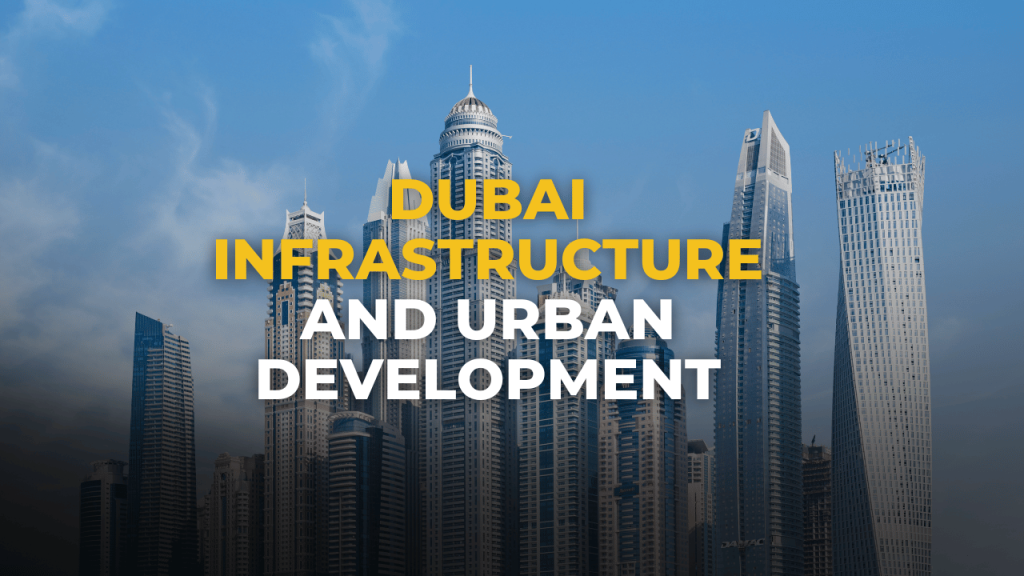
the airport, rail, roads and utility projects behind dubai’s growth.
Dubai
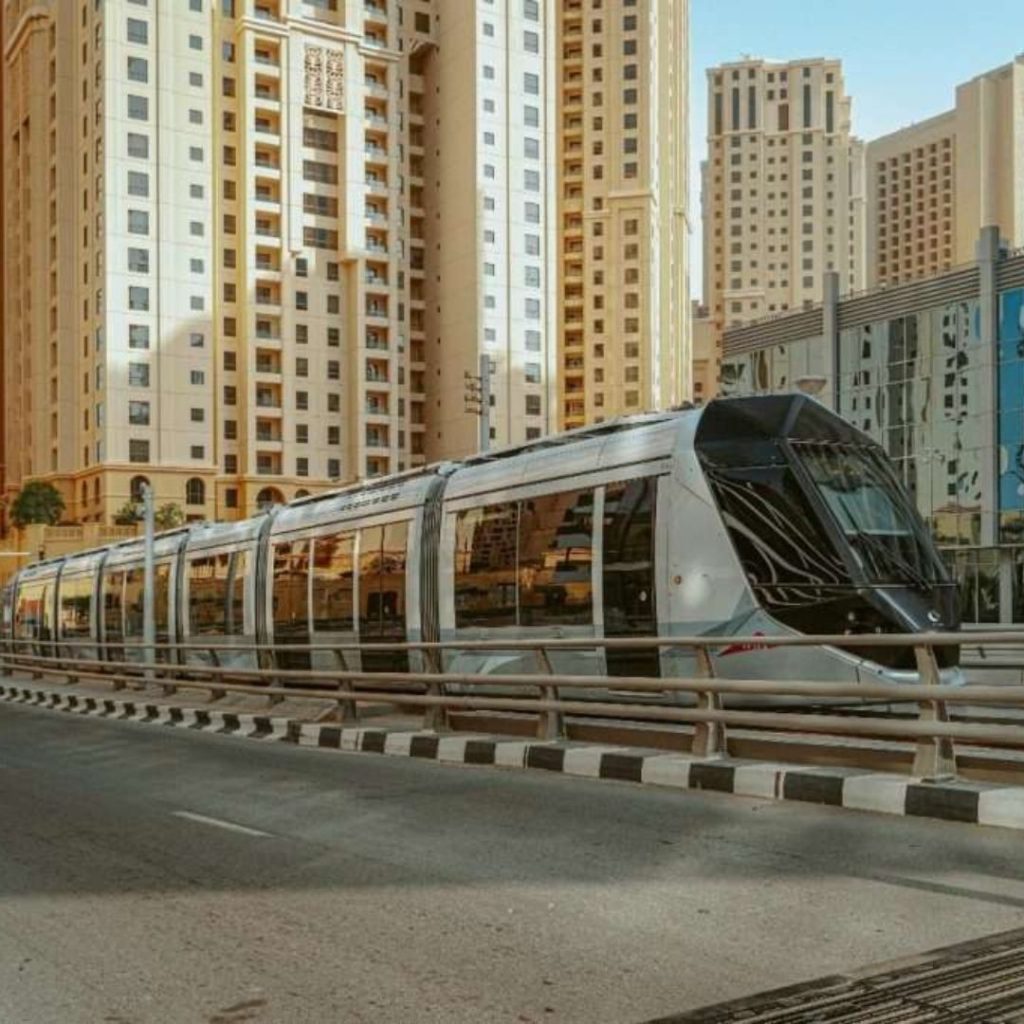
blue line, gold line and etihad rail station areas compared.
Dubai
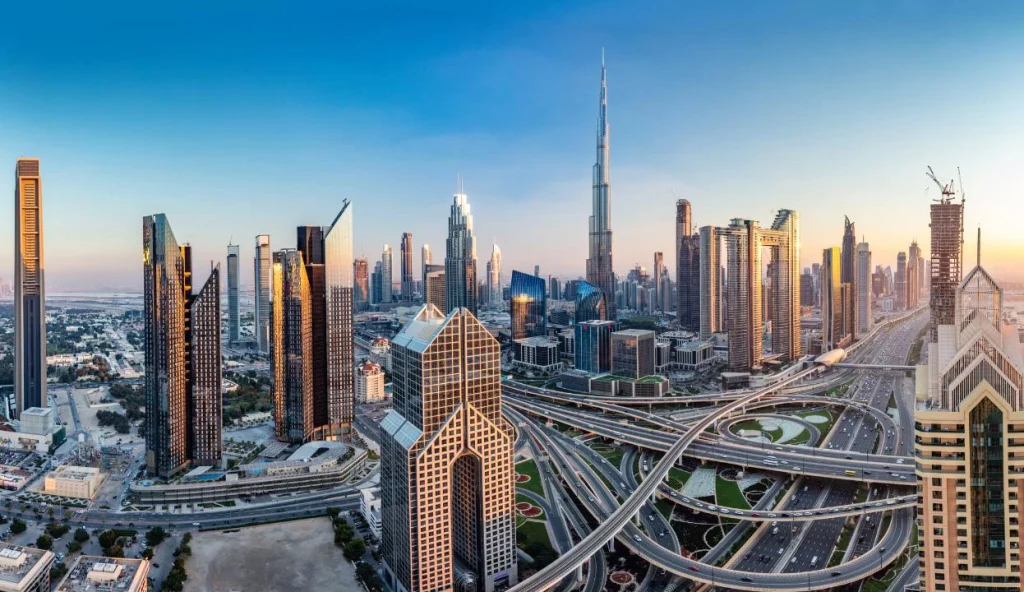
prices, sales volumes and supply across the dubai market.