

Rental Yields and ROI in Downtown Dubai in 2026: Rents, Prices and Net Returns
- Published 23 Jun 2025
- Updated 10 November 2026
- 11 min read
- Data verified on 10 Nov 2026
In short
Downtown Dubai apartments earn a gross rental yield of about 6% in 2026 on units both sold and rented, and closer to 4% to 5% if you divide median rent by median price. The median annual rent is AED 147,000 so far in 2026, about 4.5% below 2025, and the median resale price is AED 2,671 per sq ft, 4.1% lower. Studios and one-bedrooms yield most; after service charges and purchase costs, plan on a net return one to two points below gross.
DXBinteract (DLD-registered transactions), 2026 to date and last 12 months · Cavendish Maxwell via Khaleej Times, Q3 2026 · ValuStrat VPI, September 2026
6%gross yield
Downtown apartments, units both sold and rented
Source: DXBinteract (DLD data), last 12 months to Nov 2026
AED 147,000median annual rent
All Downtown contracts, down from AED 154,000 in 2025
Source: DXBinteract (DLD data), 2026 to date
AED 2,671per sq ft
Median resale price, 4.1% below 2025
Source: DXBinteract (DLD data), 2026 to date
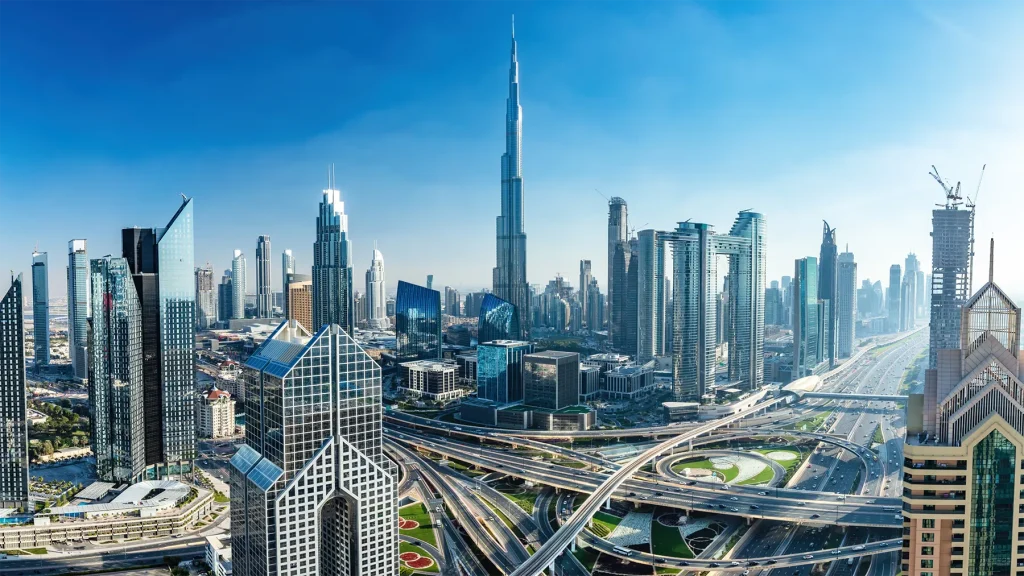
Downtown Dubai, where studios and one-bedrooms near the metro still deliver the strongest yields.Photo: © VALORISIMO
In this article · 9 sections
What rental yield can you expect in Downtown Dubai in 2026?
Downtown Dubai still pays a gross rental yield of about 6% in 2026, but that headline hides a wide spread by unit type and by method.
The most useful starting point is the yield measured on units that were both sold and rented in the same period. On that basis, DXBinteract puts Downtown apartments at 6% gross over the last 12 months, with studios and one-bedrooms a notch above larger units. A second, harsher test is to divide the median rent by the median sale price for each bedroom count. That ratio comes out lower, between 4% and 5%, because the median price is pulled up by premium towers and fountain-view stock that rents for less per dirham invested.
Neither figure is “the” yield. The matched-unit number tells you what a typical rented unit earns on its own price; the median ratio tells you what you get if you buy an average-priced unit and let it at an average rent. Investors should underwrite their own deal on the second, more conservative basis and treat anything above it as upside.
| Unit type | Median annual rent 2026 | Median sale price 2026 | Gross yield (matched units) | Median rent ÷ median price |
|---|---|---|---|---|
| Studio | AED 70,000 | AED 1,365,000 | 7% | 5.1% |
| 1 bedroom | AED 110,000 | AED 2,175,000 | 6% | 5.1% |
| 2 bedrooms | AED 175,000 | AED 3,800,000 | 6% | 4.6% |
| 3 bedrooms | AED 285,000 | AED 7,055,000 | 5% | 4.0% |
| All units | AED 147,000 | AED 3,080,000 | 7% | 4.8% |
Source: DXBinteract, DLD-registered transactions, 2026 year to date (accessed 10 November 2026). Last column: Valorisimo calculation from the two medians.
Why smaller units yield more
Rents do not rise in line with size. A Downtown three-bedroom sells for more than five times the price of a studio but rents for about four times as much. Studios and one-bedrooms also let faster to single professionals and couples, which keeps void periods short. Larger units suit end users and families who prize space and views, so they are better bought for living in or for long-term capital value than for income.
Are Downtown Dubai rents rising or falling in 2026?
Downtown rents peaked in 2025 and have eased through 2026 as new supply reached the market.
The median annual rent across all Downtown contracts rose from AED 94,000 in 2020 to AED 154,000 in 2025, a 64% climb in five years. In 2026 to date the median stands at AED 147,000, about 4.5% lower. The quarterly series shows where the softening happened: rents slipped from the first quarter into the summer, then steadied in the autumn.
| Period | All units | Studio | 1 bedroom | 2 bedrooms |
|---|---|---|---|---|
| Q1 2026 | AED 158,000 | AED 80,000 | AED 120,000 | AED 190,000 |
| Q2 2026 | AED 149,000 | AED 70,000 | AED 110,000 | AED 173,000 |
| Q3 2026 | AED 140,000 | AED 70,000 | AED 108,000 | AED 165,000 |
| Q4 2026 (to date) | AED 145,000 | AED 69,000 | AED 110,000 | AED 176,000 |
Source: DXBinteract, DLD-registered transactions, median annual rent of registered contracts by quarter, 2026 (Q4 covers October to early November).
What is driving the softer rents
The slowdown is city-wide, not a Downtown problem. Cavendish Maxwell, reported by Khaleej Times on 2 November 2026, found that 21.4% of Dubai rental transactions in Q3 2026 recorded a rent reduction, up from 4.8% in Q1, while about 38,000 homes were delivered across Dubai between January and September 2026, 41.4% more than a year earlier. ValuStrat links the spring weakness to the regional disruption from late February; its Q2 2026 review notes that the 8 April ceasefire helped price declines ease.
Demand has not disappeared. DXBinteract counts 10,243 Downtown rental contracts registered so far in 2026, including 1,328 in October alone. What has changed is bargaining power: tenants now have more choice, so landlords who price above the market wait longer for a signature.
The rules that cap rent rises
On renewal, Dubai increases are tied to the DLD Smart Rental Index rather than to asking rents, and the DLD has confirmed that landlords must give 90 days’ notice before contract expiry even where the index allows an increase (Khaleej Times). In a falling market this cuts both ways: you cannot push existing tenants up quickly, but sitting tenants also have little reason to leave.
What are Downtown Dubai property prices doing in 2026?
Downtown values are a little below their 2025 level, after one of the strongest runs in the area’s history.
On resale transactions, the median Downtown price per square foot almost doubled between 2019 and 2025, from AED 1,403 to AED 2,784. In 2026 to date it sits at AED 2,671 per sq ft, 4.1% lower. Activity has fallen further than prices: DXBinteract records 1,878 Downtown sales so far in 2026, 44% fewer than at the same point last year.
| Year | Median resale price per sq ft | Resale transactions |
|---|---|---|
| 2014 | AED 2,387 | 2,223 |
| 2019 | AED 1,403 | 693 |
| 2022 | AED 2,119 | 2,412 |
| 2023 | AED 2,457 | 3,608 |
| 2024 | AED 2,577 | 3,123 |
| 2025 | AED 2,784 | 2,950 |
| 2026 (to date) | AED 2,671 | 1,615 |
Source: DXBinteract, DLD-registered transactions, resale (secondary) sales only, calendar years; 2026 to early November.
Prime towers took the hardest hit
Index providers see a sharper correction at the very top of Downtown. ValuStrat’s September 2026 price index shows Burj Khalifa apartment values 21.7% lower than a year earlier, against a 4.5% fall for Dubai residential values overall. ValuStrat describes 2026 as a measured correction in which premium central locations fell most and affordable communities held up better.
The long view matters here. A buyer who paid the 2014 median resale price is only around 12% ahead in 2026 on our reading of the table above, while a 2019 buyer has nearly doubled their money. Downtown has rewarded entry timing far more than holding period, which is why yield should carry most of the investment case today.
For a wider view of how Downtown compares with other districts, see our guide to apartment prices in Dubai and the Dubai real estate index.
Who rents in Downtown Dubai, and is short-term or long-term letting better?
Downtown attracts tenants who pay for an address: executives, senior professionals, couples and international visitors.
Long leases usually run for one to two years and are often taken furnished by relocating staff. Short stays of a few nights to a few weeks are driven by tourism, events and business travel. The district’s draw is easy to state: the Burj Khalifa/Dubai Mall station on the Dubai Metro Red Line, walkable access to Dubai Mall and the Boulevard, and quick road links to DIFC and Business Bay.
Short-term letting in 2026: higher potential, higher volatility
Holiday-home income depends on visitor numbers, and 2026 has been a weaker year for them. Emaar reported in its nine-month results on 5 November 2026 that UAE hotel occupancy across its portfolio averaged 63% in the first nine months of 2026, down from 80% a year earlier, partly because of lower international visitor numbers across the region. Short-term lets in branded towers can still out-earn an annual lease in strong months, but the 2026 data is a reminder that the gap can close quickly. Budget for management fees, furnishing, licensing and empty nights before comparing the two.
Long-term letting: steadier, now with more competition
An annual lease gives predictable cash flow and lower running costs. With rents easing, the winning tactic in 2026 is to price at or slightly below the building median and to keep a good tenant rather than chase the last few thousand dirhams.
Schools and family tenants
Families are a smaller share of Downtown demand, but several well-rated schools sit within a short drive. In the Dubai school directory used by DXBinteract, Horizons English School and Jumeirah English Speaking School (both UK curriculum) are rated Outstanding, and Jumeira Baccalaureate School (IB) is rated Very Good. Check current inspection ratings before relying on them for a letting pitch.
Which Downtown Dubai buildings give the best rental yields?
Building choice moves the yield more than the district average does.
The table compares five established Downtown towers on the last 12 months of registered deals. The yield spread is narrow, 5% to 7%, but price per square foot ranges from about AED 2,800 to more than AED 4,400. Higher-priced fountain-view and branded stock does not earn proportionally higher rent, which is why its yield sits at or below the area average.
| Building | Median sale price per sq ft | Change vs previous year | Median annual rent | Gross yield |
|---|---|---|---|---|
| Burj Khalifa | AED 2,910 | -3.8% | AED 220,000 | 5% |
| The Address Residence Fountain Views | AED 4,430 | +0.4% | AED 270,000 | 6% |
| Burj Royale | AED 3,260 | -3.9% | AED 149,000 | 7% |
| Act One | Act Two | AED 3,000 | -1.6% | AED 158,000 | 6% |
| Boulevard Point | AED 2,790 | -11.8% | AED 195,000 | 6% |
Source: DXBinteract, DLD-registered transactions, last 12 months to November 2026, all unit types; gross yield on units both sold and rented.
What lifts rent within the same building
- Distance to Dubai Mall and the metro. Units a short walk from the Burj Khalifa/Dubai Mall station let faster to tenants without cars.
- Floor and view. Burj Khalifa or fountain views command a premium, but the premium is usually larger on the sale price than on the rent.
- Amenities and management. Well-run pools, gyms and lobbies reduce churn; poor maintenance shows up quickly in reviews and renewals.
- Furnishing and finish. Turnkey, upgraded units suit relocating executives and short-stay guests.
Our Downtown Dubai area guide covers the sub-districts, towers and amenities in more detail.
Is off-plan or ready property the better ROI in Downtown Dubai?
Buyers who entered Downtown towers at launch have generally done well; buyers today are paying close to the market for future handovers.
DXBinteract lets us compare the median price per square foot paid to the developer on each tower (all recorded primary sales) with the median paid in the last 12 months. For towers completed between 2019 and 2022, the gap is large: Burj Royale moved from AED 1,760 to AED 3,260 per sq ft, Boulevard Point from AED 2,070 to AED 2,790 and Address Fountain Views from AED 2,500 to AED 4,430. These are gross price moves before fees and holding costs, and they reflect a strong cycle.
| Tower (handover) | Median primary price per sq ft | Median price per sq ft, last 12 months | Gross change |
|---|---|---|---|
| Burj Royale (Nov 2022) | AED 1,760 | AED 3,260 | +85% |
| Act One | Act Two (Dec 2022) | AED 2,290 | AED 3,000 | +31% |
| Boulevard Point (Feb 2020) | AED 2,070 | AED 2,790 | +35% |
| The Address Residence Fountain Views (Jan 2019) | AED 2,500 | AED 4,430 | +77% |
Source: DXBinteract, DLD-registered transactions, accessed 10 November 2026. Gross change: Valorisimo calculation, before transaction costs.
The pipeline today
Downtown is largely built out. DXBinteract counts 24,351 delivered units across 45 projects and 4,918 units under construction across 14 projects, so about 17% of the eventual stock is still to come. That is a modest pipeline compared with newer districts, which supports rents over the long run. Off-plan buyers benefit from payment plans and a lower entry price, but they forgo rent until handover, and a 2026 entry price already reflects much of the previous cycle.
How do you turn Downtown Dubai's gross yield into a net return?
Gross yield is only the start: costs can remove one to two percentage points before you see a dirham.
To move from gross yield to net return, subtract the costs below from the rent and divide by your full acquisition cost, not just the price.
- Purchase costs. The DLD transfer fee is 4% of the declared price, plus title deed and trustee fees (Property Finder, July 2026). On a cash purchase these raise your cost base and cut the yield.
- Service charges. These are set per building and per square foot. Each AED 10 per sq ft of annual charges removes about 0.4 points of yield on a unit bought at AED 2,500 per sq ft. Check the building on the DLD service charge index before you offer.
- District cooling, maintenance and insurance. Confirm whether chiller fees are billed separately in the tower you are buying.
- Void periods and agency fees. With 21.4% of Dubai contracts in Q3 2026 signed at a lower rent (Cavendish Maxwell), allow for a slower relet.
- Management. Short-term lets add operator fees, cleaning and utilities; long-term lets add an annual leasing fee.
Compare charges across towers with our guide to service charges in Dubai and Abu Dhabi, and weigh Downtown against higher-yield districts in our top rental yield areas in Dubai guide.
Watch out
2026 figures cover a market that turned in late February and stabilised from late summer. Medians move with the mix of units traded, so a single quarter can mislead. Underwrite on today's rent for the exact building and unit, use a conservative net yield, and do not rely on a return to 2025 prices to make the numbers work.
Frequently asked questions
What is the average rental yield in Downtown Dubai in 2026?
DXBinteract puts Downtown apartments at about 6% gross over the last 12 months, measured on units both sold and rented. Dividing the 2026 median rent by the median sale price gives a lower 4% to 5%, which is the safer basis for underwriting a purchase.
How much does it cost to rent an apartment in Downtown Dubai?
Median annual rents registered so far in 2026 are about AED 70,000 for a studio, AED 110,000 for a one-bedroom, AED 175,000 for a two-bedroom and AED 285,000 for a three-bedroom, according to DLD-registered contracts on DXBinteract. Individual towers and views vary widely around these medians.
Have Downtown Dubai prices fallen in 2026?
Slightly overall, sharply at the top. The median resale price is AED 2,671 per sq ft in 2026 to date, 4.1% below 2025 (DXBinteract), while ValuStrat shows Burj Khalifa apartment values 21.7% lower year on year in September 2026.
Which unit type gives the best return in Downtown Dubai?
Studios and one-bedrooms. They show the highest matched-unit yields, 6% to 7%, and the highest rent-to-price ratios, about 5.1%. Three-bedroom and larger units yield 4% to 5% and suit end users or investors focused on long-term capital value.
Is short-term rental better than a long lease in Downtown Dubai?
It can earn more in strong months, but 2026 showed the risk: Emaar reported UAE hotel occupancy of 63% for the first nine months of 2026, down from 80%. A long lease gives steadier income; compare both on a net basis after fees and empty nights.
Figures are indicative as of the date shown: check them with official sources before any decision.
- For information only; this is not tax, legal or financial advice.
Want the yield on a specific Downtown tower?
Read next
Dubai
rents, yields and tower data for Emaar’s waterfront district east of Downtown.
Dubai
where gross yields are highest across Dubai and what drives them.

Dubai
how building charges work and how they cut your net yield.