

Green Building Regulations in Dubai 2026: Al Sa'fat Rules and Eco-Friendly Projects
- Published 8 Mar 2025
- Updated 10 November 2026
- 8 min read
- Data verified on 10 Nov 2026
In short
Dubai’s green building regulations are set by Al Sa’fat, the Dubai Municipality system that replaced the 2010 Green Building Regulations on 19 October 2020; the current edition dates from January 2023. Every new building must meet the mandatory Silver Sa’fa, while Golden and Platinum are optional. Abu Dhabi uses Estidama, with a 1 Pearl minimum since 2010. Leading projects go further: The Sustainable City reports 78% lower per-capita emissions.
Dubai Municipality, Al Sa’fat page, Nov 2026 · Bayut, UAE sustainable developments, Oct 2026
SilverSa’fa
Mandatory minimum for all new buildings in Dubai
Source: Dubai Municipality, 2026
123LEED buildings
Certified buildings at Expo City Dubai
Source: Bayut, Oct 2026
5,000 MWby 2030
Planned capacity of the Mohammed bin Rashid Al Maktoum Solar Park
Source: Bayut, Oct 2026
Green building in Dubai: Al Sa’fat Silver is the legal minimum for every new building.Photo: © VALORISIMO
In this article · 9 sections
What are Dubai's green building regulations in 2026?
Every new building in Dubai must meet Al Sa’fat, the emirate’s green building system, at least at Silver level.
Dubai Municipality introduced its first Green Building Regulations and Specifications in 2010, starting with government buildings and then extending them to all building types. In 2016, Al Sa’fat was approved as a rating system that classifies buildings by sustainability performance, and on 19 October 2020 it replaced the earlier regulations. The current version is the second edition, dated January 2023.
Dubai Municipality says Al Sa’fat aims to improve building performance, reduce energy consumption, raise the efficiency of electrical and mechanical systems and cut the carbon footprint, while improving safety for building users.
| Year | Milestone | What it means |
|---|---|---|
| 2010 | Dubai Municipality issues the Green Building Regulations and Specifications | Phase 1 mandatory for new government buildings; Phase 2 later extended to all building types |
| 2016 | Al Sa’fat approved as Dubai’s green building rating system | Buildings classified by sustainability performance |
| 19 Oct 2020 | Al Sa’fat replaces the earlier regulations | One code for all new buildings |
| Jan 2023 | Second edition of Al Sa’fat | Current version; first edition superseded |
Source: Dubai Municipality, Al Sa’fat – Dubai Green Building System page (last modified 10 Nov 2026).
How does the Al Sa'fat rating work?
Al Sa’fat has three levels: Silver is compulsory, Golden and Platinum are voluntary.
All new buildings must meet a set of mandatory requirements to obtain the Silver Sa’fa. Owners who aim higher can apply additional requirements to reach Golden or Platinum. The system covers the areas the old regulations already addressed: energy efficiency, water use, materials and waste.
Energy
Requirements push for efficient cooling, lighting and building envelopes, which matters in a climate where air conditioning dominates electricity use. Many projects add rooftop solar panels.
Water
Low-flow fixtures, water recycling and drought-tolerant landscaping reduce demand for desalinated water.
Materials and waste
Developers are encouraged to use recycled and lower-carbon materials and to manage construction waste so that less ends up in landfill.
| Rating system | Emirate | Minimum for new buildings | Higher levels |
|---|---|---|---|
| Al Sa’fat | Dubai | Silver Sa’fa, mandatory for all new buildings | Golden and Platinum Sa’fa, optional |
| Estidama Pearl Rating | Abu Dhabi | 1 Pearl since 2010; 2 Pearl for government buildings | Up to 5 Pearl |
| LEED (USGBC) | International, voluntary | Not required | Certified to Platinum |
Sources: Dubai Municipality, Al Sa’fat page (Nov 2026); Bayut, “Biggest Sustainable Real Estate Developments in the UAE” (updated 23 Oct 2026).
How do Dubai's rules compare with Abu Dhabi's Estidama?
Abu Dhabi runs its own system, the Estidama Pearl Rating: since 2010, new buildings need at least 1 Pearl and government buildings 2 Pearl.
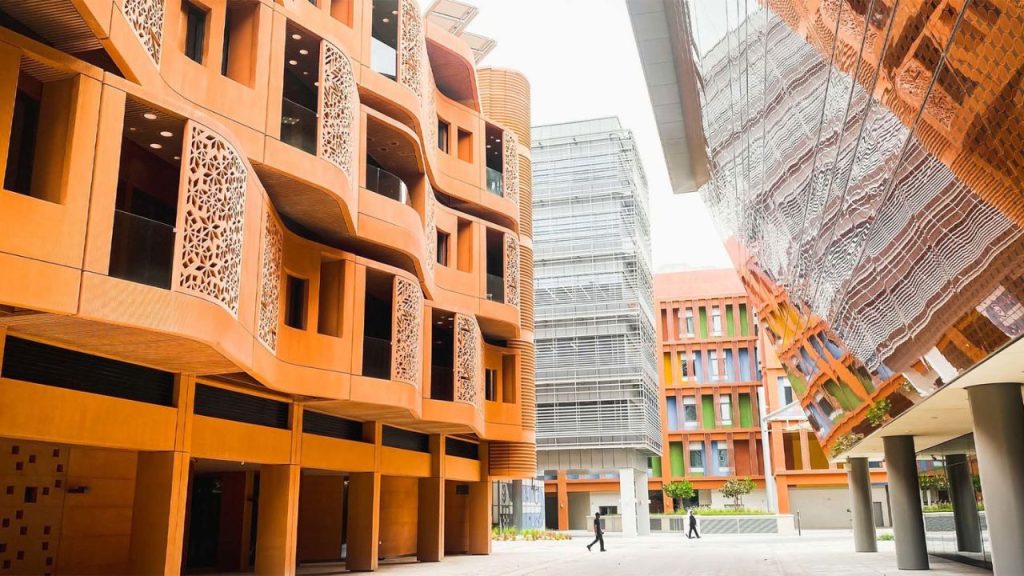
The two emirates follow the same logic, a mandatory baseline with optional higher tiers, but use different names and scales. Estidama runs up to 5 Pearl. In Abu Dhabi, The Sustainable City on Yas Island has achieved 5 Pearl, the highest villa rating, according to Bayut, and several Masdar City buildings carry 3 or 4 Pearl ratings.
Investors comparing the two cities can therefore treat a Dubai Silver Sa’fa and an Abu Dhabi 1 Pearl as the legal minimum, and look for Golden, Platinum or 3 Pearl and above as a sign of genuinely higher performance. Utilities are part of the picture too: Abu Dhabi’s distribution company ADDC moved its customers to electronic “Green Bills” in May 2017, which show each household’s consumption and whether it falls in the green or red band, and offers a green tariff supplied from renewable sources.
For Abu Dhabi’s flagship green district, see our analysis of capital appreciation and risks in Masdar City.
Which eco-friendly projects lead the UAE market?
A handful of communities show what the rules look like when developers go beyond the minimum.
The Sustainable City in Dubai, built by Diamond Developers, reports 78% lower per-capita emissions than conventional developments, solar-powered common areas and 85% of waste diverted from landfill. Expo City Dubai counts 123 LEED-certified buildings, seven of them Platinum, and its Terra pavilion runs at net-zero energy and water. DIFC holds 15 LEED certifications.
Newer launches market their ratings upfront. Aldar’s Dubai projects with Dubai Holding include Athlon, with LEED Platinum pre-certification for planning and design, and Haven, which targets LEED Gold, with a first phase of 462 homes due in Q3 2027.
| Project | Emirate | Certification or result reported |
|---|---|---|
| The Sustainable City (Diamond Developers) | Dubai | 78% lower per-capita emissions than conventional developments; solar-powered common areas; 85% of waste diverted from landfill |
| Expo City Dubai | Dubai | 123 LEED-certified buildings (7 Platinum, 105 Gold); Terra pavilion net-zero energy and water |
| DIFC | Dubai | 15 LEED certifications, including LEED Platinum for The Gate Building |
| Athlon (Aldar with Dubai Holding) | Dubai | LEED Platinum pre-certification for community planning and design |
| Haven (Aldar with Dubai Holding) | Dubai | Targets LEED Gold; phase 1 of 462 units, handover expected Q3 2027 |
| The Sustainable City – Yas Island | Abu Dhabi | Estidama 5 Pearl; solar panels cut energy bills by 50%; 864 homes planned |
| Masdar City (Oasis Residences, NZ1, IRENA HQ) | Abu Dhabi | 3 Pearl (Oasis), 4 Pearl (IRENA HQ), LEED Zero Energy and Platinum (NZ1) |
Source: Bayut, “Biggest Sustainable Real Estate Developments in the UAE” (updated 23 Oct 2026). Results as reported by the developers.
Why is Dubai pushing green buildings now?
Buildings are central to the UAE’s climate targets, and Dubai is adding clean power at scale.
The UAE Energy Strategy 2050, launched in 2017, rests on five pillars, including sustainable architecture and infrastructure. In Dubai, DEWA’s Mohammed bin Rashid Al Maktoum Solar Park is planned to reach 5,000 MW by 2030, with a 900 MW fifth phase under development, and is expected to cut more than 6.5 million tonnes of carbon emissions a year once complete, according to Bayut’s summary.
Efficient buildings reduce the peak demand that new power plants must meet. That is why rules focus on cooling and envelopes first: savings there scale across thousands of homes. For more on how public investment shapes the property market, see our guide to Dubai infrastructure and property.
Are green buildings a better investment in Dubai?
Green communities hold their own on prices and yields, and they offer lower running costs, but the data does not prove a fixed premium.
The Sustainable City, the best-known eco community, offered three- and four-bedroom villas at average asking prices of AED 3.5 million and AED 3.7 million in 2026, with villa rents around AED 275,000 a year and a 6.1% gross yield in Bayut’s Q3 data. That is a higher yield than larger master-planned villa areas such as Dubai Hills Estate (4.2%) or Arabian Ranches (3.8%), though at a lower price point.
| Community | Indicator | Figure | Period |
|---|---|---|---|
| The Sustainable City | Average 3-bed / 4-bed villa price | AED 3.5m / AED 3.7m | Aug 2026 |
| The Sustainable City | Average villa rent | AED 275,000 a year | Aug 2026 |
| The Sustainable City | Gross villa yield | 6.1% | Q3 2026 |
| Dubai Hills Estate | Villa asking price / yield | AED 3,057 per sq ft / 4.2% | Q3 2026 |
| Al Barari | Villa asking price / yield | AED 3,713 per sq ft / 4.9% | Q3 2026 |
| Arabian Ranches | Villa asking price / yield | AED 2,409 per sq ft / 3.8% | Q3 2026 |
Sources: Bayut, “Eco-friendly living: All about The Sustainable City Dubai” (updated 27 Aug 2026) and Bayut Dubai Sales Market Report Q3 2026 (30 Oct 2026). Advertised prices and rents, not transactions.
The wider market gives green projects plenty of buyers. Bayut, citing Dubai Land Department data, counts 12,184 ready property transactions worth AED 49.50 billion and 25,307 off-plan transactions worth AED 43.72 billion in Q3 2026. With off-plan making up most deals, buyers increasingly judge launches on their certification targets as well as on price and payment plan.
Where the value comes from
Three factors support green homes. Lower energy and water bills improve net returns for owners and appeal to tenants. Certification ratings give buyers an objective measure of quality, which helps on resale. And as more developers advertise LEED, Sa’fat or Pearl ratings, homes without them may face more questions from buyers and lenders.
How can buyers check a building's green credentials?
Ask for the rating, the certificate and the bills, not only the marketing.
- Rating level. Silver Sa'fa (Dubai) or 1 Pearl (Abu Dhabi) is the legal minimum; Golden, Platinum or 3 Pearl and above signal more.
- Certificate stage. Pre-certification at design stage is not the same as a certified completed building.
- Real consumption. Request twelve months of electricity, water and cooling bills for the unit.
- Solar and cooling. Check who owns rooftop solar and how district cooling is billed.
- Service charges. Green features need maintenance; compare the charge per sq ft with similar buildings.
For Dubai price and transaction trends that frame any purchase, read our Dubai real estate market report.
What is next for green building in the UAE?
Expect higher baselines over time and more projects marketed on their ratings.
Both Dubai and Abu Dhabi have raised their codes in steps: Dubai moved from regulations in 2010 to Al Sa’fat in 2020 and a second edition in 2023. Developers already compete on LEED and Pearl ratings, and large clean-energy projects make efficient buildings part of a wider plan rather than a niche. For investors, green credentials are becoming a standard item on the due-diligence list. As of November 2026, the January 2023 edition of Al Sa’fat is still the version Dubai Municipality lists as current, so any new building you buy off-plan today should be designed to it.
Watch out
Developers' sustainability claims are self-reported until certified. Ask to see the final certificate, and remember that efficiency savings depend on how the building is run and maintained.
Frequently asked questions
What is Al Sa'fat?
Al Sa’fat is Dubai’s green building system, run by Dubai Municipality. It replaced the Green Building Regulations and Specifications on 19 October 2020; the current second edition dates from January 2023.
Is green certification mandatory in Dubai?
Yes. All new buildings must meet Al Sa’fat’s mandatory requirements to obtain the Silver Sa’fa. Golden and Platinum levels are optional.
What is the Abu Dhabi equivalent?
The Estidama Pearl Rating. Since 2010, new buildings in Abu Dhabi must reach at least 1 Pearl and government buildings 2 Pearl, on a scale that goes up to 5 Pearl.
Which is the greenest community in Dubai?
The Sustainable City is the best-known example. Its developer reports 78% lower per-capita emissions than conventional developments and 85% of waste diverted from landfill.
Do green homes earn higher yields?
Not always, but they compete well. The Sustainable City’s villas showed a 6.1% gross yield in Q3 2026, against 4.2% in Dubai Hills Estate and 3.8% in Arabian Ranches (Bayut).
Figures are indicative as of the date shown: check them with official sources before any decision.
- For information only; this is not tax, legal or financial advice.
Is the project you like really green?
Read next
Abu Dhabi
prices, yields and risks in Abu Dhabi’s sustainable district.
Dubai
the 2040 master plan and what it means for property.
Dubai
airport, rail and roads and their impact on prices.