How New UAE Infrastructure Will Reshape Key Investment Zones
UAE infrastructure investments, ports and marinas, roads and metro links, utility upgrades, and tourism-facing placemaking are shifting where capital flows in Dubai. Four zones stand out: Dubai Islands, Dubai Maritime City (DMC), Mina Rashid, and Meydan. Each benefits from different infrastructure drivers (coastal engineering and marinas; logistics and shipyard upgrades; cruise-port and hospitality conversion; and road/retail/leisure/entertainment anchors). Together these projects reframe land use, rents, demand profiles, and exit options for investors.
Big-picture infrastructure drivers reshaping value
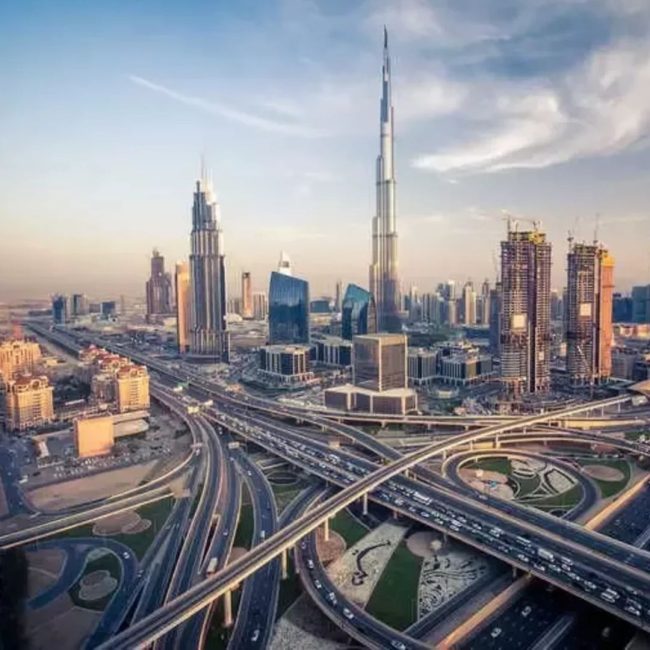
In the UAE, property value rarely moves in isolation. Behind every month-on-month shift in rents and prices, there is usually a bigger engine at work infrastructure. Roads, metro lines, waterfront redevelopment, utility upgrades, and master-planned public-private partnerships don’t just improve the city; they change how people live, where they commute, where tourists spend time, and where businesses cluster. Over time, these shifts reshape demand patterns, which then show up in the data as higher occupancy, stronger rent growth, or faster capital appreciation in specific districts.
- Connectivity upgrades such as new roads, express links and planned metro/rapid transit spur reduced travel time to airports and business hubs, broadening catchment areas for buyers and tenants.
- Maritime & port modernization such as expanded marinas, cruise terminals and logistics yards reposition waterfront districts from industrial to mixed-use tourism and leisure hubs.
- Mixed-use placemaking such as large-scale entertainment, retail and hospitality projects (malls, promenades, attractions) create demand for short-stay hospitality and premium residential products.
- Utilities & resilience such as upgraded power, water and flood protections are increasingly mandatory for waterfront developments, lowering long-term operational risk and insurance costs.
- Policy & master-developer momentum such as focused masterplans from Nakheel, Emaar and other major developers align public infrastructure investment with private projects accelerating delivery and investor confidence.
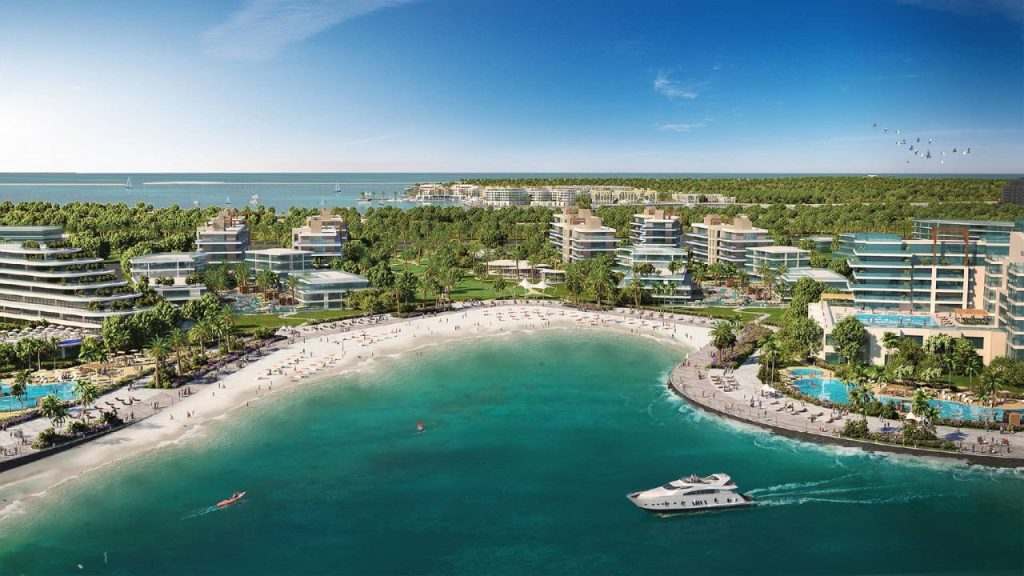
Dubai Islands
From reclaimed land to premium waterfront precinct
What’s being built / recent signal: Nakheel’s Dubai Islands masterplan is a multi-island, mixed-use vision (residential, hotels, marinas and retail) designed to add high-amenity waterfront inventory to Dubai’s northern shore.
How infrastructure benefits value:
- Marina-first design: purpose-built marinas and yacht berths increase attractiveness to high-net-worth buyers and short-stay tourists raising per-sqft values for waterfront plots vs inland alternatives.
- New access nodes: planned causeways and promenade links shorten travel times to Deira and Dubai Creek, shifting buyer preference toward island living when access friction is solved.
- Amenity clustering: dedicated utilities, beachfront promenades and lifestyle nodes (F&B, boutique retail) support premium yields from holiday rentals and branded residences.
Investor implications
- Best product types: branded hotels, waterfront villas, boutique retail and marina-adjacent apartments.
- Timing risk: islands typically have long buildout cycles early buyers capture upside but face longer holding costs.
- Exit paths: strong short-stay/tourism performance + marina services make assets attractive to institutional hospitality buyers.
Dubai Maritime City (DMC)
The specialised maritime cluster
What’s being built / recent signal: Dubai Maritime City is positioned as a maritime industry cluster with workshops, ship lifts, showrooms and integrated maritime services to support Dubai’s maritime economy and logistics ecosystem.
How infrastructure benefits value:
- Industry-ready infrastructure: heavy-duty berths, shiplifts, workshops and warehousing create stable rental demand from maritime businesses lowering vacancy risk for specialized industrial real estate.
- Synergies with logistics corridors: proximity to port nodes and freight routes reduces operating costs for ship repair, supply-chain and offshore service firms allowing landlords to charge premiums for purpose-built units.
- Adaptive reuse upside: as waterfront industrial land modernizes, mixed-use parcels adjacent to DMC can be converted to complementary hospitality, marine retail and training/innovation hubs.
Investor implications:
- Best product types: industrial leases (workshops, warehouses), purpose-built logistic facilities, specialized marine-support real estate and serviced industrial parks.
- Stable cashflow: long-term, low-volatility leases to maritime operators can be an institutional-style income play.
- Transition watch: areas immediately adjacent to DMC are candidates for future rezoning toward leisure and residential as masterplans evolve.
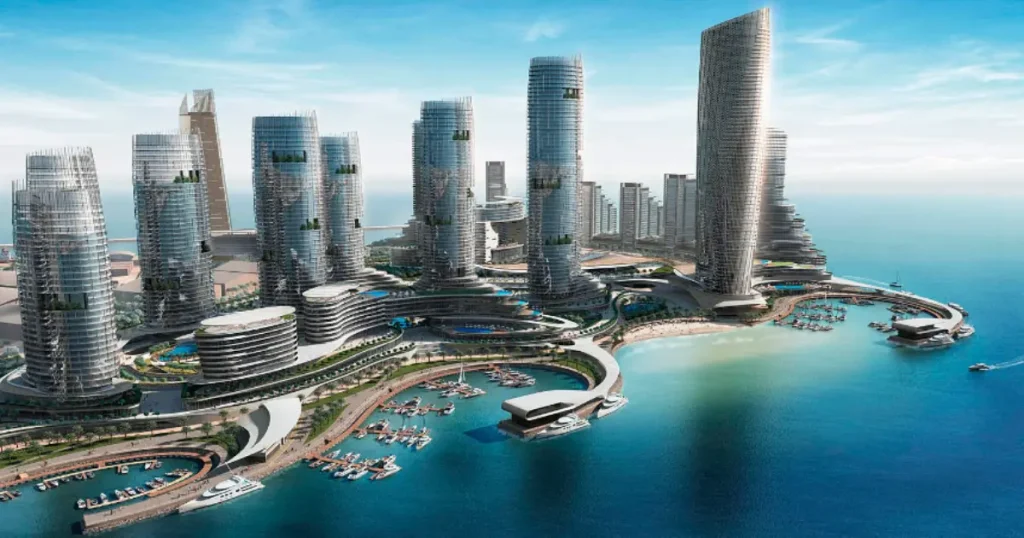
Mina Rashid
Cruise & heritage-facing waterfront transformation
What’s being built / recent signal: Mina Rashid (Port Rashid) is being redeveloped into a cruise-port and waterfront destination with hospitality, marinas and cultural nodes part of a wider plan to reposition the port for tourism rather than purely industrial shipping.
How infrastructure benefits value:
- Cruise-terminal and tourist flows: upgraded cruise facilities feed high seasonal visitor volumes into waterfront hotels, short-stay rentals and retail giving higher ADR (average daily rates) potential for hospitality assets.
- Cultural/heritage placemaking: integrating historic QE2 and maritime museum-like attractions increases year-round visitation and local leisure demand.
- Integrated marina & marina services: private marinas and P&O collaboration boost value for marine-support services and waterfront residential.
Investor implications:
- Best product types: boutique hotels, serviced apartments, F&B/experiential retail and marina-front residences.
- Seasonality management: hospitality allocations should be optimized for cruise seasonality; flexible short-stay management is a plus.
- Regulatory alignment: cruise-port projects often involve port authorities and operators favored investors will partner with experienced operators (hotel groups, marina managers).
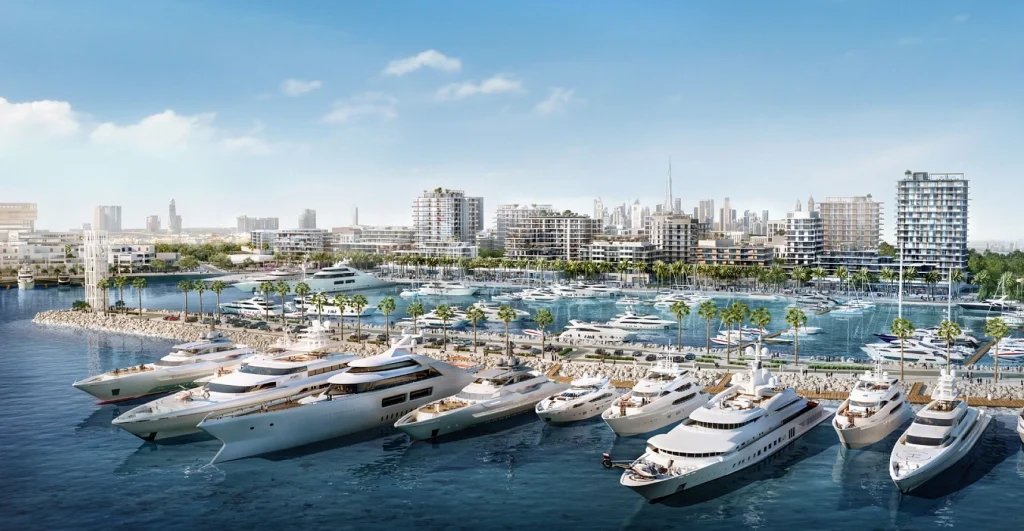
Meydan City
Leisure, events, and new urban living near central Dubai
What’s being built / recent signal: Meydan City is evolving from a racecourse-centric precinct into a larger mixed-use node (mall, leisure attractions, residential districts like District One West and Meydan One) with major entertainment anchors planned.
How infrastructure benefits value:
- Major event & entertainment anchors: Meydan’s racecourse, concerts and new malls drive high footfall supporting retail and short-term rentals.
- Road and transit links: Improved road links to Downtown Dubai and Sheikh Zayed Road broaden Meydan’s appeal for commuters and corporate tenants.
- Lifestyle estates & premium villas: Projects like District One West create a high-end residential product matched to executives seeking gated, amenity-rich communities.
Investor implications:
- Best product types: Mid-to-high-end villas, family apartments, experiential retail and event-oriented hospitality.
- Demand profile: Families and professionals attracted by green spaces and schools; investors benefit from stable long-term tenants and premium capital appreciation.
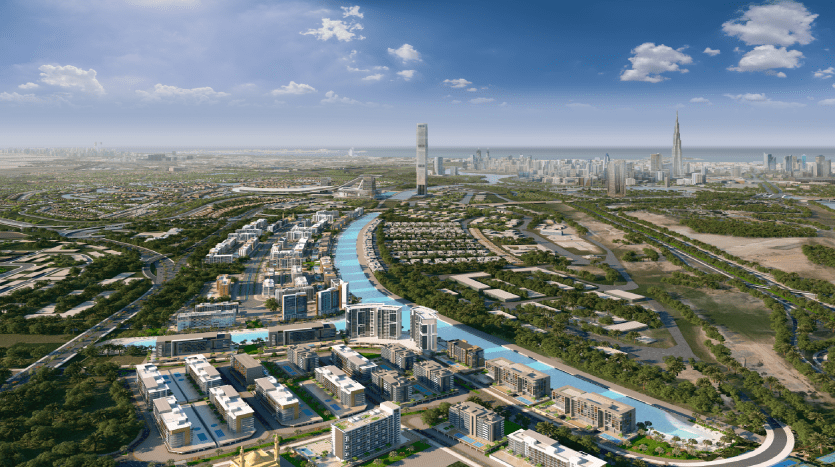
Cross-cutting investment effects (A→Z)
In the UAE real estate market, performance depends not only on a neighborhood or project, but also on broader dynamics that operate “in the background” and influence almost every segment. These transversal effects gradually diffuse across areas, modify demand profiles, and end up being reflected in key indicators: rents, occupancy rates, net yield, resale liquidity and rate of capital appreciation. Understanding these forces allows us to analyze an asset not as an isolated case, but as part of an evolving urban system.
- Appreciation vectors: Reduced travel time + amenity supply → higher rental yields and capital appreciation. Waterfront and marina access are persistent value multipliers.
- Product differentiation: Infrastructure makes premium products (branded residences, marina berths, boutique hotels) viable where previously only industrial or low-density uses made sense.
- Mixed-use arbitrage: Industrial-to-leisure transitions (esp. Mina Rashid / DMC fringe) create redevelopment arbitrage for investors who can bridge short-term leasing with longer-term rezoning plays.
- Risk stack: Delivery delays, environmental permitting, sea-defense costs and global tourism cycles remain the main risks. Thorough due diligence and staged capital deployment mitigate exposure.
Practical investor checklist
This section defines the concrete actions to apply before investing, in order to transform market trends into measurable decisions. The objective is to align the right timing, the right product and the right operator with your strategy (yield, capital growth or mix of the two), while reducing classic selection errors.
- Map the infrastructure timeline to align purchase milestones with confirmed delivery dates for roads, marinas, and transit links.
- Choose the right product & operator match product type to infrastructure driver (marinas → luxury villas; cruise terminals → hotels).
- Partner experienced operators with hospitality and marina management experience materially improves yield.
- Stress-test seasonality for cruise and events-driven markets, model occupancy and rates conservatively.
- Confirm rezoning & utility commitments ensure master-developer or government commitments for power, sewer and flood protection are signed.
- Exit strategies have both capital-appreciation and income exit paths (sell to institutional landlord vs convert to hospitality REIT).
Risks & mitigations
Even in a dynamic market, performance depends on risk management: deadlines, costs, regulations, seasonality and demand cycles. The points below present the major risks and recommended mitigation measures to secure cash flow, protect value and limit the impact of unforeseen events.
- Construction & delivery risk: mitigate via staged payments, performance bonds and legal exit clauses.
- Macro-tourism shocks: diversify exposure across residential and industrial tenants where possible.
- Environmental & regulatory risk: demand up-to-date environmental impact studies and shoreline resilience plans.
- Liquidity risk for niche assets: marina berths and ultra-luxury villas can be illiquid to keep a realistic sale timeline.
Quick investor playbook (90-day actions)
This 90-day playbook turns UAE infrastructure and market signals into a clear step-by-step execution plan. It helps investors move from shortlisting zones to validating rents, stress-testing downside risks, and locking in negotiation and financing so you can act with speed while protecting yield, liquidity, and long-term upside.
Day 0-30: Shortlist zones and product types; request masterplan PDFs and infrastructure delivery schedules from developers/authorities.
Day 30-60: Perform market rent comparables, speak to marina/hotel operators, and run downside scenarios.
Day 60-90: Negotiate terms with phased delivery safeguards; align with operator partners and finalize financing.
New UAE infrastructure from Nakheel’s Dubai Islands masterplan to modernized maritime infrastructure at DMC, the cruise- and hospitality-focused Mina Rashid redevelopment, and the entertainment-residential buildout in Meydan. It is structurally changing demand and elevating the types of real estate that outperform. Each zone benefits from specific infrastructure levers (marinas, cruise terminals, industrial-capable yards, event anchors) and offers distinct investor opportunities and risks. Savvy investors will align product, timing and operational partners to capture both yield and appreciation as these infrastructure projects finish and the new urban geographies fully come online.
To take the next step in securing your investment, explore Opportunities in Dubai and use our Investment Tool to make informed, strategic decisions that will maximize your returns in this thriving market. Contact Valorisimo for tailored consultations to navigate Dubai’s dynamic real estate sector and discover the best investment opportunities for long-term growth.
Frequently Asked Questions (FAQ)
How do new infrastructure projects in the United Arab Emirates impact investment zones?
New infrastructure such as roads, metro expansions, ports, and airports improves connectivity, reduces travel time, and makes key areas more attractive to buyers, tenants, and long-term investors.
Which investment zones benefit the most from new infrastructure in the United Arab Emirates?
Waterfront districts, transit-oriented developments, mixed-use hubs, and areas along new transport corridors benefit the most, as they see higher demand, rising property values, and stronger rental yields.
Why is infrastructure development important for long-term investors in the United Arab Emirates?
Infrastructure development lowers operational risks, supports sustainable urban growth, and boosts economic activity, helping investors achieve stable returns, capital appreciation, and long-term market confidence.
Related Posts
Dubai Real Estate: Better Developer Deals During the Crisis?
Understanding the Dubai Real Estate Index 2026
Top Capital Appreciation Areas in Dubai 2026
Top Rental Yield Areas in Dubai 2026: Investment Guide
Property Payment Plans In Dubai And Abu Dhabi 2026
Golden Visa Dubai: Complete Guide for Investors in 2025
UAE Mortgage Guide: 2025.

Service Charges in Dubai & Abu Dhabi 2025.