Dubai Islands A vs B vs C: Which Sub-Zone Performs Better?
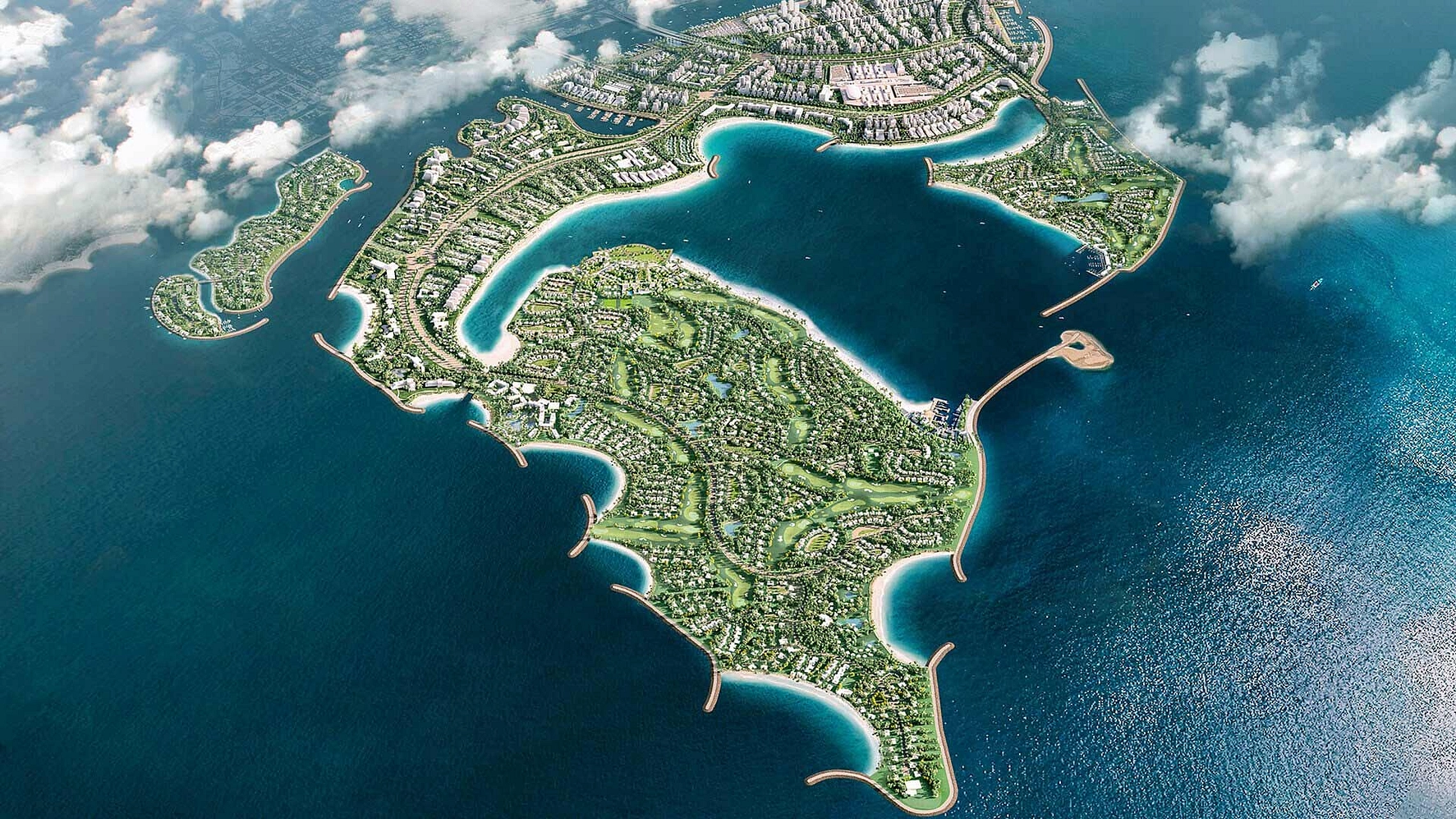
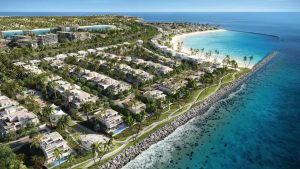
Dubai Islands is a large, Nakheel masterplan of five interconnected isles that will mix villas, apartments, hotels and leisure. Sub-zones A, B and C (for the purpose of this analysis we treat them as three representative sub-zones inside the masterplan: Central / Marina / Shore-style clusters) differ by product mix, delivery timing, beach access and transport links and those differences drive price, rent and yield performance. Overall: Central/Marina (A) = best for capital appreciation and premium rents; Shore/Golf (B) = balanced family product, steady rents; Elite / villas cluster (C) = luxury niche with lower gross yields but strong long-term value.
Market snapshot — what the data says (recent and relevant)
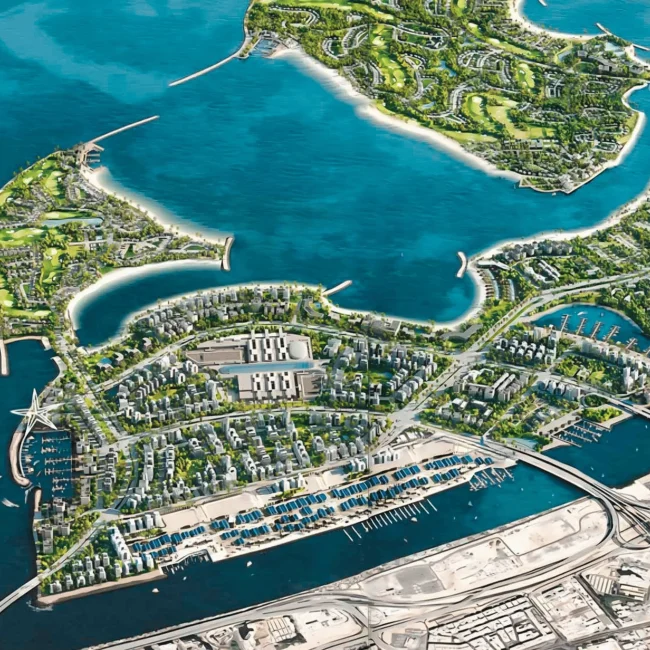
Dubai Islands has quickly become one of the most talked-about waterfront launches in 2024–2025. Recent market indicators show meaningful early price appreciation and strong reservation volumes: off-plan apartment prices for Dubai Islands rose from roughly AED 2,162/sq ft to AED 2,317/sq ft in early 2025 (about a 7% quarterly move reported in Q1 data), indicating accelerated buyer interest in the early delivery corridor.
Semi-annual checks from multiple data trackers show the average off-plan price moving nearer AED 2,340/sq ft in mid-2025, while large developer activity and notable launches (Bay Grove, Bay Villas, Avida, Isolana) confirm a pipeline of new supply and varied product types (apartments, townhouses, villas).
Market volumes and early take-up are not trivial: H1 2025 sales volume for the project area was cited at ~AED 3.5 billion, with May alone exceeding AED 950 million, illustrating robust absorption for a new masterplan. Reported rental yield ranges for Dubai Islands are currently in the ~6–8% for apartments and ~4–6% for villas, a competitive yield band for waterfront projects with short-to-mid term income potential.
Dubai Islands is emerging as a mid-to-upper tier waterfront entry point — meaning attractive upside vs older luxury islands but still below legacy benchmarks such as Palm Jumeirah — and its short-term performance depends heavily on which sub-zone, product type and handover timetable you pick.
Defining Sub-Zone A, B, and C — A Data-Driven Framework
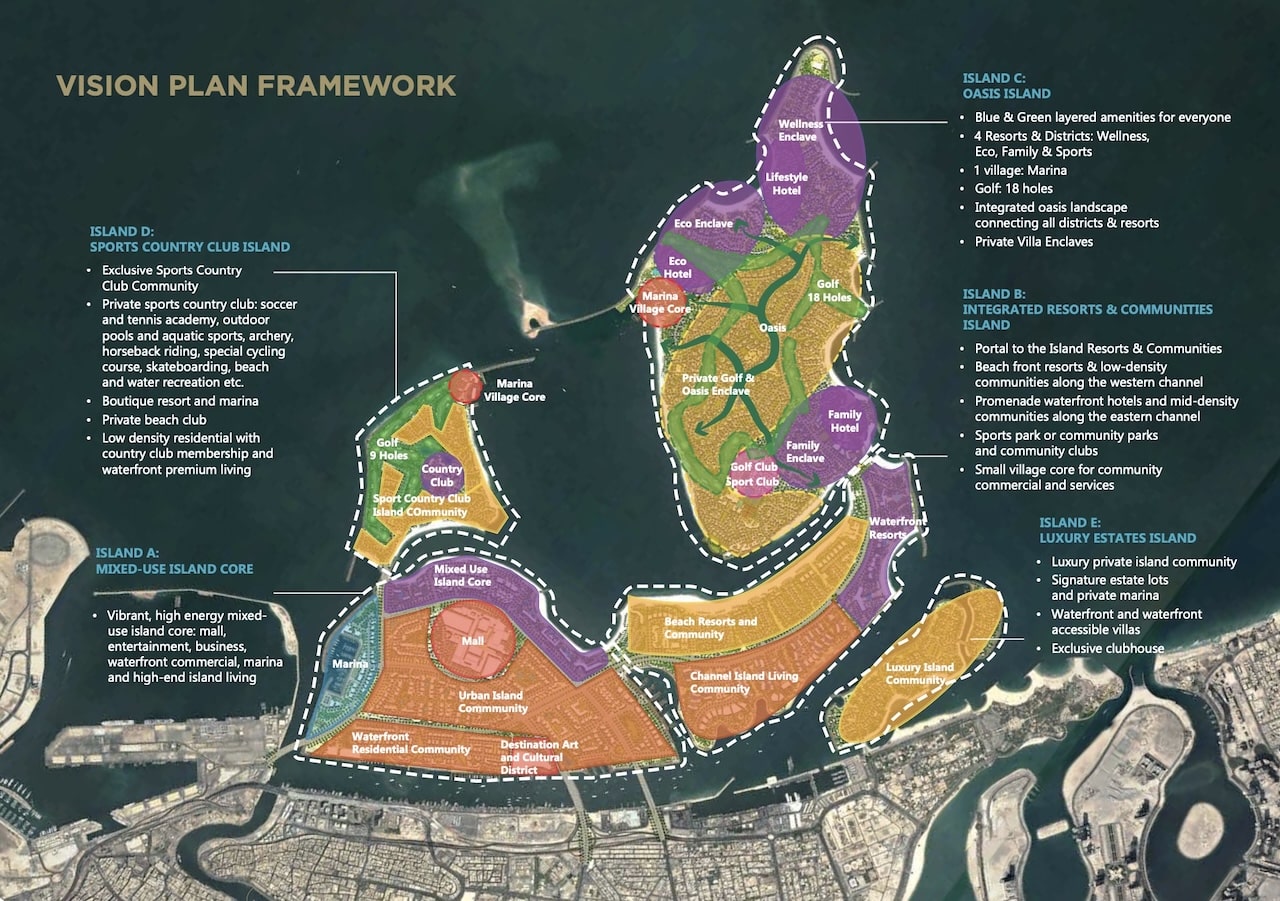
For analytical clarity, we segment Dubai Islands into three representative sub-zones based on urban form, infrastructure sequencing, density, and expected market behavior. This framework allows investors and end-users to move beyond brochure labels and assess performance through measurable indicators such as price per square foot, rental absorption speed, yield stability, and resale liquidity.
Sub-Zone A — Central / Urban Core
This zone represents the highest-density and most infrastructure-forward part of Dubai Islands. It typically consists of mid- to high-rise apartment clusters located closest to the main access bridges, planned retail spines, public transport corridors, and community facilities. From a data perspective, Sub-Zone A benefits from earlier infrastructure delivery, which historically correlates with faster handovers, quicker rental activation, and stronger short-term liquidity.
Product mix here is dominated by apartments, with limited townhouse inventory. Transaction data across comparable Dubai masterplans consistently shows that urban-core units experience higher transaction velocity, tighter bid-ask spreads, and earlier price discovery, making this zone particularly attractive for investors prioritizing near-term income generation and resale optionality.
Sub-Zone B — Marina / Mid-Waterfront
Sub-Zone B sits at the intersection of lifestyle appeal and investment fundamentals. Characterized by medium-density developments aligned along marina basins, this zone includes apartments, podium townhouses, and select branded or lifestyle-oriented residences. From a valuation standpoint, marina adjacency introduces a view and lifestyle premium without reaching the absolute price levels of direct beachfront villas.
Data from mature marina districts across Dubai shows that once marina infrastructure, berthing, and F&B ecosystems become operational, price appreciation tends to accelerate in the mid-to-late development phase, often outperforming purely urban clusters over a 3–5 year horizon. Sub-Zone B therefore appeals to investors seeking a balanced risk-return profile, combining acceptable early yields with stronger medium-term capital appreciation as the destination matures.
Sub-Zone C — Shore-Front / Villa Belt
This zone represents the lowest-density and highest-ticket segment of Dubai Islands, composed primarily of premium villas and beachfront plots. Larger plot sizes, private beach access, and architectural individuality drive higher absolute pricing and per-square-foot premiums. However, data across Dubai’s waterfront markets consistently shows that villa-led zones follow longer development and absorption cycles, resulting in slower transaction velocity and delayed yield realization.
Sub-Zone C is therefore best understood as a long-duration, scarcity-driven investment, where value creation is tied less to rental yield and more to long-term land appreciation, exclusivity, and replacement cost inflation. Investors targeting this zone must account for extended construction timelines, higher capital commitment, and a narrower buyer pool at exit.
Why This Segmentation Matters for Performance Analysis
These practical groupings are not arbitrary. Across Dubai’s real estate market, pricing, yield, and liquidity are strongly correlated with three variables:
- Density and unit size,
- Direct access to lifestyle anchors (waterfront, marina, retail), and
- Timing of infrastructure and handover milestones.
Data consistently shows that earlier-delivered, higher-density inventory tends to generate rental income sooner, achieve higher occupancy rates, and transact more frequently in the secondary market. Conversely, low-density beachfront villas command premium pricing and stronger long-term appreciation but exhibit slower resale velocity and lower percentage yields.
By segmenting Dubai Islands into Sub-Zones A, B, and C, Valorisimo applies a decision-oriented lens that helps buyers align each sub-zone with specific investment objectives — whether that is yield optimization, medium-term growth, or long-term capital preservation. The remainder of this article evaluates performance across these dimensions using recent market data, transactional behavior, and comparable benchmarks to determine which sub-zone performs better for which investor profile.
| Metric | Sub-Zone A – Central / Urban Core | Sub-Zone B – Marina / Mid-Waterfront | Sub-Zone C – Shore-Front / Villa Belt |
|---|---|---|---|
| Typical Product Type | Apartments, limited townhouses | Apartments, podium townhouses, branded residences | Beachfront villas, large plots |
| Average Price per Sq Ft (2025) | AED 2,100 – 2,400 | AED 2,300 – 2,700 | AED 2,900 – 3,800+ |
| Capital Appreciation Outlook | Short-term focused (early price discovery, faster re-rating post-handover) | Mid-term focused (strong uplift as marina lifestyle matures) | Long-term focused (scarcity-driven appreciation) |
| Expected Rental Yield | 6.5% – 8% (apartments) | 6% – 7.5% (apartments / townhouses) | 4% – 6% (villas) |
| Rental Absorption Speed | Fast (broad tenant pool, competitive rents) | Moderate to fast (lifestyle-driven demand) | Slow to moderate (premium tenant segment) |
| Liquidity / Resale Velocity | High (largest buyer pool, lower ticket size) | Medium (view & lifestyle selective buyers) | Low (high ticket, niche demand) |
| Supply Volume | High (multiple apartment launches) | Medium (controlled marina-facing inventory) | Low (limited villa plots) |
| Infrastructure Timing | Earliest delivery (bridges, retail, access roads) | Mid-phase delivery (marina, F&B, leisure) | Later-phase delivery (beach shaping, landscaping) |
| Risk Profile | Low to Medium (execution & absorption risk limited) | Medium (dependent on marina activation) | Medium to High (longer timelines, capital lock-in) |
| Ideal Investor Profile | Yield-focused investors, first-time Dubai buyers, shorter hold | Balanced investors seeking growth + lifestyle | High-net-worth buyers, long-term capital preservation |
| Best Holding Horizon | 1–3 years | 3–5 years | 5–10+ years |
Capital appreciation: which sub-zone has the edge?
Short-term (12–24 months): Sub-Zone A (Central / Urban Core):
- Rationale: earlier delivery, greater product volume and proximity to retail/transport make A the fastest to convert reservations into hands-on assets that can be let or re-sold. Data from the early phases shows off-plan apartment prices rising strongly as initial infrastructure and marketing milestones are completed; those moves disproportionately benefit urban apartment clusters. Early 2025 quarter-on-quarter moves of +7% and semi-annual jumps documented for Dubai Islands are driven by these early launches — which are predominantly central apartments.
Medium-term (2–5 years): Sub-Zone B (Marina) — balanced upside:
- Rationale: marina frontages capture lifestyle premium as the marina and ancillary retail/ F&B mature. Apartments and podium townhouses near marinas historically show above-market appreciation once the marina ecosystem (berths, restaurants, yacht services) is live. Given Dubai Islands’ marina planning and product mix, B is positioned to outperform mid-term as the destination brand builds. Recent project pipeline (marina-focused launches) and increasing buyer interest in lifestyle apartments support this view.
Long-term (5+ years): Sub-Zone C (Shore-front villas) — highest upside but highest patient capital requirement
- Rationale: beachfront villas are scarce, hold scarcity value, and enjoy strong appetite among premium buyers. Prices per sq ft may be highest in absolute terms for C, but expected liquidity is lower and development/handover risk is higher because large-lot masterworks take longer to complete. Comparative statements putting Dubai Islands below Palm Jumeirah on per-sq-ft currently reflect an opportunity to capture future compression of that gap — but the time horizon and risk tolerance must be aligned. Recent market commentary shows Dubai Islands remains cheaper than mature island luxury benchmarks, leaving space for long-run catch-up.
Net conclusion on appreciation: For short-to-medium term capital gains, Sub-Zone A (Central) and B (Marina) generally outperform because they deliver earlier and have stronger transactional velocity. For long-run strategic appreciation and scarcity play, Sub-Zone C (Shore-front villas) may yield the highest absolute gains, but only for investors who can carry inventory through longer construction and stabilization cycles.
Rental performance & yields — what to expect?
Macro yields: Dubai yields vary by neighbourhood and product; recent UAE/Dubai yield indices show gross yields averaging ** ~5–7%** across the city for apartments, with higher yields in affordable clusters and lower yields for ultra-prime waterfront stock. Dubai Islands’ mix of premium products suggests mid single-digit gross yields for apartments, lower for villas when measured as gross yield.
- Zone A: Stronger short-let and serviced apartment demand (marina & retail amenity) projected gross yields ~5–6% for well-priced 1BR/2BR apartments in early secondary market; holiday rental peaks can push effective yields higher seasonally.
- Zone B: Steady long-term tenant pool (families) → gross yields ~5–6%, but lower rental volatility; higher occupancy in near-beach family products.
- Zone C: Villas command high rents but also high capital values; gross yields typically lower (3–4%) because capital outlay is much higher; these are value plays rather than yield plays.
Note: Official reported yields vary by data provider and change quickly; the island’s off-plan nature and evolving supply pipeline are significant variables. For up-to-date transaction-level yields consult RERA transaction data or broker rental transaction feeds.
Demand drivers & risks — the A to Z investor checklist
Investment outcomes here are shaped by a mix of structural demand drivers and timing-related risks. The checklist below distils what is supporting absorption and pricing today, alongside the key variables that could affect returns, liquidity, and exit optionality across Zones A, B, and C.
Demand drivers:
- Waterfront lifestyle + Blue-flag beach (marketing pull).
- Variety of products (apartments → villas) attracts both investors and owner-occupiers.
- Proximity to Dubai International Airport and central Dubai (relatively short drives) improves rental catchment.
Risks:
- Supply timing: A large wave of new units scheduled across Dubai in 2025–2028 increases competition; oversupply can pressure short-term prices. Recent market commentary flagged significant upcoming stock which could cool price gains.
- Off-plan premium risk: Buyers paying early may face slower capitalisation if handovers are delayed or market softens.
- Narrow villa resale pool: Zone C villas are highly desirable but sell more slowly and carry higher transaction friction.
Which zone “performs better”? (Investor scenarios)
➤Short-to-medium term flip / quick resale: Zone A: Higher liquidity because of apartment product and better access; apartments sell faster than villas.
➤Buy-to-let (year-round income): Zone B: Stable family rentals and long-stay yields, lower vacancy risk.
➤Long-term wealth / ultra-luxury: Zone C: Lower gross yields but high capital appreciation potential for truly scarce beachfront lots.
Practical buying checklist (A → C)
The practical buying checklist is a final due-diligence filter that translates zone-level analysis into executable purchase decisions. It helps investors align entry timing, product type, operating costs, and exit strategy with their risk tolerance, liquidity needs, and investment horizon reducing decision bias and improving risk-adjusted outcomes.izon.
- Verify project stage & payment plan (off-plan vs ready). Early payment plans improve cashflow but increase timing risk.
- Check connectivity: Which bridge/entry serves the plot and how long the daily commute to work hubs will be.
- Estimate operating costs & service charges: Beachfront higher OPEX; factor into net yield.
- Target product-market fit: Short-let friendly for Zone A (investor), family long-let for Zone B, prestige sale for Zone C.
- Plan for tax & visa advantages: Use Dubai’s residency options and mortgage conditions where relevant.
If you want liquidity and lease-demand, focus on Zone A apartments (marinafront, mixed-use). If you want steady rental income and family tenants, target Zone B (shore/golf-facing family buildings). If your goal is long-term capital appreciation and exclusivity, buy selectively in Zone C (villas/lots) but be prepared for lower immediate yields. For any purchase, match purchase timing to your investment horizon and stress-test yields assuming rising supply and seasonal holiday demand.
If you are ready to explore investment opportunities in Dubai, discover our opportunities in Dubai and use our investment tool to make informed decisions, perfectly aligned with your goals. Do you have questions about your next real estate investment? Contact VALORISIMO today to benefit from personalized support and expert advice tailored to your objectives.
Frequently Asked Questions (FAQ)
What is the main difference between Dubai Islands A, B and C?
The sub-zones differ in development density, proximity to waterfront amenities, infrastructure timelines, and target buyer profiles, which directly impacts pricing and investment performance.
Which Dubai Islands sub-zone offers better rental yields?
Rental yields vary by unit type and project stage, but sub-zones with earlier infrastructure delivery and higher accessibility typically generate stronger short- to mid-term yields.
How should investors choose between Dubai Islands A, B and C?
Investors should assess budget, investment horizon, risk tolerance, and sub-zone maturity, aligning their strategy with yield goals or long-term capital appreciation.
Related Posts

Dubai Real Estate: Better Developer Deals During the Crisis?
Understanding the Dubai Real Estate Index 2026
Top Capital Appreciation Areas in Dubai 2026

Top Rental Yield Areas in Dubai 2026: Investment Guide

Property Payment Plans In Dubai And Abu Dhabi 2026

Golden Visa Dubai: Complete Guide for Investors in 2025

UAE Mortgage Guide: 2025.

Service Charges in Dubai & Abu Dhabi 2025.