Dubai Real Estate Market Report 2026
Price Per Sqft Analysis (Jan 2025 → Jan 2026)
Dubai’s residential real estate market has entered a structurally segmented phase, where performance is increasingly determined by asset type, delivery stage, and micro-location fundamentals rather than broad cyclical appreciation.
According to Valorisimo Research’s 1-Year Price Per Sqft Analysis (Jan 2025 → Jan 2026) , residential pricing trends reveal selective repricing across growth corridors, emerging masterplans, waterfront expansions, and premium villa communities.
Executive Market Overview: Segmentation Over Uniform Growth
The report highlights a clear structural shift in Dubai’s residential pricing behavior. Between January 2025 and January 2026, price-per-sqft growth was not market-wide. Instead, capital rotated selectively into:
- Emerging master-planned districts
- Waterfront expansion zones
- Infrastructure-aligned corridors
- Premium low-density villa communities
Meanwhile, several mature urban apartment clusters experienced stabilization or localized compression.
This divergence signals a maturing real estate cycle driven by precision capital allocation rather than speculative broad-based appreciation.
Apartments (Ready – Secondary Market)
Growth Neighborhoods: Accessibility & Entry-Point Momentum.
Ready apartment communities showed strong repricing in value-driven and infrastructure-linked districts.
Standout Performers (YoY Price Per Sqft Growth):
- Dubai South: +107%
- Dubai Islands: +55%
- JVT: +39%
- Al Hebiah Fifth: +18%
- JLT: +11%
Dubai South’s price jump from AED 580 to AED 1,200 per sqft reflects capital migration toward affordability-driven growth corridors and Expo-aligned infrastructure expansion.
Dubai Islands, rising from AED 1,490 to AED 2,310 per sqft, demonstrates strong early-stage waterfront positioning.
Core districts like Downtown Dubai, Palm Jumeirah, Business Bay, and Dubai Hills recorded moderate gains between 5–8%, reinforcing liquidity depth and pricing stability.
What This Means
Ready apartments are benefiting from:
- Infrastructure-led accessibility
- Relative affordability entry points
- Strong end-user absorption
- Supply-constrained micro-markets
Growth is concentrated — not uniform.
Stabilization & Compression Zones
Some mature clusters exhibited price consolidation:
- Jumeirah Village: -0.8%
- Arjan: -0.8%
- Dubai Harbour: -7.7%
- Dubai Maritime City: -15.2%
These movements reflect valuation normalization and inventory balancing, not structural demand deterioration. For investors, this signals that capital is rotating rather than exiting the market.
Apartments (Off-Plan Market)
Off-plan apartments showed stronger dispersion, highlighting their sensitivity to launch cycles and investor sentiment.
High-Growth Corridors
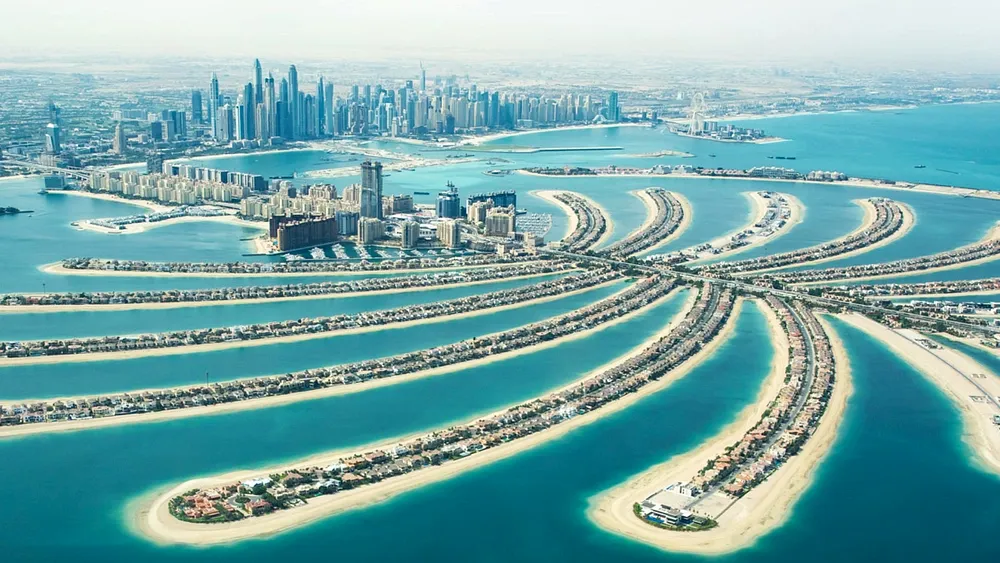
- Palm Jumeirah: +40%
- Dubai Islands: +31%
- Jabal Ali First: +26%
- Business Bay: +20%
- Downtown Dubai: +13%
- Dubai Creek Harbour: +12%
Palm Jumeirah’s off-plan price per sqft surged from AED 4,210 to AED 5,910 — reflecting premium coastal positioning and long-term capital allocation ahead of delivery cycles.
Investor activity in CBD-aligned districts like Business Bay and Downtown Dubai confirms strong forward-market conviction.
Key Insight
Off-plan pricing reflects:
- Infrastructure visibility
- Masterplan maturity
- Developer positioning
- Pipeline timing
- Future supply absorption expectations
Off-Plan Stabilization Areas
Localized repricing occurred in:
- Nadd Hessa: -10%
- JLT: -9%
- Dubai Land Residence: -6%
- Al Merkadh: -1%
- Dubai South: +4% (stable)
These movements represent recalibration after prior expansion cycles. The takeaway: Off-plan requires disciplined pipeline evaluation rather than broad allocation.
Villas (Ready – Secondary Market)
Growth Leaders, Ready villas demonstrated the strongest structural resilience across all segments.
- Sobha Hartland: +32.8%
- Emirates Hills: +30.8%
- Damac Hills: +21%
- MBR City: +20.2%
- Palm Jumeirah: +17.7%
Low-density residential assets continue to benefit from:
Land scarcity
End-user family demand
Limited new supply
Defensive pricing characteristics
This confirms villas as structurally constrained assets within Dubai’s residential ecosystem.
Stabilization Patterns Neighborhoods
- JVC
- Jabal Ali First
- Nadd Hessa
- The Oasis
- Dubai Hills
- The Valley
Recorded modest gains between 1%–12%. These are consolidation phases typical of maturing communities rather than demand weakness.
Villas (Off-Plan)
Major Movers, Off-plan villas showed high forward-market sensitivity.
- Jabal Ali First: +56.4%
- Palm Jebel Ali: +23.4%
- Dubai South: +21%
- Al Hebiah Fifth: +6.9%
Jabal Ali First’s 56.4% surge reflects investor positioning ahead of large-scale coastal and masterplan expansion. Palm Jebel Ali also recorded strong capital appreciation driven by long-term waterfront redevelopment narrative.
Stabilized Off-Plan Zones
- Damac Hills: +1.7%
- Dubai Hills: +1.5%
- The Valley: -1.6%
These moderate changes illustrate pricing recalibration as delivery cycles mature.
Off-plan villas require:
Development visibility
Timeline discipline
Infrastructure confirmation
Absorption outlook validation
Cross-Segment Comparative Insights
Average YoY Growth Across Growth Sets:
- Apartments (Ready): 19.2%
- Apartments (Off-Plan): 16.7%
- Villas (Ready): 19.5%
- Villas (Off-Plan): 14.0%
Interpretation
Ready villas show strongest structural momentum.
Ready apartments closely follow in growth corridors.
Off-plan segments display higher dispersion due to pipeline sensitivity.
Dubai’s residential market is now typology-driven rather than cycle-driven.
Strategic Investment Implications for 2026
The report outlines four structural strategic principles:
1. Prioritize Structural Supply Constraints
Low-density, land-backed villa communities continue to offer defensive stability and long-term capital preservation.
2. Target Infrastructure-Aligned Corridors
Accessibility-driven districts like Dubai South and Dubai Islands show early momentum tied to transport and masterplan delivery.
3. Align Off-Plan Allocation with Development Visibility
Pipeline maturity, delivery phasing, and absorption outlook matter more than launch hype.
4. Monitor Emerging Waterfront Masterplans
Dubai Islands and Palm Jebel Ali demonstrate early-stage pricing expansion linked to coastal redevelopment and long-horizon positioning.
Why This Market Phase Matters
Dubai’s residential performance between Jan 2025 and Jan 2026 confirms:
Increasing micro-segmentation
Capital rotation dynamics
Typology-driven appreciation
Infrastructure-led repricing
End-user demand resilience
The era of uniform market-wide growth is transitioning into precision-based capital allocation.
Data-Led Asset Selection Over Market Timing
The evolution of price per sqft across Dubai reinforces one central thesis:
Strategic advantage lies in micro-market positioning — not broad cycle timing.
Ready villas remain structurally resilient due to land scarcity and stable end-user demand.
Apartments show growth concentration in accessibility corridors.
Off-plan assets require disciplined evaluation of delivery timelines and masterplan visibility.
Dubai’s real estate market in 2026 is increasingly defined by analytical precision.
For investors, the opportunity lies not in chasing headlines — but in understanding segmentation, infrastructure alignment, and asset typology dynamics.
Related Posts