
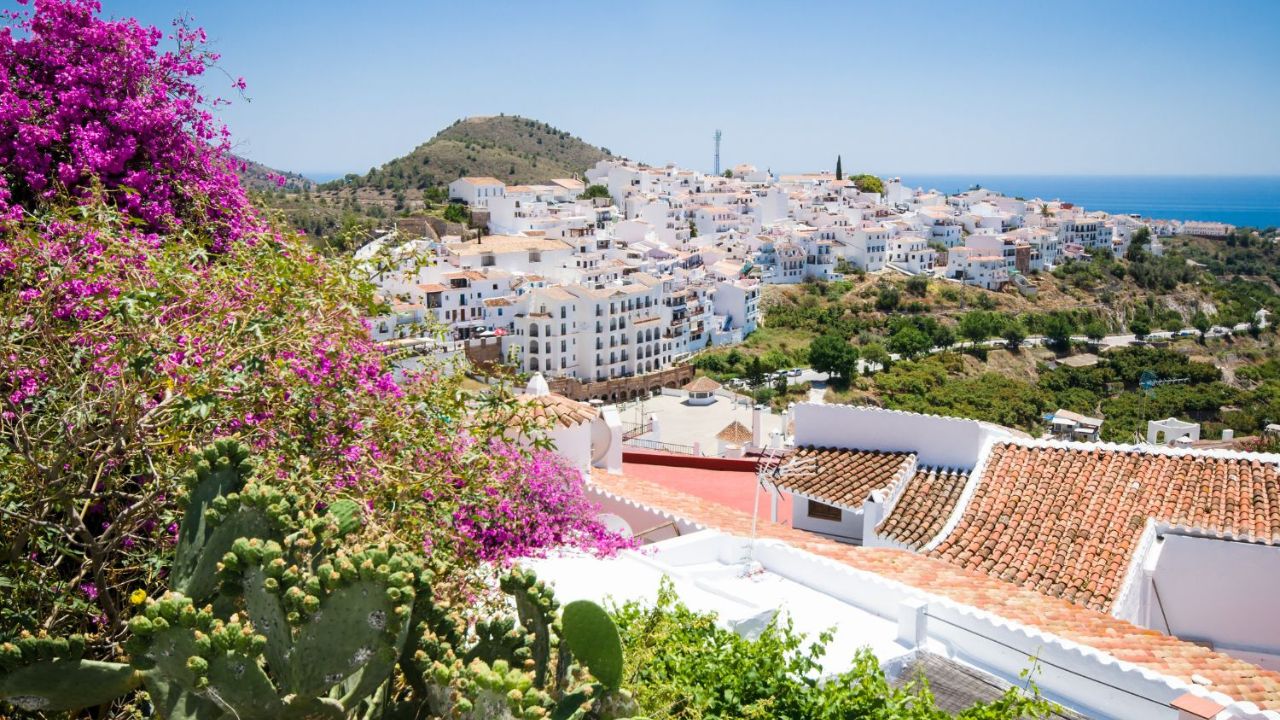
How to Buy Real Estate in Morocco
The Ultimate 2026 Guide, Marrakech, Agadir, Casablanca & More
Buying real estate in Morocco in 2026 remains one of the most attractive investments around the Mediterranean. With prices still very competitive compared with Europe, a dynamic seasonal rental market, advantageous taxation, and a recognized quality of life, including 300 days of sunshine, gastronomy, and security, the Kingdom attracts tens of thousands of foreign buyers and MREs, Moroccans Living Abroad, every year.
Whether you dream of an authentic riad in the Medina of Marrakech, a seaside villa in Agadir, a modern apartment in Casablanca, or a character house in Tangier, this pillar guide supports you step by step. Legal procedures, buying stages, financing, taxation, the most profitable cities, traps to avoid: you will know exactly how to proceed to succeed with your real estate investment in Morocco in 2026.
The Moroccan Real Estate Market in 2026: Key Figures and Trends
The Moroccan real estate market enters 2026 in a phase of controlled consolidation, with solid fundamentals despite a volatile international context. According to the Real Estate Asset Price Index, IPAI, co-published by Bank Al-Maghrib and the ANCFCC, transactions remain dynamic in major urban areas, supported by a return of local demand, growing interest from MREs and foreign buyers especially since the post-pandemic tourism boom and the acceleration of investments linked to the 2030 World Cup, co-hosted by Morocco.
Why Invest in Real Estate in Morocco in 2026?
- Attractive prices: 2 to 5 times cheaper than in France, Spain, or Italy for equivalent quality.
- Gross rental profitability between 5% and 10% depending on cities and property types.
- Political stability and a secure legal framework for foreign investors.
- Tourism boom: Morocco exceeded 17 million tourists in 2024 and is targeting 26 million by the 2030 World Cup.
- Proximity to Europe: 2 hours from Paris, 3 hours from Madrid, 1.5 hours from Barcelona.
- Advantageous taxation on rental income and capital gains.
- Major infrastructure projects: extension of the Al Boraq high-speed train to Agadir and Marrakech, new stadiums, highways, ports, airport modernization.
- Promising seasonal rental market, especially in Marrakech, Agadir, Tangier, and Essaouira.
Market Situation by City in 2026
| City | Average price (MAD/m²) | Approx. price (€ /m²) | Rental profitability | Investor profile |
|---|---|---|---|---|
| Marrakech | 12,000 – 26,000 MAD | €1,100 – €2,400 | 6% – 10% | Seasonal / Luxury |
| Agadir | 10,000 – 19,000 MAD | €900 – €1,750 | 5% – 8% | Seaside / Family |
| Casablanca | 15,000 – 32,000 MAD | €1,380 – €2,950 | 4% – 7% | Residential / Professional |
| Tangier | 11,000 – 22,000 MAD | €1,000 – €2,030 | 5% – 9% | Growth / Expatriates |
| Rabat | 14,000 – 27,000 MAD | €1,290 – €2,490 | 4% – 6% | Civil servants / Diplomacy |
| Essaouira | 8,000 – 16,000 MAD | €730 – €1,470 | 4% – 7% | Cultural / Retirement |
| Fez | 6,000 – 13,000 MAD | €555 – €1,200 | 4% – 6% | Medina / Heritage |
Source: IPAI / Bank Al-Maghrib / 2026 market estimates. Indicative exchange rate: 1 EUR ≈ 10.9 MAD.
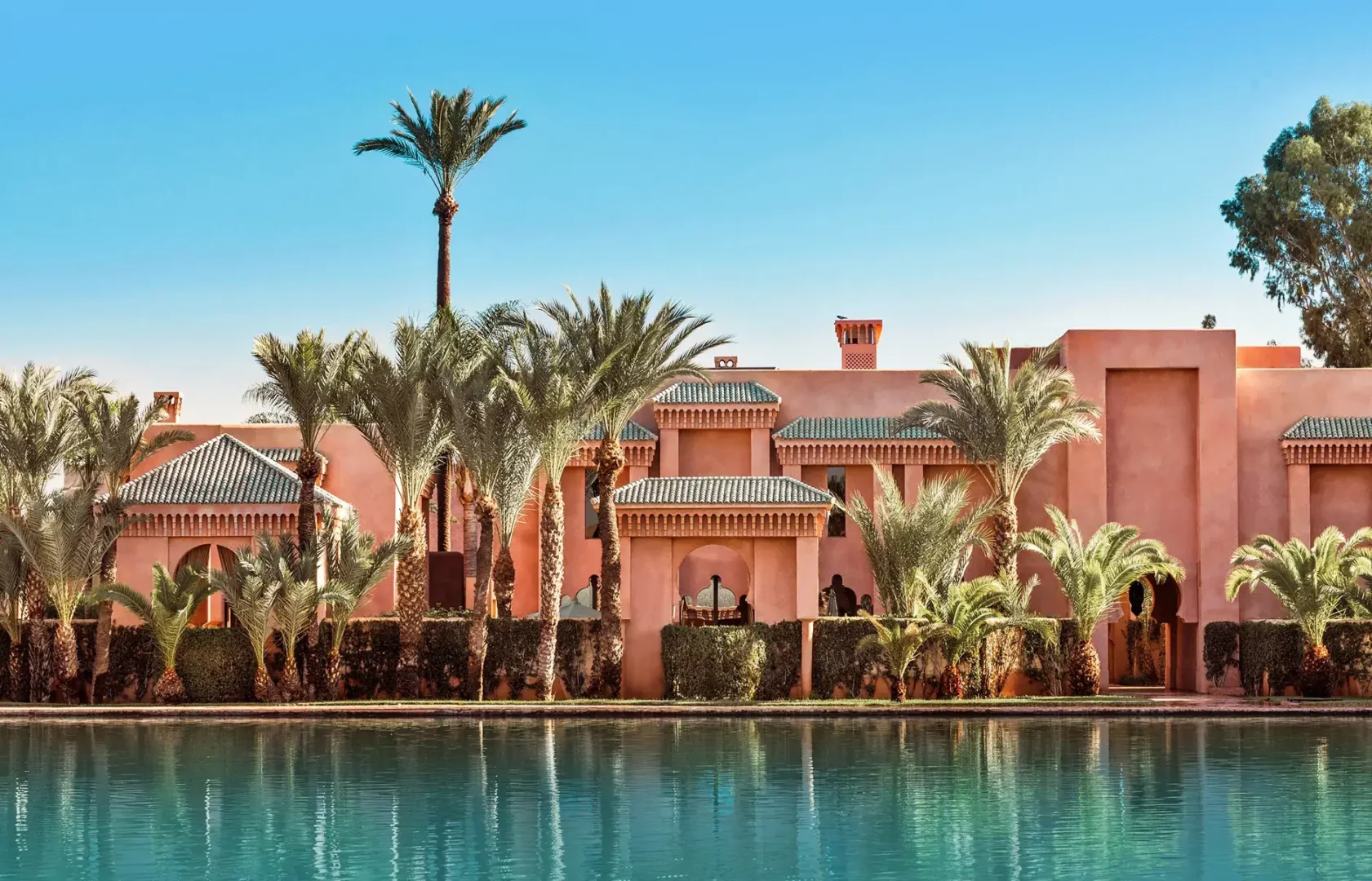
The 10 Key Steps to Buying Real Estate in Morocco
Step 1 — Define your project and budget
Before any search, clarify your objectives: primary residence, secondary residence, seasonal rental investment, long-term rental, retirement purchase? Each objective involves different choices.
- Calculate your total budget = purchase price + 8% to 12% in additional costs.
- Define the type of property: apartment, villa, riad, traditional house, commercial premises.
- Choose your target city and neighborhood.
- Set your profitability criteria if it is an investment.
Step 2 — Property search: the right platforms
The Moroccan real estate market works through several channels:
- specialized platforms,
- real estate agencies,
- local networks,
- private groups,
- word of mouth.
However, the best opportunities are often accessible through serious local agencies with a genuine on-the-ground network.
Step 3 — Visits and due diligence
During visits, whether physical or by video, check:
- General condition: structure, roof, plumbing, electricity, waterproofing.
- Compliance with the local development plan.
- The status of the land title, request a copy immediately.
- Absence of disputes, mortgages, or easements.
- For an apartment: condition of charges and condominium arrears.
For a rented property: conditions of the current lease.
Step 4 — Legal verification of the land title
This is the most critical step. Before making any commitment, have the land title, or TF, checked by an independent notary or lawyer, never the seller’s representative. This verification includes:
- Request for a recent mortgage status statement from the ANCFCC.
- Verification of the identity of the legal owner.
- Checking easements, mortgages, and pre-emption rights.
- Compliance of the legal use, residential, commercial, or mixed.
For older properties: verification of heirs and absence of undivided ownership.
Step 5 — Negotiation and purchase offer
The Moroccan market is negotiable, especially for properties that have been on the market for a long time. A discount of 5% to 15% is often obtained, particularly for riads to renovate or VEFA/off-plan sales. Base your offer on recent comparable sales.
Step 6 — Signing the preliminary sales agreement
The preliminary sales agreement, or compromis de vente, commits both parties. It specifies:
- Final price.
- Deposit, generally 10%.
- Conditions precedent, such as obtaining financing or removal of a mortgage.
- Completion deadline, usually 2 to 4 months.
- Penalties in case of withdrawal.
💡 Important: Never pay a deposit without a preliminary agreement drafted and signed before a notary or lawyer. Informal deposits are almost impossible to recover.
Step 7 — Opening a convertible dirham account
This is the time to open the account if it has not already been done. The incoming transfer must be traceable and pass through this account to preserve your future repatriation right.
Step 8 — Obtaining financing
There are two main options: own funds or mortgage financing. See section 6 for the full details, including rate, down payment, and term.
Step 9 — Signing the Deed of Sale at the Notary’s Office
The authentic deed is signed before a modern notary, under French-Moroccan law. The notary:
- Verifies the authenticity of the documents.
- Drafts and authenticates the deed.
- Collects registration duties for the State.
- Clears any possible mortgages.
- Carries out the registration formalities.
If you cannot be present, sign a legalized power of attorney in your country.
Step 10 — Registration with the Land Registry, ANCFCC
The deed is filed with the ANCFCC for registration on the land title. This registration legally grants you ownership. Average timeframe: 1 to 3 months. You then receive a registration statement.
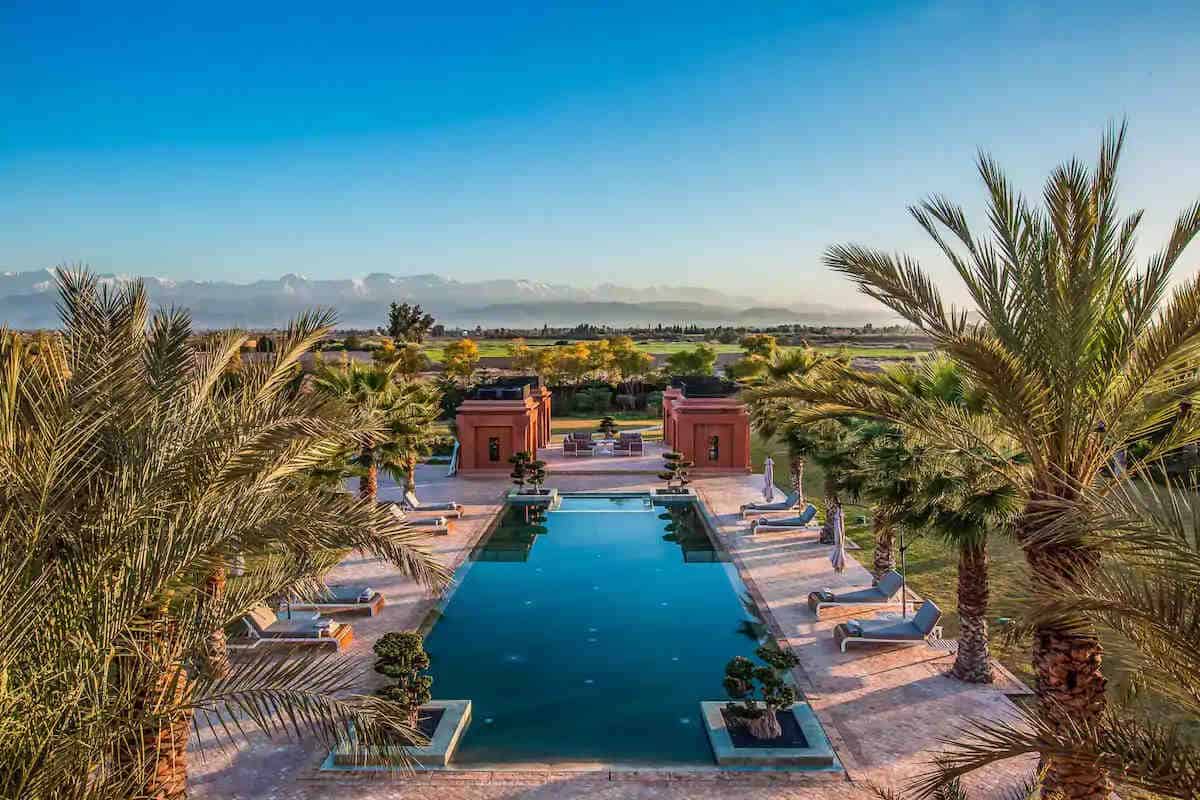
All Real Estate Purchase Costs in Morocco: Complete 2026 Table
The most common mistake is budgeting only for the advertised price. In reality, additional costs represent 8% to 12% of the sale price.
| Type of Fee | Rate / Amount | Who Pays? | Notes |
|---|---|---|---|
| Registration duties | 4% of the price | Buyer | 2.5% for social housing |
| Land Registry | 1% to 1.5% | Buyer | Registration on the land title |
| Notary fees | 1% + 20% VAT | Buyer | Minimum around 2,500 MAD |
| Notarial tax | 0.5% | Buyer | On deeds |
| Agency fees | 2.5% to 5% | Variable | Often shared between buyer and seller |
| Bank fees (if financed) | Variable | Buyer | File processing, appraisal |
| Mortgage registration | 1% of the guaranteed amount | Buyer | If financed |
| Housing tax (annual) | Variable | Owner | Every year |
| Municipal services tax | 10.5% – 13.5% of reference rental value | Owner | Based on reference rental value |
Concrete Example: Buying an Apartment for 1,000,000 MAD
| Expense Item | Estimated Amount |
|---|---|
| Purchase price | 1,000,000 MAD |
| Registration duties (4%) | 40,000 MAD |
| Land Registry (1.5%) | 15,000 MAD |
| Notary fees (1% + VAT) | 12,000 MAD |
| Notarial tax (0.5%) | 5,000 MAD |
| Agency fees (3%) | 30,000 MAD |
| Total additional costs | ~102,000 MAD (around 10.2%) |
| Total acquisition cost | ~1,102,000 MAD |
Best Cities to Buy Property in Morocco in 2026
Choosing the city is one of the most important factors for a successful real estate investment in Morocco. Each market has its own advantages, profitability levels, and buyer profiles. Marrakech mainly appeals to investors looking for strong seasonal rental returns thanks to international tourism, while Agadir attracts buyers who want seaside property and second homes. Casablanca remains the country’s most stable and liquid market thanks to its economic dynamism, while Tangier offers excellent long-term appreciation potential driven by major infrastructure projects and the development of Tanger Med port.
Before buying an apartment, villa, or riad in Morocco, it is therefore essential to compare cities according to your budget, investment strategy, and wealth objectives.
Buying Property in Marrakech: The Ochre City
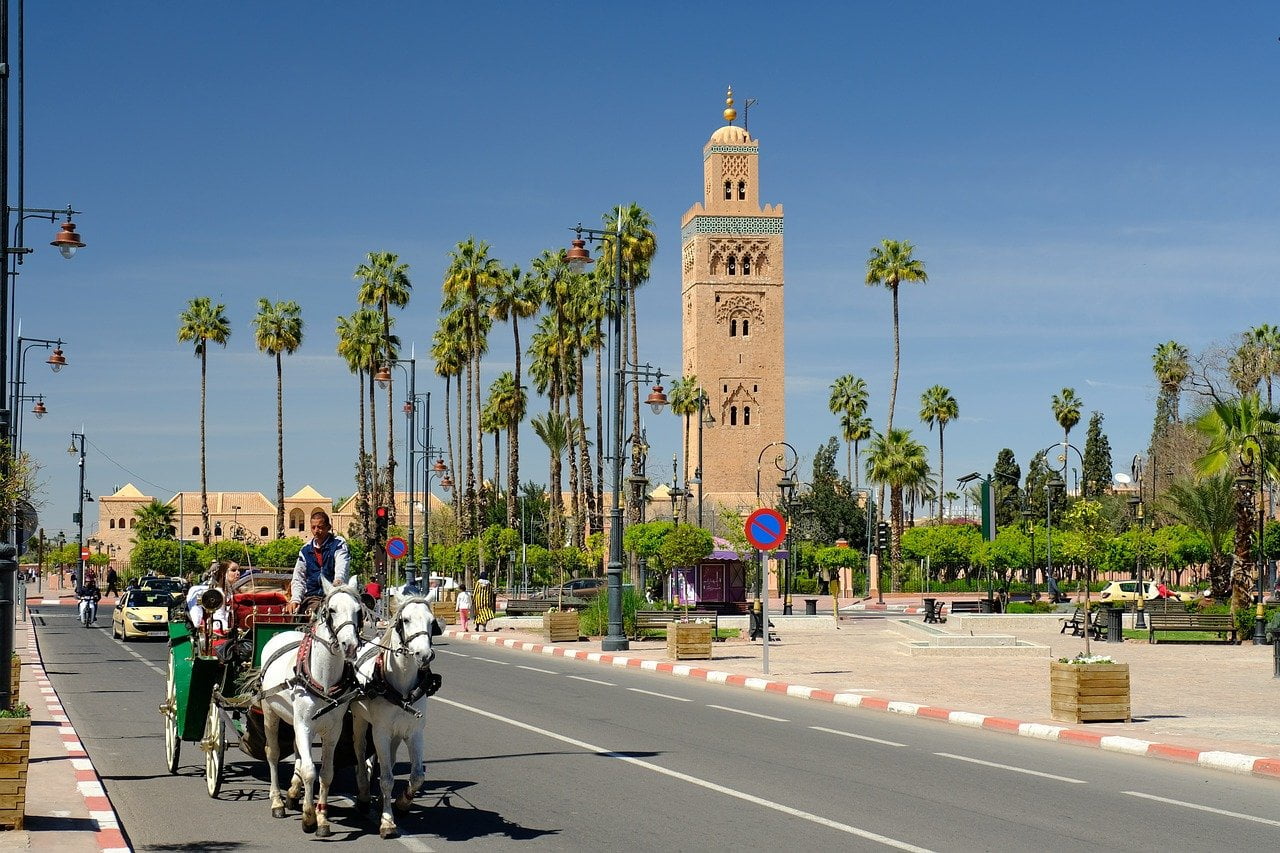
Marrakech remains the favorite real estate destination for foreigners in Morocco. UNESCO heritage, global tourism influence, and one of the most profitable seasonal rental markets in Africa: the red city ticks all the boxes. To analyze market trends, prices per m², and the most sought-after neighborhoods, also consult the Marrakech Real Estate Prices guide.
Types of Property in Marrakech
- Riad, traditional patio house: 500,000 MAD to 5,000,000 MAD+
- Medina: authenticity + reinforced legal checks are essential.
- Palmeraie: contemporary luxury, golf, private pools.
- Modern apartment: Guéliz, Hivernage, Majorelle, 400,000 to 2,000,000 MAD+.
- Villa with pool: Route de l’Ourika, Palmeraie, Amelkis, 1,500,000 to 15,000,000 MAD+.
- Dar, simpler traditional house: Medina and surrounding areas.
Key Neighborhoods in Marrakech
| Neighborhood | Profile | Average budget (MAD) | Profitability |
|---|---|---|---|
| Medina, historic | Riads, heritage | 800K – 3M+ | 7% – 10% |
| Guéliz | Modern, shops | 600K – 2M | 5% – 7% |
| Hivernage | Prestige, hotels | 800K – 3M+ | 6% – 8% |
| Palmeraie | Villas, golf, luxury | 1.5M – 20M+ | 5% – 8% |
| Agdal | Quiet residential | 500K – 1.8M | 4% – 6% |
| Route Ourika / Amizmiz | Villas, nature | 1M – 5M | 5% – 7% |
Precautions When Buying a Riad in Marrakech
- Existence of a land title, as many Medina properties are not registered.
- Structural assessment: humidity, foundations, condition of beams.
- Compliance of past works, with the municipality and Habous.
- Medina rules: listed buildings, limited height.
- Renovation costs: 2,000 to 5,000 MAD/m² for a full renovation.
💡 UNESCO context: The Medina of Marrakech has been listed as a UNESCO World Heritage Site since 1985. Any renovation project must comply with the rules of ADER, the Agency for the Dedensification and Rehabilitation of the Medina of Marrakech.
Buying Property in Agadir: The Seaside Resort
Agadir is Morocco’s major seaside resort: 300 days of sunshine, 8 km of beach, and a relaxed quality of life. The city appeals to families, retirees, and investors looking for solid summer rental profitability.
Why Invest in Agadir in 2026?
- Modern real estate market, as the city was rebuilt after the 1960 earthquake.
- Infrastructure: international airport, marina, golf courses, tourist complexes.
- Strong seasonal rental demand, from June to September.
- Development of the Agadir-Taghazout Bay area, with premium resorts.
- Prices still affordable compared with Marrakech or Casablanca.
- Many low-cost connections from Europe.
Investment Areas in Agadir
| Area / Neighborhood | Property Type | Range (MAD) | Advantages |
|---|---|---|---|
| Marina / Seafront | Apartments, residences | 600K – 2.5M | Sea view, rental +++ |
| Tilila / Hay Mohammadi | Residential apartments | 400K – 1.2M | Affordable prices, residential |
| Taghazout Bay | Villas, luxury apartments | 1.2M – 8M+ | Surf, premium tourism |
| Founty / Dakhla Road | Villas, land | 800K – 3M | Tranquility, nature |
| Souss-Massa, surrounding areas | Land, houses | 200K – 800K | Future potential |
Buying an Apartment in Casablanca: The Economic Hub
Casablanca is Morocco’s economic engine. Its market is the most structured and liquid in the country. Although rental profitability is slightly lower than in Marrakech or Agadir, security of investment and resale liquidity are unmatched.
- Premium neighborhoods: Anfa, Racine, Gauthier, Triangle d’Or, Boulevard de la Corniche.
- Accessible neighborhoods: Hay Hassani, Sidi Bernoussi, Aïn Sebaâ, Maarif.
- Offices and commercial premises: 7% – 10% profitability.
- Strong long-term capital gain potential thanks to urban densification and the Casa Anfa project.
Buying in Rabat: The Political Capital
A more stable and institutional market: diplomats, civil servants, and expatriates from international organizations. The most sought-after neighborhoods are Souissi, Hay Riad, Agdal, and Hassan. Profitability is more modest, around 4% to 6%, but investment security and rental occupancy are excellent.
- High-potential areas: Bay of Tangier, Cap Malabata, Marchane, La Montagne, Achakar.
- Buyer profile: expatriates, entrepreneurs, investors focused on capital appreciation.
- Rental profitability: 5% – 9% depending on location.
Real Estate Financing and Mortgage Loans in Morocco in 2026
Real estate financing in Morocco in 2026 remains accessible both to residents and to foreign investors and MREs, meaning Moroccans Living Abroad. Buyers can finance their purchase through personal funds, a Moroccan mortgage, or a loan obtained in their country of residence. Moroccan banks offer loans to non-residents, generally with a higher personal contribution and stricter income conditions. Before buying an apartment, villa, or riad in Morocco, it is important to compare interest rates, bank fees, and financing options in order to choose the solution best suited to your real estate project.
Financing with Personal Funds
The simplest solution for non-residents: transfer funds from abroad to your convertible dirham account.
✅ No borrowing costs, fast transaction. ❌ Capital is tied up.
Mortgage Loan from a Moroccan Bank
The main banks, including Attijariwafa Bank, Banque Populaire, CIH Bank, Bank of Africa, and Société Générale Maroc, offer loans to non-residents under stricter conditions:
| Criterion | Moroccan residents | MREs | Foreign non-residents |
|---|---|---|---|
| Minimum personal contribution | 10% – 20% | 20% – 30% | 30% – 50% |
| Interest rate | 3.5% – 5.5% | 4% – 6% | 5% – 7% |
| Maximum term | 25 – 30 years | 20 – 25 years | 15 – 20 years |
| Required documents | Standard | Proof of foreign income | Income + guarantees |
| Borrower insurance | Mandatory | Mandatory | Mandatory |
Mortgage Loan in the Country of Residence
For French buyers, it is often more advantageous to take out a loan in France by using an existing property as collateral. Advantages: more competitive rates and lighter documentation requirements.
Participative Financing, Mourabaha
Islamic finance has been developing rapidly since 2017. Participative banks, including Al Akhdar Bank, Umnia Bank, BTI Bank, Bank Assafa, and Bank Al Yousr, offer interest-free Mourabaha contracts that comply with Sharia law. They are particularly appreciated by practicing MREs.
Real Estate Taxation in Morocco 2026: Understanding Everything
Real estate taxation in Morocco is an essential factor to consider before any investment. In 2026, buyers must anticipate several taxes and costs related to the acquisition, ownership, and resale of a property. The main costs include registration duties, land registry fees, notary fees, as well as taxes on rental income and real estate capital gains. For foreign investors and MREs, it is also important to understand fund transfer rules and international tax treaties in order to optimize the net profitability of their real estate investment in Morocco.
Taxes on Purchase
- Registration duties: 4% of the price, or 2.5% for social housing.
- Land Registry: 1% to 1.5%.
- Notary fees: 1% + VAT.
Annual Property Taxes
- Housing Tax, TH: based on the Reference Rental Value, VLR. New properties are exempt for the first 5 years.
- Municipal Services Tax, TSC: 10.5% of the VLR in urban areas, 6.5% in non-equipped areas.
- Property Tax, TF: paid annually by the owner.
Tax on Rental Income
| Annual Rental Income (MAD) | Income Tax Rate | Flat-rate Allowance |
|---|---|---|
| Less than 30,000 MAD | 0% (exempt) | 40% |
| 30,001 – 50,000 MAD | 10% | 40% |
| 50,001 – 60,000 MAD | 20% | 40% |
| 60,001 – 80,000 MAD | 30% | 40% |
| 80,001 – 180,000 MAD | 34% | 40% |
| More than 180,000 MAD | 38% | 40% |
Capital Gains Tax on Resale
- Basic rate: 20% of the net capital gain after allowances.
- Full exemption if the property has been used as a primary residence and held for more than 6 years.
- Exemption if the capital gain is under 140,000 MAD.
- Annual allowance of 5% per year of ownership after 5 years.
💡 France-Morocco tax treaty: Real estate capital gains are generally taxed in Morocco, where the property is located. Consult a tax expert for your personal situation, especially in cases of dual residence.
The 10 Traps You Must Absolutely Avoid
Buying property in Morocco can be an excellent investment opportunity, but certain mistakes can quickly turn the project into a financial or legal problem. Between untitled properties, deposits paid without an official contract, hidden fees, and unqualified intermediaries, it is essential to secure every stage of the transaction. Before buying an apartment, villa, or riad in Morocco, investors should take the time to verify legal documents, the real condition of the property, and the reputation of the professionals involved in order to avoid the most common traps in the Moroccan real estate market.
- Trap no. 1: buying a property without a land title A melkia property or an unregistered property offers no legal guarantee. Always require an ANCFCC land title.
- Trap no. 2: paying a deposit without a signed preliminary sales agreement Without a notarized preliminary agreement, there is no recourse if the seller withdraws.
- Trap no. 3: not checking mortgages and charges Always request a mortgage status statement dated within the last 3 months.
- Trap no. 4: underestimating additional costs Plan for an extra 8% to 12% of the purchase price.
- Trap no. 5: trusting an unlicensed agent Choose FNAIM Morocco agencies or agencies with verifiable references.
- Trap no. 6: buying off-plan without checks For VEFA/off-plan purchases, check the building permit and the developer’s previous projects.
- Trap no. 7: ignoring foreign exchange rules Funds must pass through a convertible dirham account in order to remain repatriable.
- Trap no. 8: not having an independent legal representative Appoint a lawyer or notary independent from the seller — never the seller’s agent.
- Trap no. 9: neglecting condominium charges Ask for the minutes of the last 3 general meetings and an up-to-date statement of charges.
- Trap no. 10: underestimating remote rental management Plan from the start for a concierge service or a trusted local agency.
Buying Property in Morocco from Abroad: How It Works
Buying property in Morocco from abroad is now a relatively simple process for foreign investors and Moroccans Living Abroad, or MREs. Thanks to digital tools, virtual visits, and legalized powers of attorney, it is possible to buy an apartment, villa, or riad without physically traveling to Morocco. However, to secure the transaction, it remains essential to work with an independent notary, verify the property’s land title, and use a convertible dirham account to ensure traceability and the future repatriation of funds.
Steps for a Remote Purchase
- Select properties via Avito, Mubawab, or Sarouty.
- Mandate a serious agency for HD video visits.
- Arrange an independent appraisal through a local firm.
- Use a notary and/or lawyer for legal verification.
- Sign a legalized power of attorney in your country, through a consulate or embassy.
- Open a convertible dirham account remotely.
- Transfer funds from abroad.
- Have your legal representative sign the deed.
- Receive the property title.
Legalized Power of Attorney: How Does It Work?
The power of attorney must be:
- Drafted in French or Arabic, ideally both.
- Signed before a notary in the country of residence.
- Apostilled under the Hague Convention, or legalized by the Moroccan consulate.
- Precise about the powers granted, including the property, amount, and conditions.
- Sent to your representative before signing.
Documents Needed to Buy in Morocco: Complete Checklist
Before buying property in Morocco, it is essential to prepare all the necessary administrative and legal documents in order to secure the transaction and avoid delays in the acquisition process. Whether you are a resident, foreign investor, or Moroccan Living Abroad, certain documents are mandatory, including passport, proof of income, bank statements, and financing-related documents. On the property side, verifying the land title, mortgage status, administrative authorizations, and condominium documents remains essential to guarantee a secure real estate purchase in Morocco.
Buyer Documents, Foreign Non-Resident
☐ Valid passport, all pages.
☐ Recent proof of address, less than 3 months old.
☐ Bank statements from the last 3 to 6 months.
☐ Proof of income, such as payslips, tax notice, or balance sheet.
☐ Tax identification number, such as French NIF or equivalent.
☐ Bank account details for the transfer.
☐ Legalized power of attorney if buying remotely.
Property Documents to Check
☐ Copy of the land title, TF, with requisition number.
☐ Recent mortgage status statement, less than 3 months old, from ANCFCC.
☐ Seller’s identity document, CIN or passport.
☐ Preliminary sales agreement or pre-contract.
☐ Habitation permit, for new or renovated buildings.
☐ Plans filed with the municipality + work authorizations.
☐ Co-ownership regulations + general meeting minutes, for apartments.
☐ Up-to-date housing tax and municipal services tax receipts.
☐ Certificate of ownership from the Land Registry.
Rental Management and Profitability: Maximizing Your Investment
Buying property in Morocco is not limited to the acquisition itself. To maximize the profitability of your investment, it is essential to implement an effective rental management strategy adapted to the local market. Between seasonal rentals on Airbnb in Marrakech or Agadir and long-term rentals in Casablanca, each model has different advantages in terms of income, stability, and day-to-day management. Good price optimization, professional guest management, careful decoration, and excellent online visibility can significantly increase rental income and improve the long-term value of the property.
Seasonal Rental vs Long-Term Rental
| Criterion | Seasonal Rental | Long-term Rental |
|---|---|---|
| Gross profitability | 8% – 15% | 4% – 7% |
| Management | Intensive, concierge service | Simple |
| Vacancy risk | Seasonal | Low |
| Moroccan taxation | Income tax on revenue | Income tax on revenue |
| Platforms | Airbnb, Booking, VRBO | Avito, agencies |
| Ideal property | Riad, villa, furnished apartment | Apartment, studio, house |
Seasonal Rental Regulations
Since 2016, furnished tourist rentals have fallen under Law 61-00:
- Mandatory declaration to the Ministry of Tourism.
- Keeping an occupant register.
- Compliance with safety and hygiene standards.
- Declaration of income to the Directorate General of Taxes, DGI.
Optimizing Rental Profitability
- Careful decoration: around +30% in Airbnb income on average.
- Professional photos are essential.
- Dynamic pricing: high season, Ramadan, summer, festivals such as Marrakech du Rire and Mawazine.
- Additional services: airport transfer, breakfast, excursions.
- Fast replies to requests, as Airbnb penalizes slow hosts.
- Accumulated positive reviews are the main visibility driver.
FAQ — Frequently Asked Questions About Buying Real Estate in Morocco
Can a foreigner buy freely in Morocco?
Yes, any foreigner can purchase titled real estate in Morocco without restriction, except for agricultural land and certain strategic zones. The process is secured under Moroccan law and supervised by a notary.
What total costs should be planned for?
Expect total acquisition costs of 8% to 12% of the purchase price: registration duties (4%), Land Registry fees (1%–1.5%), notary fees (1% + VAT), notarial tax (0.5%), and agency fees (2.5%–5%).
Can you buy remotely without traveling?
Yes. A legalized power of attorney signed in your country allows a lawyer, notary, or trusted representative to complete the transaction on your behalf.
What is the best city to invest in 2026?
Marrakech: best seasonal rental profitability (6%–10%).
Agadir: accessible family seaside market.
Tangier: strongest short- to medium-term capital appreciation potential.
Casablanca: security and liquidity.
Rabat: stable and institutional market.
Can you get a mortgage as a non-resident?
Yes, but with a down payment of 30% to 50%, slightly higher interest rates, and strict supporting documentation requirements. In many cases, a mortgage loan in the buyer’s country of residence may be more advantageous.
What is a convertible dirham account?
It is a special account for non-residents that allows funds in foreign currency to be received and guarantees the repatriation of funds upon resale. It is mandatory for non-residents financing the purchase from abroad.
How can you check whether a property is legal?
Verify the existence of an ANCFCC land title.
Request a recent mortgage status certificate.
Use an independent notary.
Never purchase a “melkia” property without legal advice
What is the taxation on resale?
Capital gains are taxed at 20%. Full exemption applies if the property has been the primary residence for more than 6 years, or if the capital gain is less than 140,000 MAD. A 5% deduction applies for each year beyond 5 years of ownership.
What is the average timeframe to finalize a purchase?
Allow 2 to 4 months between signing the preliminary sales agreement and registration of the title with the ANCFCC.
Is it better to buy new-build, VEFA/off-plan, or old property?
New build / VEFA: 5-year housing tax exemption, developer guarantees, no renovation work required, but potential delivery delays.
Older properties: prices are often negotiable and may offer architectural charm, but renovation work may be needed along with more thorough legal checks.