EOI Process for Off-Plan Property in the UAE: 2026 Guide for International Buyers
- Published 11 Dec 2024
- Updated 10 November 2026
- 13 min read
- Data verified on 10 Nov 2026
In short
An expression of interest (EOI) is a developer pre-booking for an off-plan UAE project: you pay a deposit set by the developer to get priority at launch, then book, sign the SPA and pay into escrow. It is not registered with the DLD or ADREC. In Dubai the SPA must be registered within 90 days for a 4% fee. Demand is foreign-led: overseas and expat buyers made up 70% of Abu Dhabi residential sales value in H1 2026.
Dubai Land Department, 3 Nov 2026 · Laws No. 8 of 2007 and No. 13 of 2008 · ADREC Market Report H1 2026
70%foreign buyers
Share of Abu Dhabi residential sales value from resident and non-resident foreigners, H1 2026
Source: ADREC, H1 2026
89%off-plan
Share of Abu Dhabi residential sales value sold off-plan, H1 2026
Source: ADREC, H1 2026
68%developer sales
Share of Dubai registered sales made by developers, Q3 2026
Source: DXBinteract / DLD, Q3 2026
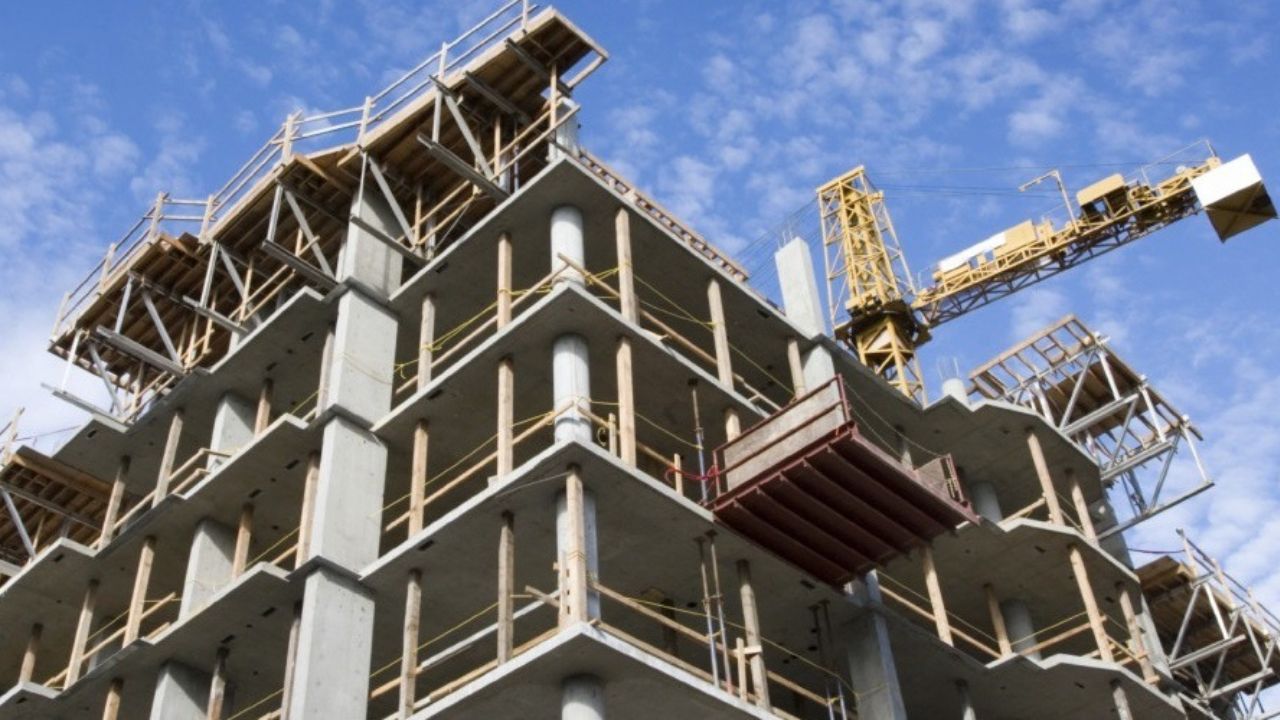
For overseas buyers, the EOI is the first and least regulated payment.Photo: © VALORISIMO
In this article · 9 sections
What is the expression of interest (EOI) process for off-plan property?
For an international buyer, the expression of interest (EOI) is usually the first money that leaves your account for a UAE off-plan property. It is also the least regulated step of the whole purchase, which is why it deserves the most attention.
An EOI is a pre-booking with a developer. You fill in a form, pay a deposit, and get priority when units in a new project are released. It signals intent; it does not transfer ownership, and it is not registered with the Dubai Land Department (DLD) or with the Abu Dhabi Real Estate Centre (ADREC). The amount, the refund terms and the allocation method are set by the developer in the EOI form.
Ownership starts later, when you sign the sale and purchase agreement (SPA) and the developer registers it. In Dubai that registration is the Oqood, in the Interim Property Register created by Law No. 13 of 2008. This guide covers the full path for buyers living abroad: the legal framework, each step, paying from overseas, refunds, Dubai versus Abu Dhabi, and what comes after. If you only need the short checklist, see our page on the EOI process in 7 steps.
Which UAE rules protect buyers around an EOI?
You will not find an “EOI law” in the UAE, but the rules around off-plan sales tell you exactly what a legitimate EOI looks like.
| Rule | Source | What it means for an EOI |
|---|---|---|
| Developers must be on the DLD Register of Real Estate Developers | Law No. 8 of 2007, Art. 4 | Check the developer in the DLD approved developers list |
| No off-plan advertising or exhibitions without written DLD authorisation | Law No. 8 of 2007, Art. 5 | Ask for the marketing permit of the project |
| Developer must open a project escrow account before selling off-plan | Law No. 8 of 2007, Arts. 6 to 9 | SPA payments go to an account in the project’s name |
| No off-plan sale before possessing the land and obtaining approvals | Law No. 13 of 2008, Art. 4 | Pre-launch hype is not approval |
| Off-plan contracts in unapproved projects are void | Law No. 13 of 2008, Art. 10 | Your money has no legal anchor until the project is approved |
| Only DLD-approved administrative fees may be charged on sales and resales | Law No. 13 of 2008, Art. 7 | Question any unexplained fee |
| SPA registered in the provisional register within 90 days | DLD service conditions, updated 3 Nov 2026 | Your protection starts with the Oqood |
Source: Law No. 8 of 2007 and Law No. 13 of 2008 (as amended by Law No. 9 of 2009), English texts in the Dubai Land Department legislation compendium; Dubai Land Department, ‘Request to register the initial sale’, updated 3 Nov 2026.
The penalties are real. Article 16 of Law No. 8 of 2007 provides for jail and a fine of at least AED 100,000 for anyone who knowingly sells units in fraudulent projects or misappropriates money paid for a development, and a developer can be struck off if it fails to start construction within six months of being allowed to sell off-plan.
What are the steps of the EOI process for international buyers?
The sequence is the same whether you live in Dubai or overseas; what changes is how you prove your identity and move your money.
1. Research the project and the developer
Compare developer track record, community, handover date, price per square foot and payment plan. Check that the developer appears in the DLD’s approved developers list and, once the project is registered, follow it with the DLD project status enquiry (website, Dubai REST app or WhatsApp 8004488).
2. Read and sign the EOI form
The form records your details and preferences and, most importantly, the refund terms. Look for four things: the amount, whether it is refundable, the refund deadline, and any deduction if you decline the unit offered.
3. Pay the EOI
Pay by bank transfer to the developer’s company account and keep the SWIFT confirmation. Avoid cash, personal accounts and payments to intermediaries.
4. Allocation and booking
Units are offered in EOI order or by ballot. You pick a unit, pay the booking amount set by the developer and usually see the EOI credited.
5. SPA and Oqood
For the DLD registration, individuals need the signed SPA and a valid UAE ID, or a valid passport for non-residents. The developer registers the SPA within 90 days; the DLD fee is 4% of the price. Our guide on how to read a DLD Oqood certificate explains what you receive.
6. Instalments, completion and title deed
Instalments go to the project escrow account. At completion the developer registers the project in the main register; the DLD’s conversion service issues the title deed and map in 6 business days for AED 250 each, plus small fees.
How should you pay an EOI and instalments from abroad?
Paying from abroad is where international buyers make avoidable mistakes. The rule is simple: every dirham should be traceable to the developer or the project escrow account.
- EOI deposit: to the developer's company account named on the EOI form, with a receipt in the developer's name.
- SPA instalments: to the escrow account opened in the project's name; the DLD publishes certified escrow agents and account details.
- DLD fee: paid as part of the Oqood registration, with an official DLD receipt.
- Records: keep SWIFT confirmations, receipts and statements together; banks and the DLD may ask for them at resale or mortgage.
- Currency: the SPA is priced in dirhams, so agree on who bears exchange-rate costs before transferring.
If you plan to finance part of the price, note that off-plan purchases in Abu Dhabi are paid through escrow-based instalment plans and are not registered as mortgages, according to ADREC. In Dubai, a sale with an initial mortgage can be registered with the DLD, with a mortgage fee of 0.25% of the loan.
Can you get your EOI or off-plan payments back?
Refunds are the question international buyers ask most. The answer depends on whether you have signed an SPA.
Before the SPA, the EOI form decides. After the SPA, Article 11 of Law No. 13 of 2008, as amended in 2009, sets what a developer may keep if you default, after a 30-day DLD notice.
| Situation | What governs the refund | What you can expect |
|---|---|---|
| EOI paid, no unit offered | The EOI form’s own terms | Usually a refund of the amount; check the deadline and any deduction written in the form |
| EOI paid, you decline the unit offered | The EOI form’s own terms | Depends on the form: some refund in full, some deduct an admin fee |
| Project not approved by the authorities | Law No. 13 of 2008, Article 10 | Any off-plan sale contract in an unapproved project is null and void |
| SPA signed, project revoked by RERA | Law No. 13 of 2008, Article 11(5); Law No. 8 of 2007 | Developer must return all payments received, under the escrow law procedure |
| SPA signed, buyer defaults, works not started | Article 11(2)(d) | Developer may terminate and keep up to 30% of payments made |
| SPA signed, buyer defaults, works under 60% | Article 11(2)(c) | Developer may terminate and keep up to 25% of the unit value |
| SPA signed, buyer defaults, works at least 60% | Article 11(2)(b) | Developer may terminate and keep up to 40% of the unit value |
| SPA signed, buyer defaults, works at least 80% | Article 11(2)(a) | Developer may keep all payments and claim the balance, or ask for a public auction |
Source: Law No. 8 of 2007 and Law No. 13 of 2008 (as amended by Law No. 9 of 2009), English texts in the Dubai Land Department legislation compendium. The DLD must first give the buyer 30 days’ notice; refunds under (b) and (c) are due within one year of termination or 60 days of resale, whichever is earlier. Check the current text with a UAE-qualified lawyer.
The practical lesson: an EOI is cheap to exit if the form is fair, while an SPA can become very expensive to exit once construction is advanced. Decide at the EOI stage, not after signing.
How does the EOI process differ between Dubai and Abu Dhabi?
Both emirates welcome foreign off-plan buyers in designated areas, with registration and escrow at the centre of buyer protection.
In Dubai, Law No. 7 of 2006 lets non-UAE nationals own freehold property in areas designated by the Ruler. In Abu Dhabi, ADREC defines investment zones as the areas where non-UAE nationals may own freehold interests; they hold about 22% of the Abu Dhabi Region’s housing stock (around 72,000 units), led by Al Reem Island, Al Raha, Yas Island and Al Saadiyat Island.
| Indicator | Dubai | Abu Dhabi |
|---|---|---|
| Registration body | Dubai Land Department (Oqood portal) | ADREC |
| Legal base for off-plan | Law No. 13 of 2008; Law No. 8 of 2007 (escrow) | Law No. 3 of 2015 |
| Off-plan / primary weight | Developer sales: 68% of registered sales, Q3 2026 | Off-plan: 89% of residential sales value, H1 2026 |
| Recent activity | 37,664 registered sales, AED 94.0bn, Q3 2026 | AED 70.4bn residential unit sales, H1 2026 |
| Freehold areas for foreigners | Areas designated under Law No. 7 of 2006 | Investment zones, about 72,000 units in Abu Dhabi Region |
Source: DXBinteract analysis of DLD records, Q3 2026 (retrieved 10 Nov 2026); ADREC, Abu Dhabi Real Estate Market Report H1 2026.
For a side-by-side view of the two markets, read our Dubai vs Abu Dhabi investment comparison.
How active is the off-plan launch market in 2026?
The volume of launches in 2026 means EOI windows open almost every week, which favours prepared buyers.
| Period | Units launched (Dubai) | Projects launched | Developer (primary) sales | All sales |
|---|---|---|---|---|
| Year 2025 | 172,053 | 648 | 149,153 | 215,608 |
| Q1 2026 | 31,390 | 111 | 33,775 | 47,946 |
| Q2 2026 | 14,105 | 62 | 28,716 | 38,479 |
| Q3 2026 | 25,559 | 70 | 25,482 | 37,664 |
Source: DXBinteract analysis of Dubai Land Department records, yearly 2025 and quarterly 2026 reports, retrieved 10 Nov 2026.
A crowded calendar cuts both ways. More launches give you more choice and more room to compare payment plans, but they also increase completions later, which matters for resale prices and rents in the same community. Compare two launches on the same basis with our investment comparison tool.
Does an EOI or off-plan purchase give you a UAE visa?
Many international buyers hope an off-plan purchase will also bring residency. Check the rules before you rely on it.
In Dubai, the DLD’s Golden Visa service requires property worth at least AED 2 million, with an e-title deed or title deed among the documents, and GDRFA Dubai issues a 10-year permit with a lien on the property. The GDRFA’s residence for property owners requires a fully constructed, habitable property that you own outright, plus a monthly income of at least AED 10,000 or proof of solvency. In practice, plan your visa around a completed, titled property.
- Choose the developer and project before the EOI, not after.
- Get the refund terms in writing and keep the signed form.
- Pay only to the developer's company account, then to the project escrow account.
- Expect the Oqood within 90 days of the SPA and check every field.
- Plan residency around a completed property with a title deed.
Watch out
Some sellers ask for EOIs before a project is approved, to test demand. Under Article 10 of Law No. 13 of 2008, any off-plan contract in an unapproved project is void, and without a registered project there is no escrow account to protect your money. If you cannot find the developer and the project in official records, do not pay.
Frequently asked questions
Can foreigners submit an EOI for UAE off-plan property?
Yes. Foreign buyers can submit EOIs and buy off-plan in Dubai’s designated freehold areas and Abu Dhabi’s investment zones. For the DLD registration that follows the SPA, a non-resident individual provides a valid passport instead of a UAE ID, so you can complete the purchase without being resident.
Is the EOI amount refundable?
It depends on the EOI form, which sets the amount, the refund deadline and any deduction. Many forms refund if no unit is allocated. After the SPA, refunds follow Article 11 of Law No. 13 of 2008, where a developer may keep up to 25% or 40% of the unit value depending on progress.
Where should I send the EOI payment?
Only to the developer’s company account named on the form, by bank transfer, with a receipt in the developer’s name. SPA instalments then go to the project’s escrow account, which Law No. 8 of 2007 dedicates to building that project and protects from the developer’s creditors.
How long after the SPA is the purchase registered?
In Dubai the developer must register the SPA in the DLD provisional register within 90 days of signing. The DLD charges 4% of the price, split 2% + 2% unless the SPA says otherwise, and issues a provisional registration e-certificate, known as the Oqood.
Does buying off-plan qualify for a Golden Visa?
Dubai’s Golden Visa for property requires at least AED 2 million of property, and the DLD’s service lists an e-title deed or title deed among the documents. The GDRFA’s property-owner residence requires a completed, habitable home. Confirm your case with GDRFA before relying on an off-plan unit.
Figures are indicative as of the date shown: check them with official sources before any decision.
- For information only; this is not tax, legal or financial advice.